





AI Is No Longer Just Generating Content. It’s Taking Action.
A year ago, learning ChatGPT, Claude, Gemini, and prompt engineering was enough to stand out in the AI job market.
Today, that advantage is disappearing.
Organizations are rapidly moving beyond chatbots and simple Generative AI usecases. Companies want intelligent systems capable of reasoning, planning, making decisions, using tools, accessing databases, interacting with APIs, collaborating with other agents, and completing business workflows autonomously.
These systems are known as AI Agents.
And they are transforming software engineering, cloud computing, customer support, banking, healthcare, cybersecurity, and enterprise automation.
The challenge?
Most learners know how to use AI.
Very few know how to build AI Agents.
This is exactly why Agentic AI has become one of the most valuable skills in technology.
Whether you’re a Python developer, AWS engineer, Azure architect, machine learning engineer, software engineer, DevOps professional, or solution architect, understanding Agentic AI can position you for the next wave of AI careers.

What Is Agentic AI?
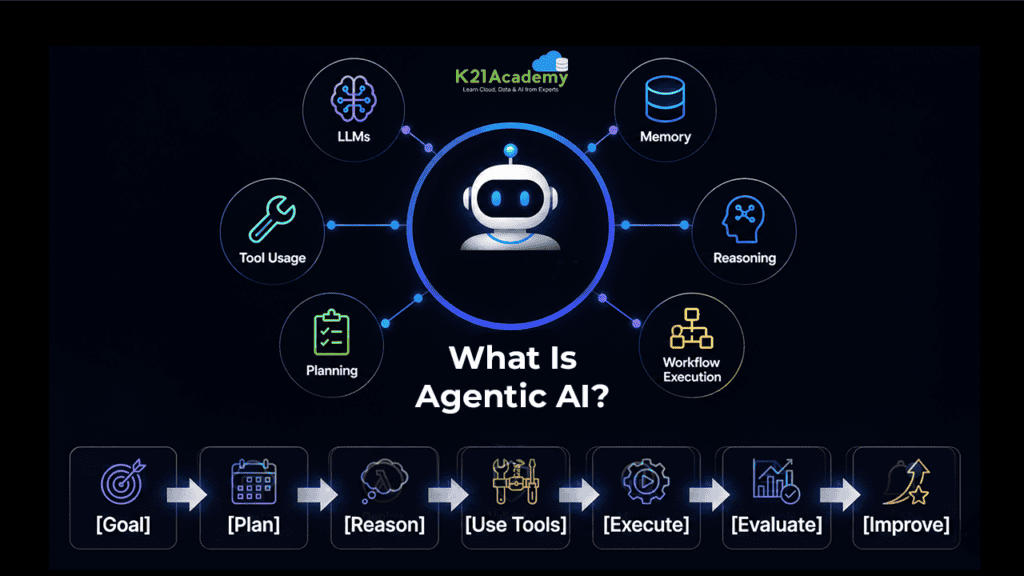
Agentic AI refers to artificial intelligence systems capable of pursuing goals instead of simply responding to prompts.
Traditional Generative AI follows a simple pattern:
Input → Generate Output
Agentic AI follows a much more sophisticated pattern:
Goal → Plan → Reason → Use Tools → Execute → Evaluate → Improve
An Agentic AI system can:
- Break complex tasks into smaller tasks
- Access external tools
- Query databases
- Search documents
- Call APIs
- Collaborate with other agents
- Evaluate its own work
- Improve outputs automatically
Instead of asking:
“Write a customer support response.”
You can ask:
“Resolve this customer issue.”
The AI agent determines how to accomplish the objective.
This shift from response generation to goal completion is what makes Agentic AI revolutionary.
Related Readings:- Generative AI vs Agentic AI
What Makes Agentic AI Unique?
Agentic AI combines several technologies into a single system:
Large Language Models (LLMs)
LLM is the reasoning engine behind the agent.
Retrieval-Augmented Generation (RAG)
Allows agents to access enterprise knowledge.
Tools
Enable interaction with external systems.
Memory
Allows agents to remember previous interactions.
Multi-Agent Collaboration
Allows multiple specialist agents to work together.
Evaluation Systems
Ensure outputs meet quality standards.
Guardrails
Protect systems from misuse and hallucinations.
MCP (Model Context Protocol)
Provides a standardized way for AI agents to discover and use tools.
Together, these capabilities transform LLMs into intelligent digital workers.
Related Readings:- Agentic AI Use Cases: 10 Real-World Examples Transforming Industries
Why Most Learners Struggle With Agentic AI
Many professionals successfully learn prompt engineering but struggle when they move into AI agents.
Common reasons include:
They Skip the Foundations
Many learners jump directly into LangGraph or CrewAI without understanding:
- Prompt Engineering
- Embeddings
- Vector Databases
- RAG
- Tool Calling
They Focus on Frameworks Instead of Concepts
Frameworks change.
Core concepts remain valuable.
Understanding reasoning loops, memory, retrieval, orchestration, evaluation, and observability matters far more than memorizing APIs.
They Avoid Building Projects
Reading about agents is not enough.
Production-ready Agentic AI requires hands-on implementation.
They Ignore Evaluation
Most AI applications fail because teams never measure quality systematically.
Evaluation and observability are critical skills.
Related Readings: ChatGPT Vs Copilot (Azure) Vs Amazon Q Vs Gemini
Who Should Learn Agentic AI?
This learning path is ideal for:
- Software Engineers
- Python Developers
- AI Engineers
- Machine Learning Engineers
- Cloud Engineers
- AWS Architects
- Azure Architects
- Data Engineers
- DevOps Engineers
- Platform Engineers
- Solution Architects
- Technical Leads
Who May Not Find This Ideal?
This learning path may not be suitable for:
- Professionals with no programming background
- Learners unwilling to work with Python
- Individuals seeking only business-level AI knowledge
- Non-technical users focused exclusively on prompt writing
Related Readings: Top 10 Claude Code Use Cases Every Developer Should Know
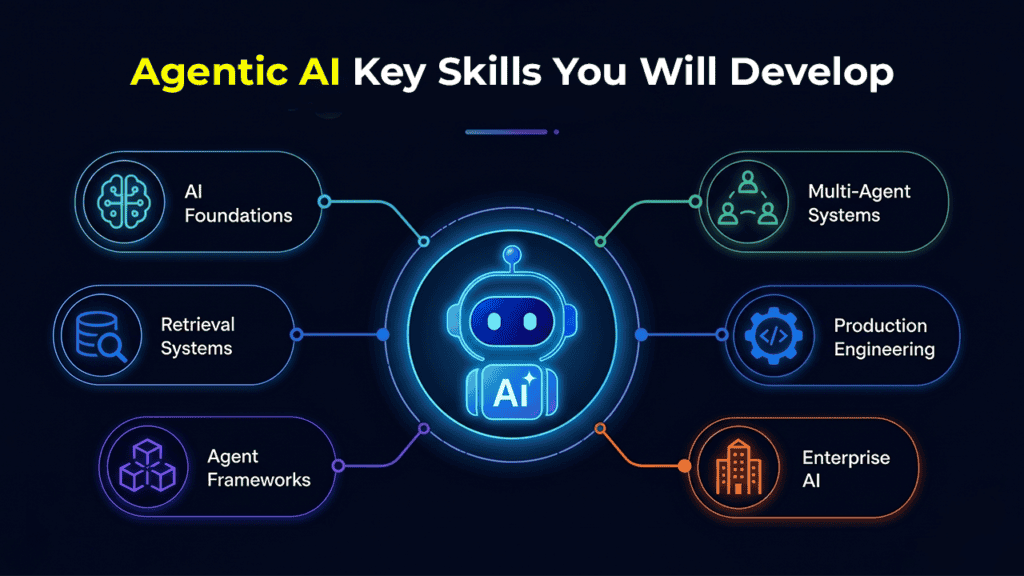
Key Skills You Will Develop
By completing this Agentic AI learning path, you will master:
Hands-On Labs Overview
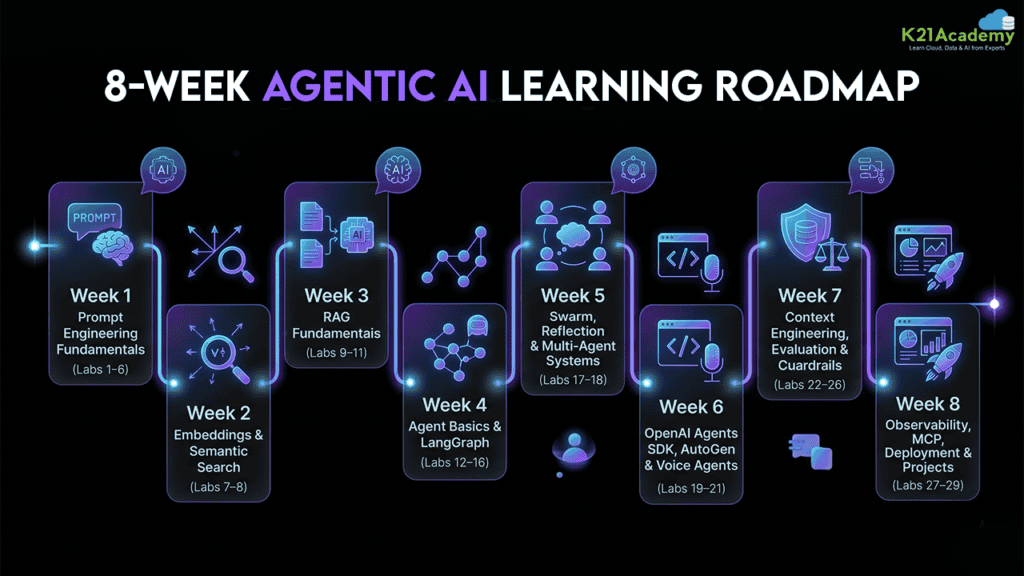
he hands-on labs are designed to help learners build practical Agentic AI skills through guided implementation and real-world scenarios. Starting with prompt engineering and LLM fundamentals, the labs gradually progress to embeddings, RAG, AI agents, LangGraph, OpenAI Agents SDK, CrewAI, MCP, observability, guardrails, and production deployment.
This Blog contains 29+ hands-on labs designed to take learners from prompt engineering fundamentals to production-grade AI agent deployment. Each lab builds on the previous one and contributes directly toward the capstone projects. Also lab includes a clear objective, estimated completion time, difficulty level, and expected outcome. By completing these labs, learners will gain the technical skills required to design, build, evaluate, and deploy modern AI agent systems used across enterprise environments.
The labs progress through five stages:
Stage 1: LLM Foundations
Labs 1–6
Stage 2: Embeddings and RAG
Labs 7–11
Stage 3: Agent Fundamentals
Labs 12–18
Stage 4: Advanced Agent Frameworks
Labs 19–24
Stage 5: Production Systems
Labs 25–29
Lab 1 : Hands-on with ChatGPT / Gemini / Claude: Prompt Shootout
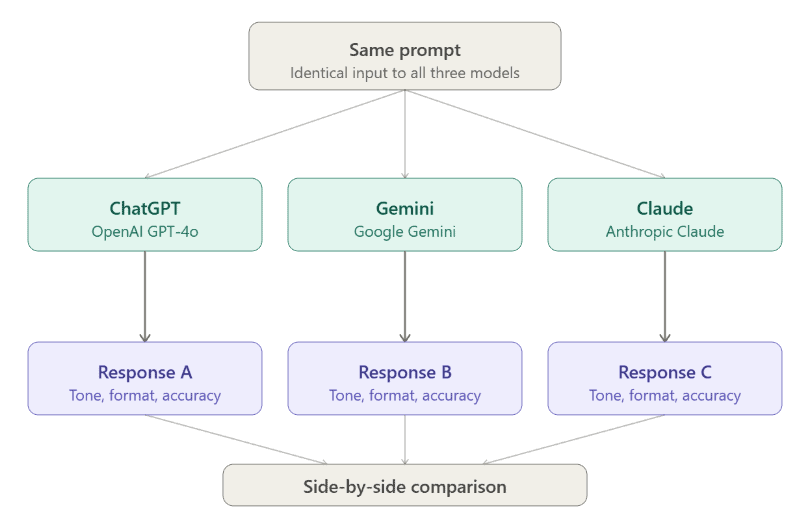
Objective: Gain hands-on experience comparing ChatGPT, Gemini, and Claude side by side to understand how different AI models respond to the same prompts and where each one performs better or worse.
In this lab, you will run the same set of prompts across all three AI platforms and observe how each model interprets instructions, handles ambiguity, and formats its responses. You will explore how token limits and context windows affect output, test each model on reasoning, summarisation, and creative tasks, and document where the responses differ and why.
By the end of this lab, you will have a clear practical understanding of how the three leading AI models compare, what each one is best suited for, and how small changes in a prompt can produce meaningfully different results across platforms.
Lab 2 : Hello-LLM client – multi-provider setup (OpenAI / Groq / Gemini / Anthropic) + Pydantic structured outputs
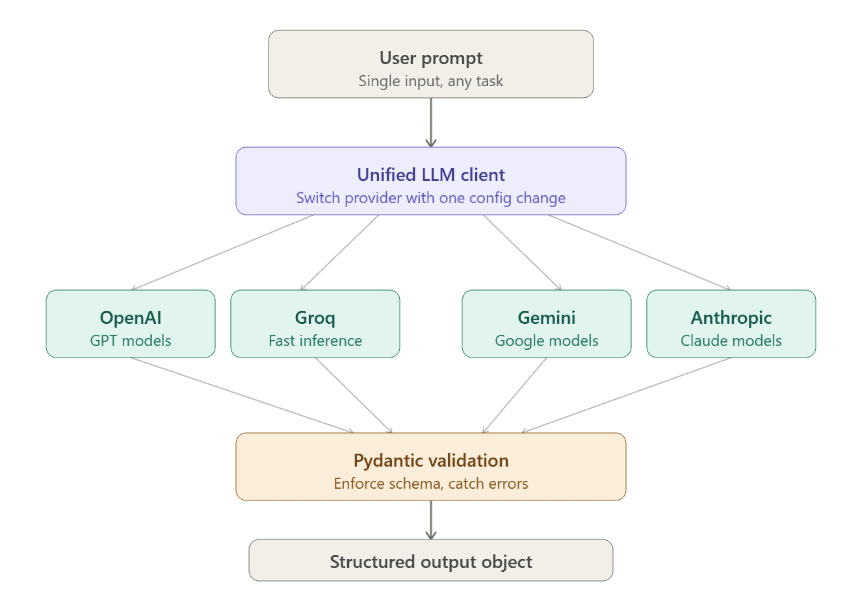
Objective: Gain hands-on experience setting up a multi-provider LLM client that connects to OpenAI, Groq, Gemini, and Anthropic from a single codebase and returns structured, validated outputs using Pydantic.
In this lab, you will configure API keys for all four providers, write a unified LLM client that can switch between models with minimal code changes, and send the same prompt to different providers to compare responses. You will then define Pydantic models to enforce structured output – ensuring the LLM returns data in a predictable, machine-readable format instead of free text, and handle validation errors when the model output doesn’t match the expected schema.
By the end of this lab, you will have a working multi-provider LLM setup and a reusable pattern for extracting structured data from any model – a foundation you will use in every lab that follows.
Related Readings:- Comparing the Best AI Chatbots for Your Business: What’s Best for You?
Lab 3 : LLM robustness – prompt-sensitivity, drift, hallucination signals
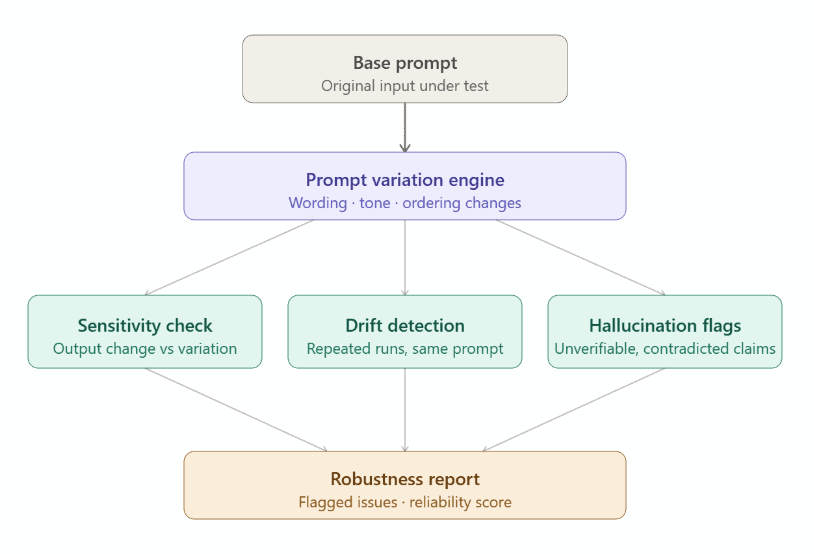
Objective: Gain hands-on experience testing LLM robustness by measuring how sensitive models are to small prompt changes, detecting output drift across repeated calls, and identifying signals that indicate a model is hallucinating.
In this lab, you will run the same prompt with minor variations – different wording, tone, and ordering – and measure how much the output changes. You will run identical prompts multiple times to observe drift in responses, build a simple test harness that flags inconsistencies, and apply techniques to detect hallucination signals such as confident but unverifiable claims, contradictions, and fabricated references.
By the end of this lab, you will understand why prompt phrasing matters more than most people expect, how to stress-test an LLM before relying on it in production, and what early warning signs to look for when a model starts generating unreliable output.
Lab 4 : Crafting precise prompts
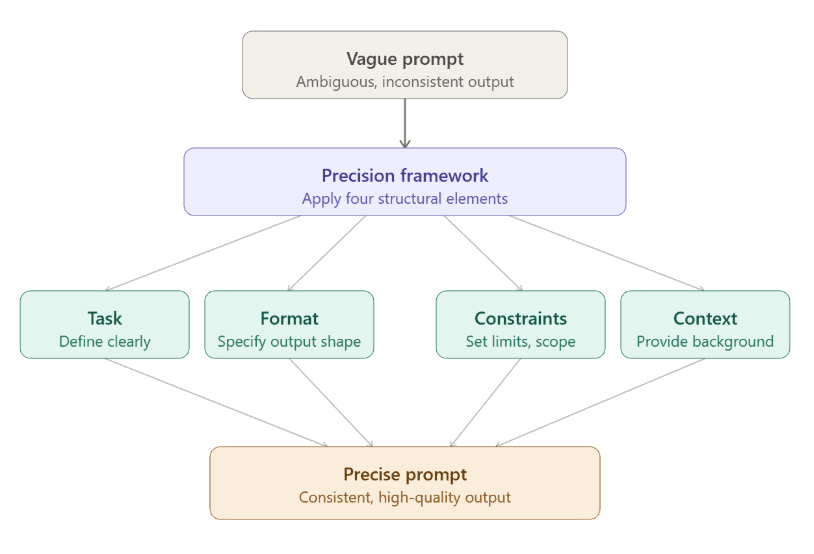
Objective: Gain hands-on experience writing clear, precise prompts that consistently produce accurate, well-structured outputs from large language models.
In this lab, you will learn why vague prompts produce inconsistent results and how small structural changes dramatically improve output quality. You will practise defining the task clearly, specifying the desired format, setting constraints, and providing the right amount of context – then compare outputs before and after each improvement to see the difference firsthand.
By the end of this lab, you will have a repeatable framework for writing prompts that get predictable, high-quality results from any LLM – a skill that directly improves every AI system you build.
Related Readings:- 7 System Design Patterns Every Cloud AI Engineer Should know
Lab 5 : Foundational Patterns: Zero/Few-Shot, CoT, Role/Persona, Delimiters
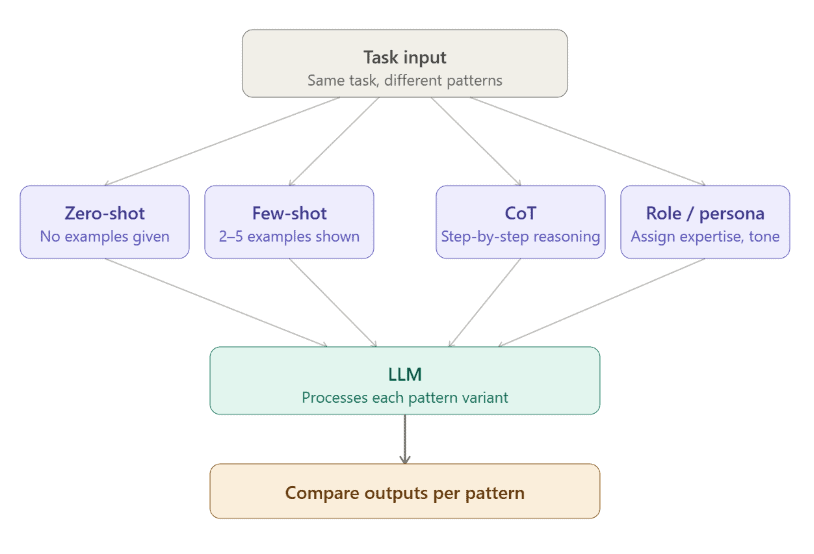
Objective: Gain hands-on experience applying the four most widely used Prompt Engineering patterns – zero-shot, few-shot, chain-of-thought, role/persona, and delimiters – and understand when to use each one.
In this lab, you will implement each pattern from scratch, test it against a real task, and observe how the model’s reasoning and output change with each approach. You will use zero-shot for simple tasks, add examples for few-shot learning, apply chain-of-thought to guide the model through multi-step reasoning, assign a role or persona to shape tone and expertise, and use delimiters to clearly separate instructions from input content.
By the end of this lab, you will know exactly which prompting pattern to reach for depending on the task – and how to combine them effectively for more complex use cases.
Lab 6 : Advanced Patterns + Chain-of-Verification (CoVe)
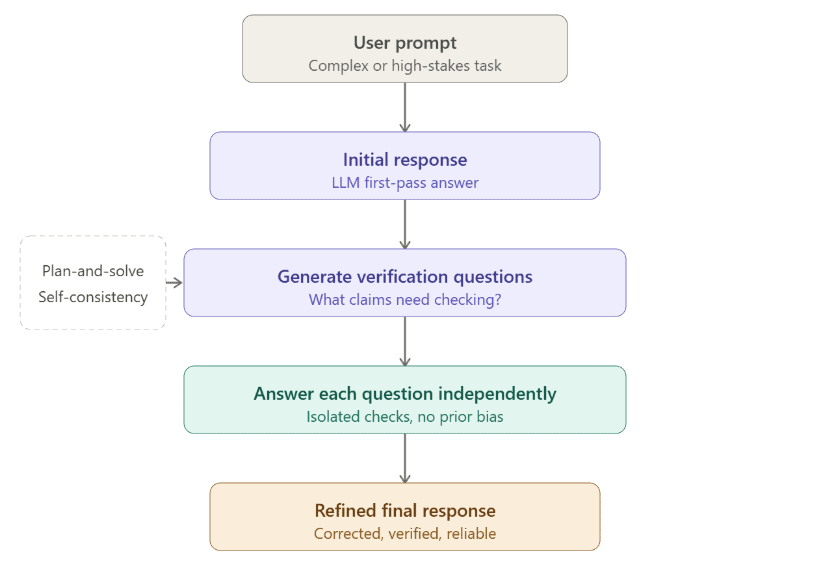
Objective: Gain hands-on experience with advanced prompting techniques including ReAct prompting, self-consistency, plan-and-solve, and Chain-of-Verification (CoVe) — a method that makes the model fact-check its own output before finalising it.
In this lab, you will implement CoVe step by step — generating an initial response, producing a set of verification questions about that response, answering each question independently, and then refining the final output based on what the checks reveal. You will also apply plan-and-solve prompting to break complex tasks into explicit steps, and use self-consistency to generate multiple reasoning paths and pick the most reliable answer.
By the end of this lab, you will have a toolkit of advanced prompting strategies that reduce hallucinations, improve reasoning accuracy, and make LLM outputs more trustworthy — especially for high-stakes or multi-step tasks.
Related Readings:- How to Build Your Own AI Bot in 2026: A Complete Guide
Lab 7 : Embeddings Deep-Dive: Vector Spaces, Cosine Similarity, text-embedding-3
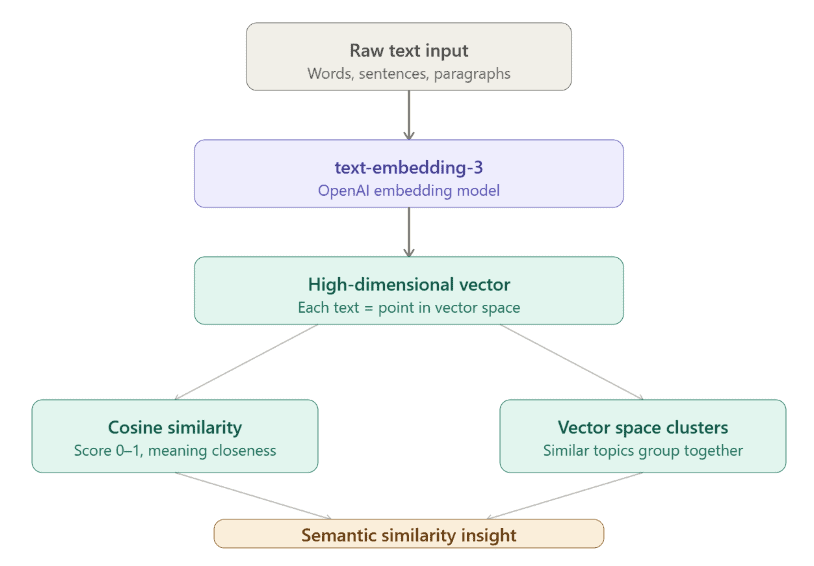
Objective: Gain hands-on experience with text embeddings — understanding how words and sentences are converted into numbers, how meaning is represented in vector space, and how cosine similarity measures the relationship between them using OpenAI’s text-embedding-3 model.
In this lab, you will convert text into embedding vectors, visualise how similar and dissimilar sentences cluster in vector space, and calculate cosine similarity scores between different pieces of text by hand and with code. You will experiment with how the model groups related concepts together and pushes unrelated ones apart — building the intuition that underpins every RAG and semantic search system.
By the end of this lab, you will understand exactly what an embedding is, why cosine similarity works better than raw distance for comparing text, and how text-embedding-3 turns language into a form machines can reason over — knowledge you will apply directly in the labs that follow.
Lab 8 : Mini Semantic Search Engine
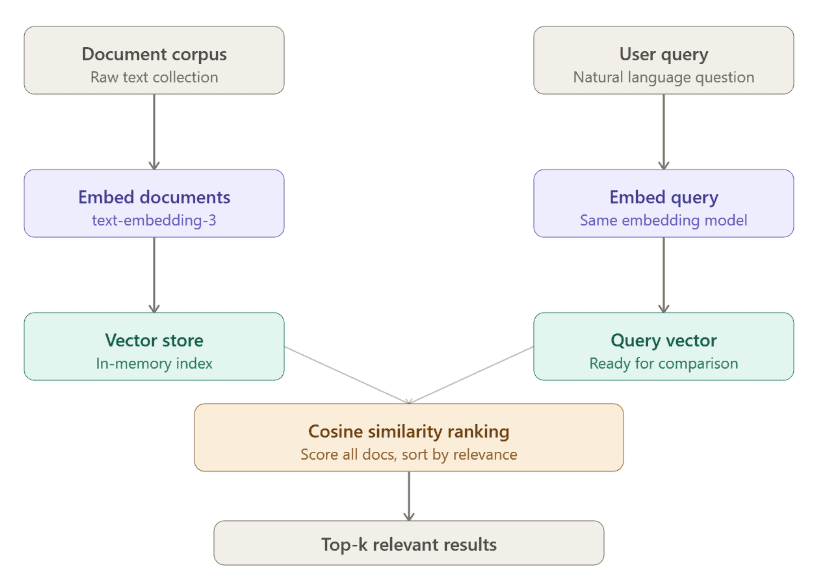
Objective: Gain hands-on experience building a working semantic search engine from scratch that finds the most relevant documents based on meaning — not just keyword matching.
In this lab, you will embed a set of documents, store the vectors in memory, and build a search function that takes a user query, embeds it, and retrieves the closest matching documents using cosine similarity. You will compare semantic search results against traditional keyword search on the same queries and see clearly where meaning-based retrieval wins.
By the end of this lab, you will have a fully working semantic search engine and a solid understanding of the retrieval mechanism that sits at the core of every RAG system.
Related Readings:- AI Engineer vs AI Architect
Lab 9 : RAG Pipeline Fundamentals: Loaders, Chunking Strategies, FAISS + ChromaDB
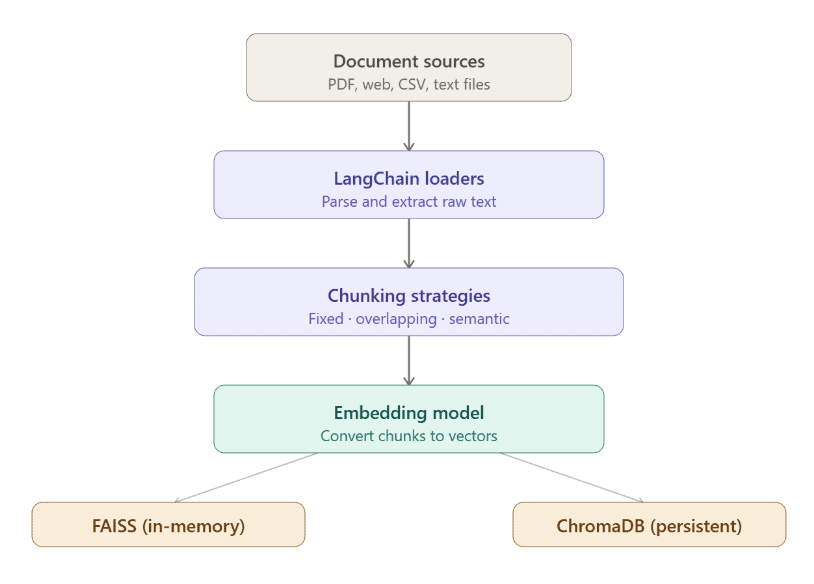
Objective: Gain hands-on experience building the foundational components of a RAG pipeline — loading documents, splitting them into chunks, embedding those chunks, and storing them in both FAISS and ChromaDB vector stores.
In this lab, you will load documents from different sources using LangChain loaders, experiment with chunking strategies — fixed size, overlapping, and semantic — to understand how chunk size affects retrieval quality. You will then embed the chunks and index them in FAISS for fast in-memory search and ChromaDB for persistent storage, and run queries against both to compare their behaviour.
By the end of this lab, you will understand every stage of the RAG ingestion pipeline and know how to make informed decisions about chunking and vector store selection for different use cases.
Lab 10 : End-to-End RAG with LangChain LCEL: Citations, Source Attribution
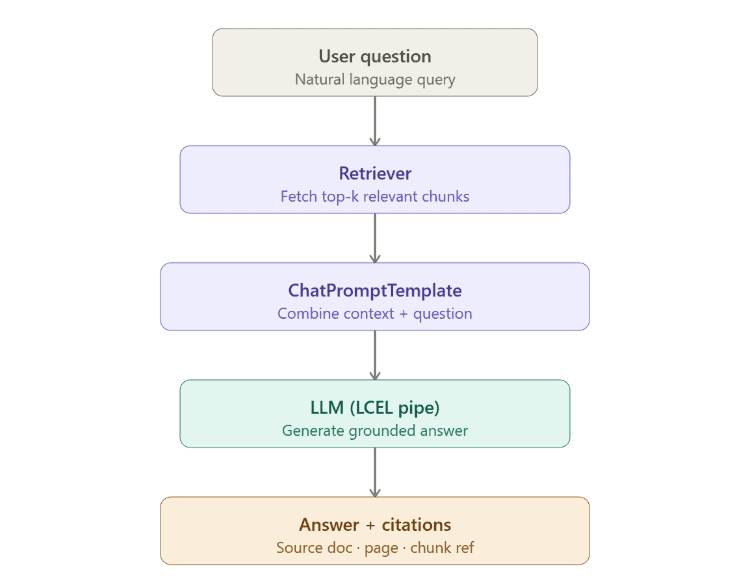
Objective: Gain hands-on experience building a complete RAG system using LangChain LCEL that not only answers questions from a document corpus but also cites the exact sources it used — making every response transparent and verifiable.
In this lab, you will chain together a retriever, a prompt template, and an LLM using LCEL’s pipe operator to build a clean, readable RAG pipeline. You will then add source attribution so every answer includes the document name, page number, or chunk reference it was drawn from — and handle cases where the retrieved context isn’t sufficient to answer the question reliably.
By the end of this lab, you will have a production-style RAG pipeline with full citation support — one you can extend directly into Project 1 and the retrieval strategy labs that follow.
Lab 11 : Retrieval Strategies: Hybrid (BM25+Vector), Parent-Child, Multi-Query, Cross-Encoder Reranking
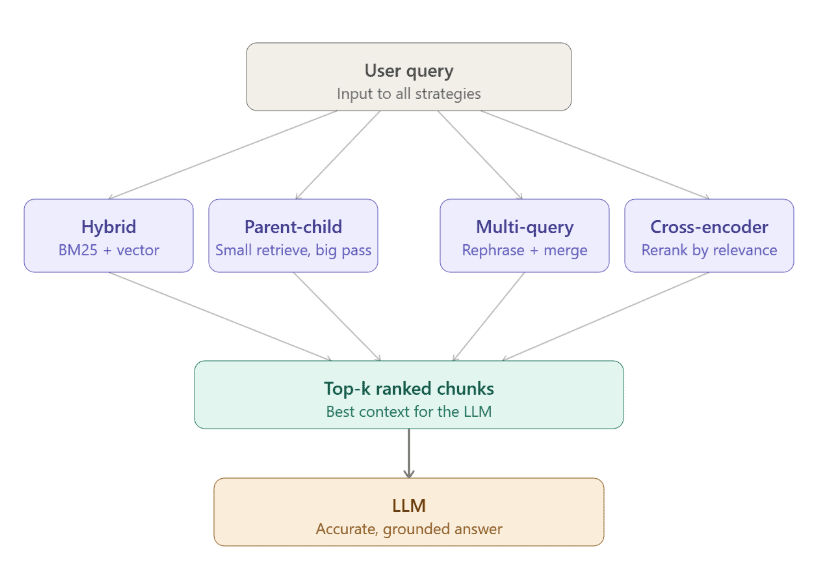
Objective: Gain hands-on experience with four advanced retrieval strategies that go beyond basic vector search to significantly improve the relevance and accuracy of what gets passed to the LLM.
In this lab, you will implement hybrid retrieval that combines BM25 keyword search with vector similarity so neither exact-match nor semantic queries are missed. You will set up parent-child chunking so small chunks are retrieved for precision but larger parent chunks are passed to the LLM for context. You will use multi-query retrieval to generate multiple rephrasings of the same question and merge the results, and finally apply a cross-encoder reranker to re-score retrieved chunks by true relevance before they reach the model.
By the end of this lab, you will know how to diagnose retrieval weaknesses in a RAG system and apply the right strategy to fix them.
Lab 12 : ReAct Agent Fundamentals: @tool Decorator, Tool Schemas, create_react_agent, Agent Loop Walk-Through
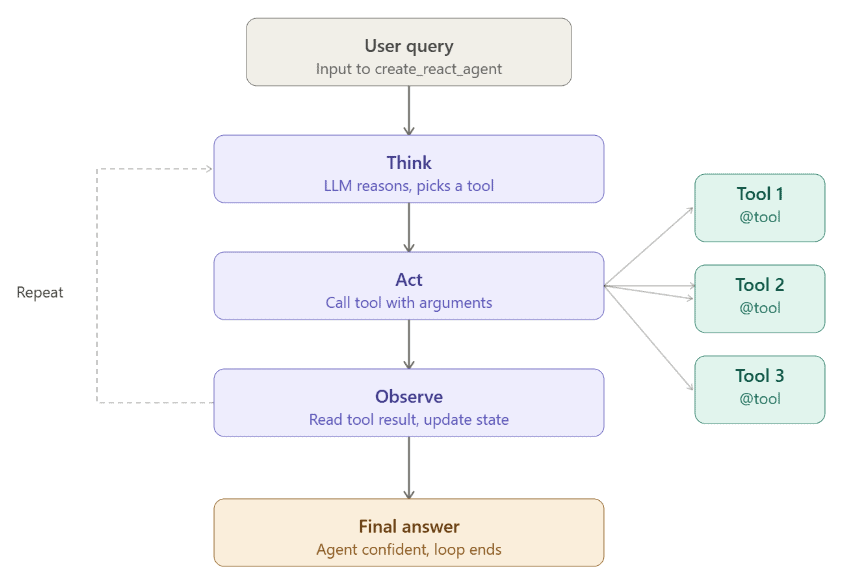
Objective: Gain hands-on experience building your first ReAct agent using LangChain — understanding how an agent decides when to use a tool, how it reasons between steps, and how the think → act → observe → repeat loop actually works under the hood.
In this lab, you will define custom tools using the @tool decorator and write tool schemas that tell the agent what each tool does and what inputs it expects. You will initialise an agent using create_react_agent, connect it to your tools, and run it against real queries.
By the end of this lab, you will understand how a ReAct agent thinks and acts, how tools extend what an LLM can do beyond its training data.
Lab 13 : LangGraph Routing: Spine A Begins
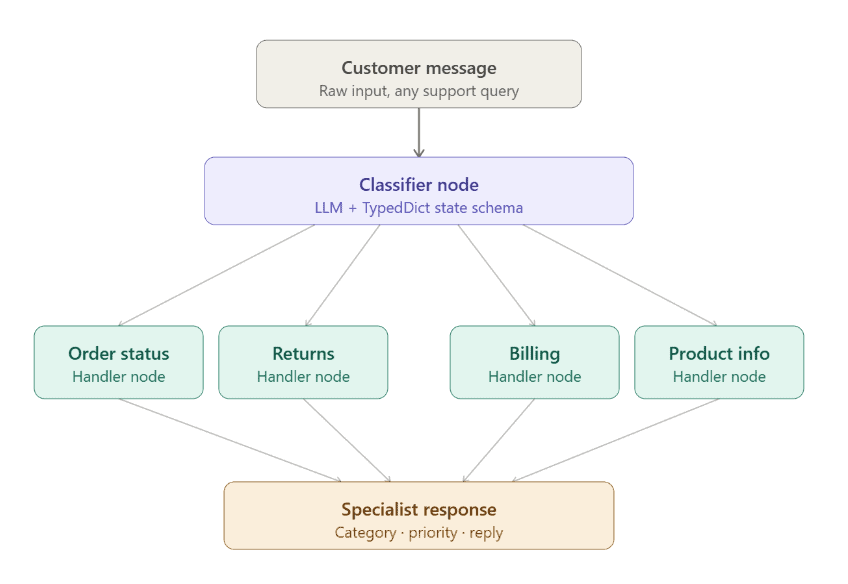
Objective: Gain hands-on experience with LangGraph’s core routing pattern — building a conditional graph that reads an input, classifies it, and directs the flow to the right node based on the decision, marking the first step of the Spine A customer support system.
In this lab, you will define a shared state schema using TypedDict, build a classifier node that uses an LLM to categorise incoming messages, and wire up conditional edges using add_conditional_edges so each category routes to its own specialist handler. You will compile the graph, visualise the flow, and test it with real queries to confirm the routing logic works correctly before any further complexity is added.
By the end of this lab, you will have the foundational routing layer of Spine A up and running — a working LangGraph graph that intelligently directs any incoming message to the right handler, ready to be extended in the sessions that follow.
Related Readings:- Understanding RAG with LangChain
Lab 14 : Prompt Chaining + Quality Gates
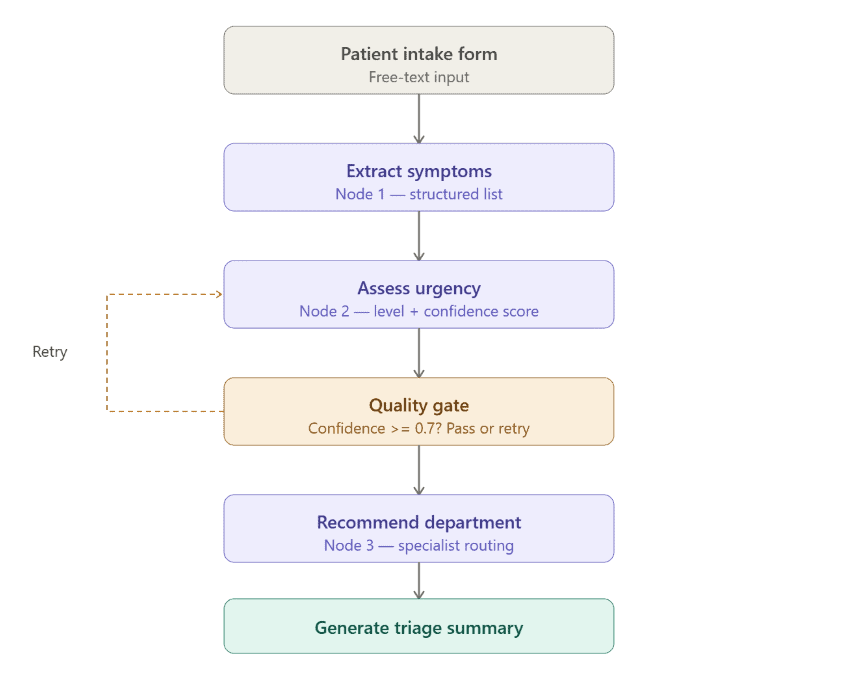
Objective: Gain hands-on experience building a sequential prompt chaining pipeline with automated quality gates that validate each step’s output before passing it to the next.
In this lab, you will break a complex task into a chain of focused LLM nodes where each step’s output feeds directly into the next step’s input. You will add a quality gate between steps that evaluates a confidence score and either passes the output forward or triggers an automatic retry with additional context – all using LangGraph’s conditional edges and pure Python logic with no extra LLM call needed for the check itself.
By the end of this lab, you will know how to design self-correcting pipelines that catch low-quality outputs early.
Lab 15 : Parallelization: Fan-Out / Fan-In with Send API
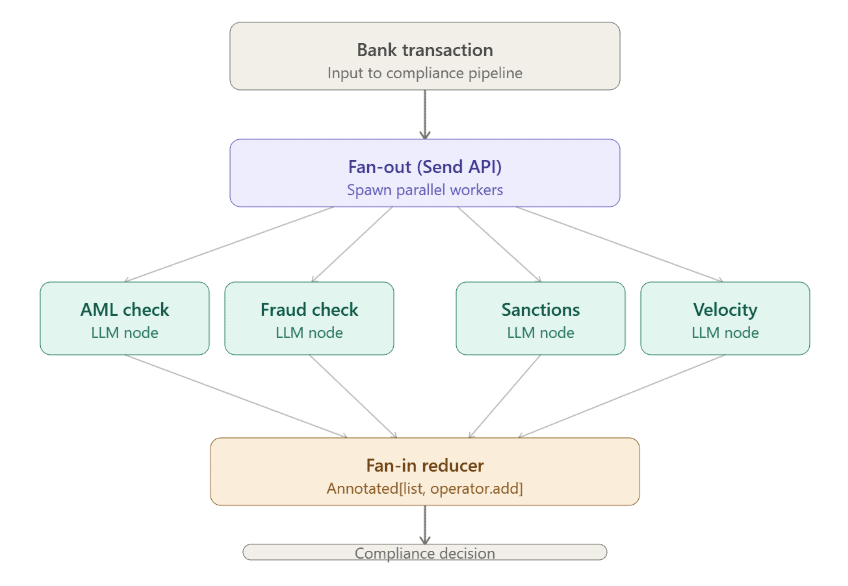
Objective: Gain hands-on experience running multiple LangGraph nodes simultaneously using fan-out / fan-in patterns — both with static parallel edges for a fixed number of tasks and with the Send API for a dynamic number of workers decided at runtime.
In this lab, you will start with a sequential baseline graph and progressively convert it to run independent nodes in parallel, using LangGraph’s reducer (Annotated[list, operator.add]) to safely merge results from multiple nodes writing to the same state field. You will then implement a real compliance checker that runs four LLM-powered checks simultaneously on a bank transaction, and finish with a dynamic fan-out using the Send API where the number of parallel workers is determined by the data, not hardcoded into the graph.
By the end of this lab, you will have two parallelization patterns in your toolkit — static fan-out for known tasks and dynamic fan-out for variable workloads.
Related Readings:- Learn about conversational bot
Lab 16 : HITL + Memory: Spine A Grows
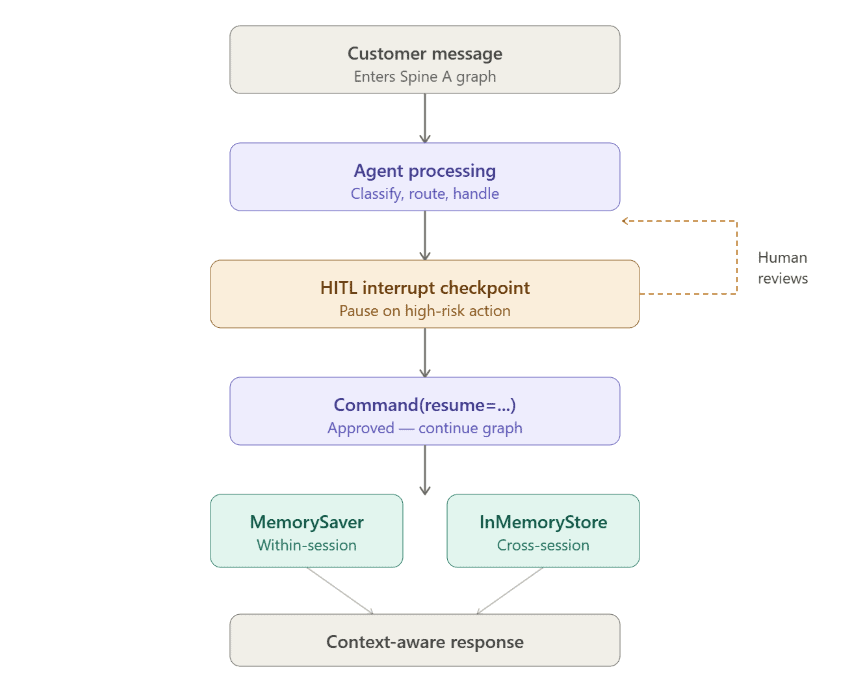
Objective: Gain hands-on experience adding Human-in-the-Loop (HITL) checkpoints and persistent memory to the Spine A customer support graph.
In this lab, you will use LangGraph’s interrupt to pause the graph at a designated checkpoint and wait for a human to review and approve or reject the agent’s proposed action before execution continues using Command(resume=…). You will then add MemorySaver for short-term within-session memory and InMemoryStore for long-term cross-session memory.
By the end of this lab, Spine A will have two critical production-grade capabilities – the ability to involve a human when stakes are high and the ability to maintain context over time.
Lab 17 : Swarm: E-Commerce Order Lifecycle
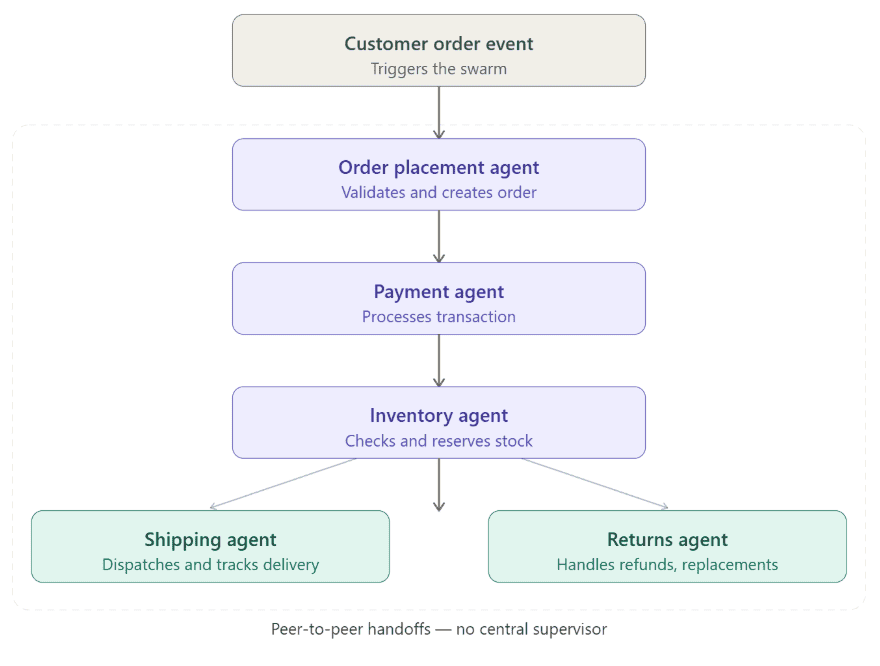
Objective: Gain hands-on experience with LangGraph’s Swarm pattern — building a multi-agent system where peer agents hand off control to each other directly based on what the current situation requires, without a central supervisor coordinating every move.
In this lab, you will build a swarm of specialist agents covering the full e-commerce order lifecycle – order placement, payment processing, inventory check, shipping, and returns. Each agent handles its own domain and hands off to the next relevant agent using peer-to-peer handoffs via create_swarm.
By the end of this lab, you will understand when the Swarm pattern is the right choice over a Supervisor, how to design clean peer-to-peer handoffs between specialist agents.
Lab 18 : Reflection: Content Quality Pipeline
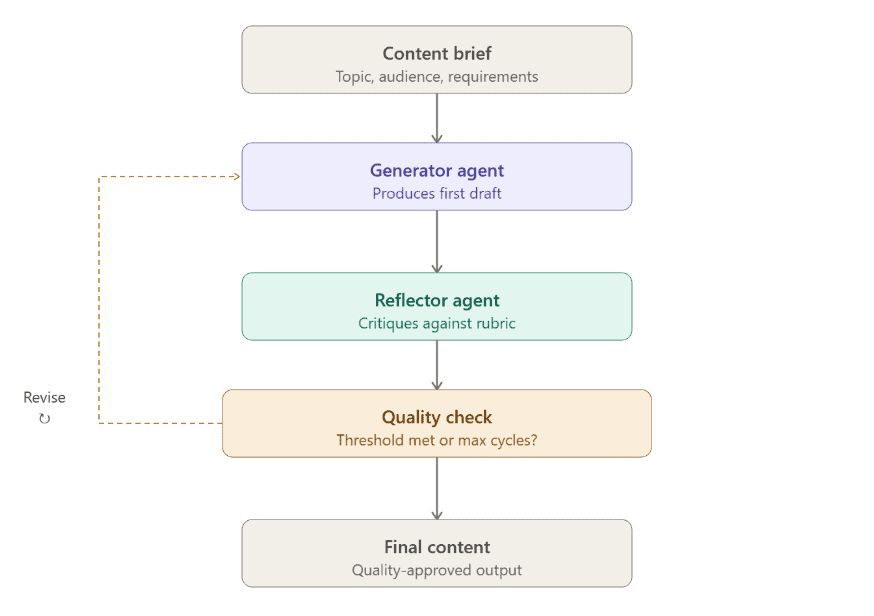
Objective: Gain hands-on experience implementing the Reflection pattern — where an LLM agent critiques its own output, identifies weaknesses, and iteratively improves the result until it meets a defined quality standard.
In this lab, you will build a content quality pipeline where a generator agent produces a first draft, a reflector agent evaluates it against a rubric and produces structured feedback, and the generator uses that feedback to revise the output.
By the end of this lab, you will have a working reflection loop you can plug into any content generation workflow, and a clear understanding of how self-critique drives quality improvement in agentic systems without any human involvement. You can also pair the workflow with an AI content detector to evaluate generated outputs and identify areas that may require further refinement.
Related Readings:- Claude Code vs GitHub Copilot vs Cursor: Which AI Coding Assistant Should You Learn?
Lab 19 : OpenAI Agents SDK: Agents, Tools, Handoffs, Guardrails, Tracing (Banking)
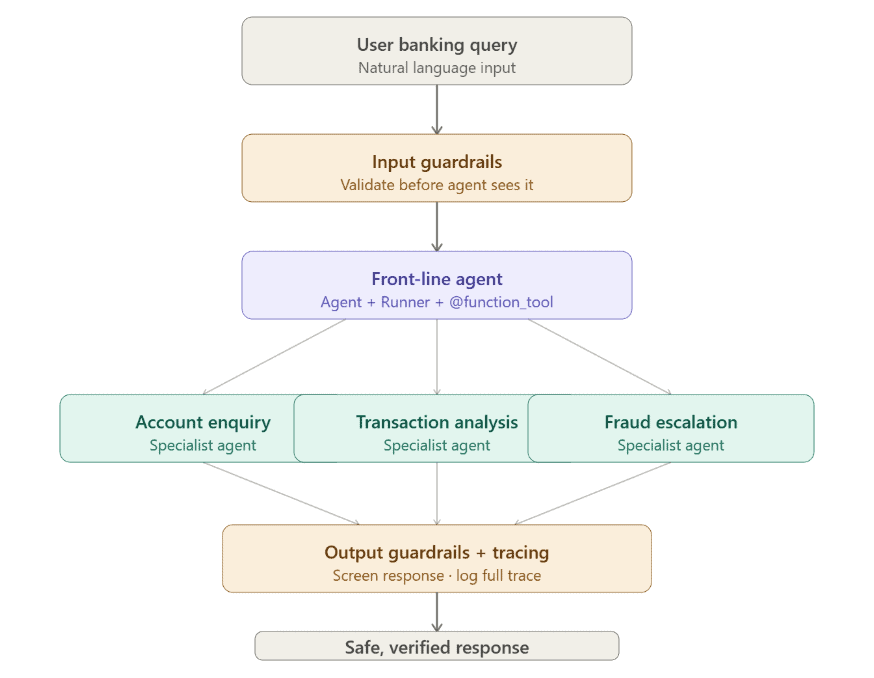
Objective: Gain hands-on experience building a banking agent system using the OpenAI Agents SDK – covering agent creation, custom tool attachment, agent-to-agent handoffs, input/output guardrails, and end-to-end tracing of every decision the system makes.
In this lab, you will build a set of specialist banking agents — account enquiry, transaction analysis, and fraud escalation — using the Agent and Runner classes and attach custom tools with the @function_tool decorator.
By the end of this lab, you will have a working multi-agent banking system built entirely on the OpenAI Agents SDK and a practical understanding.
Lab 20 : Real-Time Voice Agent: Banking IVR (Realtime API, VAD, Interruptions)
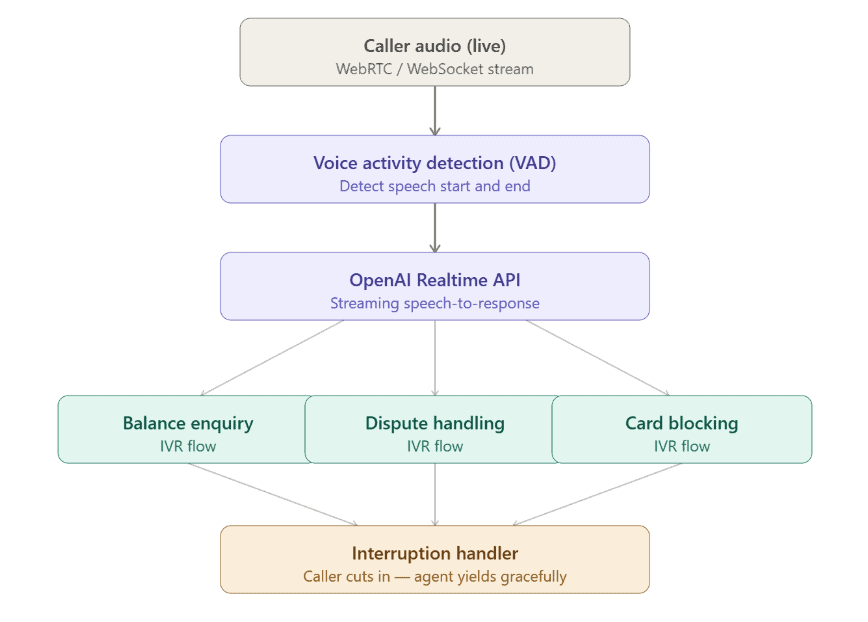
Objective: Gain hands-on experience building a real-time voice agent for a banking IVR system using OpenAI’s Realtime API — handling live audio input, voice activity detection, and natural mid-conversation interruptions the way a real phone support system would.
In this lab, you will connect to the Realtime API, configure semantic voice activity detection (VAD) so the agent knows when the caller has finished speaking, and handle interruptions gracefully when a caller cuts in before the agent finishes responding. You will build IVR flows for common banking tasks.
By the end of this lab, you will have a working voice-enabled banking agent that listens, responds, and handles interruptions in real time — and a clear mental model of what it takes to move from text-based agents to live voice interactions.
Related Readings: MLOps, AIOps and different -Ops frameworks
Lab 21 : AutoGen Group Chat + 4-Framework Showdown
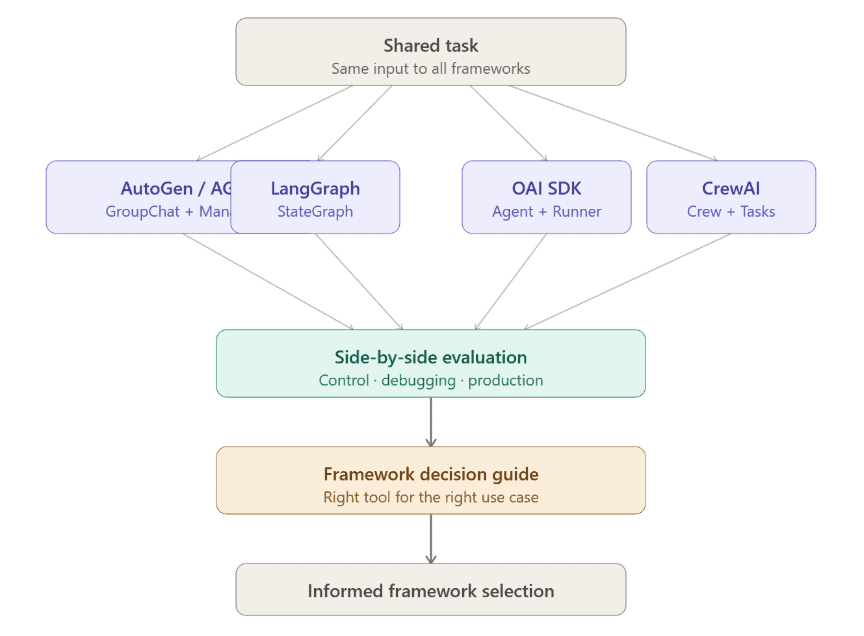
Objective: Gain hands-on experience building a multi-agent group chat using AutoGen/AG2 and directly comparing it against LangGraph, OpenAI Agents SDK, and CrewAI — understanding the real trade-offs between each framework across control, debugging, and production readiness.
In this lab, you will set up a ConversableAgent group with a GroupChatManager that coordinates turn-taking between specialist agents, run a shared task through the group, and observe how AutoGen’s conversation-driven coordination differs from the graph-based and supervisor-based approaches you have already built.
By the end of this lab, you will have first-hand experience with all four major agentic frameworks and a clear decision framework for choosing the right one based on your use case – rather than defaulting to whichever you learned first.
Lab 22 : Context Window Management & Compaction: Spine A Upgrade
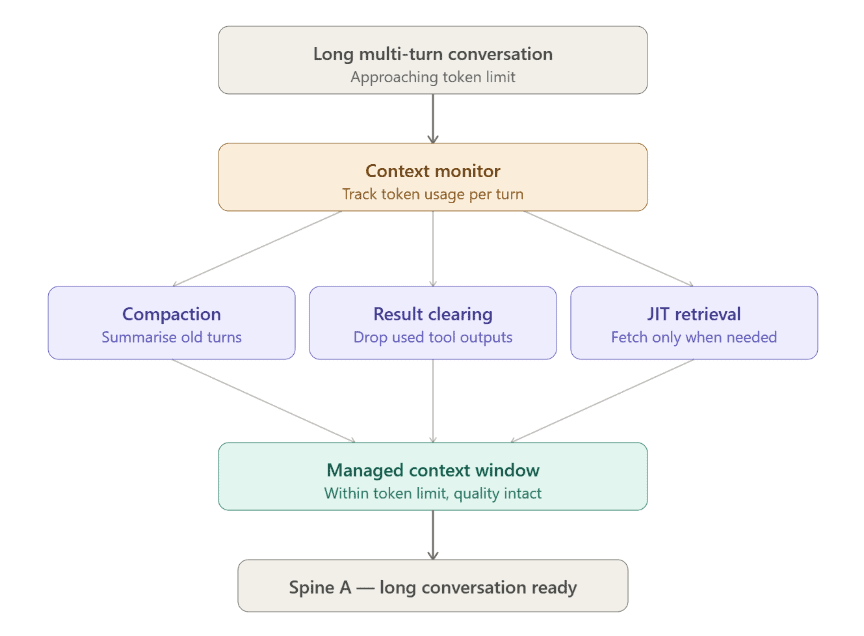
Objective: Gain hands-on experience managing context window limits in production agents – implementing compaction strategies, tool-result clearing, and just-in-time retrieval.
In this lab, you will upgrade the Spine A customer support agent to handle extended multi-turn conversations gracefully. You will implement context compaction that summarises older parts of the conversation when the window fills up, clear large tool results after they have been used, and switch from pre-fetching all context upfront to retrieving only what is needed at each step.
By the end of this lab, Spine A will handle long-running conversations reliably without truncation errors or quality degradation – and you will have a practical toolkit of context engineering techniques applicable to any production agent.
Related Readings:- Claude Code for AI/ML Engineers: Should You Invest the Time? Honest 2026 Worth-It Breakdown
Lab 23 : Reusable Skills + Prompt Optimization
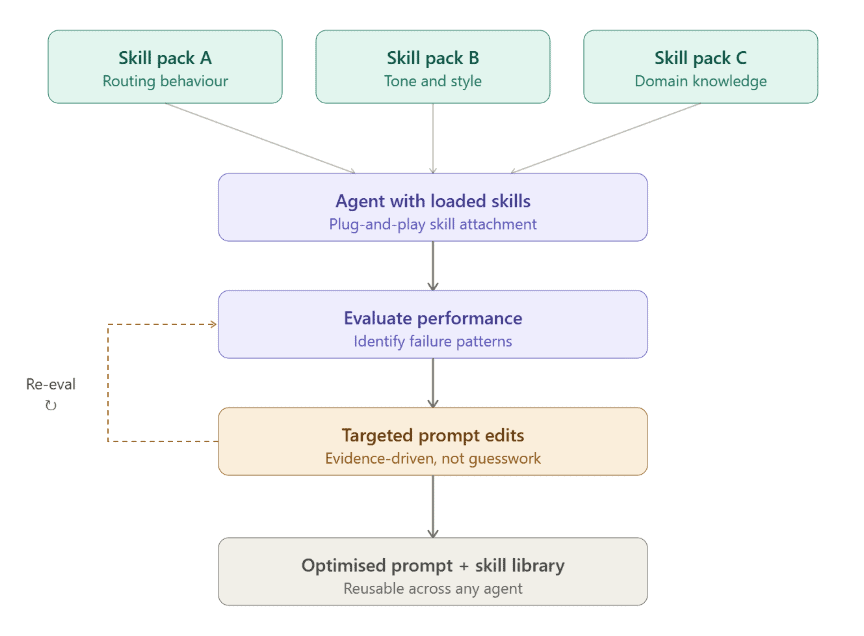
Objective: Gain hands-on experience building reusable skill packs — modular instruction sets that can be loaded into any agent — and applying a systematic prompt optimisation loop that improves agent behaviour based on evaluation results rather than guesswork.
In this lab, you will package frequently used agent behaviours into reusable skill modules that can be attached to any agent with minimal code changes. You will then run a prompt optimisation loop – evaluating current prompt performance, identifying failure patterns, making targeted edits, and re-evaluating.
By the end of this lab, you will have a library of reusable agent skills and a repeatable process for improving prompt performance systematically – replacing trial-and-error with a structured, evidence-driven optimisation workflow.
Lab 24 : Agent Eval Suite: 3 Grader Types, pass@k — Spine A Upgrade
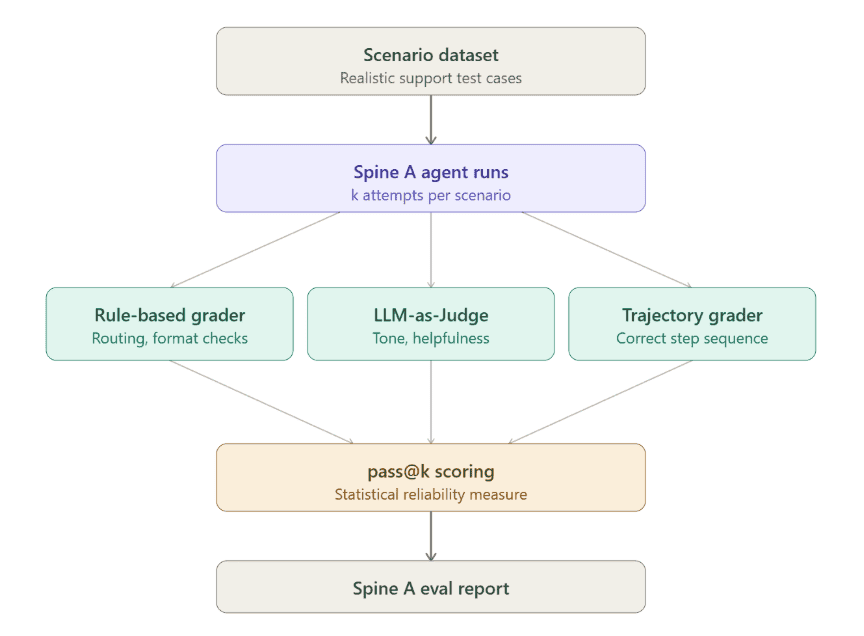
Objective: Gain hands-on experience building a comprehensive agent evaluation suite using three grader types – rule-based, LLM-as-Judge, and trajectory.
In this lab, you will build an evaluation harness that tests Spine A against a dataset of realistic support scenarios. You will write rule-based graders for deterministic checks like correct routing and response format, LLM-as-Judge graders for subjective quality assessments like tone and helpfulness, and trajectory graders that evaluate whether the agent took the right sequence of steps to reach its answer – not just whether the final output looks correct.
By the end of this lab, you will have a production-grade eval suite for Spine A and a clear understanding of how to measure agent performance rigorously — moving beyond ad-hoc testing to repeatable, comparable evaluations.
Related Readings: AI Agents vs Human Agents: Key Differences & Benefits in Modern Business
Lab 25 : RAG Evaluation with RAGAS: Project 1 Upgrade
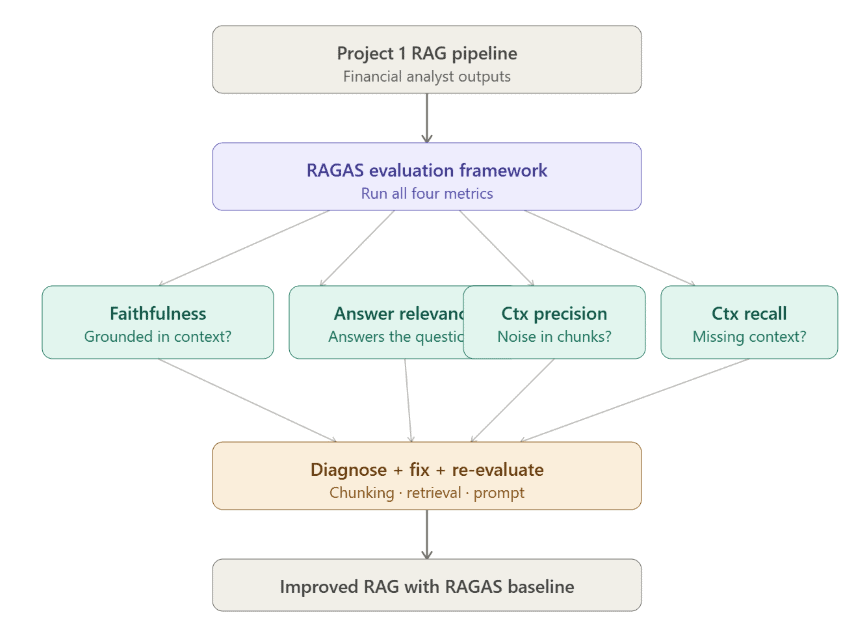
Objective: Gain hands-on experience evaluating the quality of a RAG system using RAGAS – measuring faithfulness, answer relevancy, context precision, and context recall to identify exactly where the pipeline is underperforming and fix it.
In this lab, you will run the Project 1 Financial Analyst RAG pipeline through the full RAGAS evaluation framework. You will measure whether the generated answers are faithful to the retrieved context, whether the retrieved chunks are actually relevant to the question, and whether important context is being missed at retrieval time.
By the end of this lab, Project 1 will have a measurable quality baseline with RAGAS scores across all four metrics, and you will know how to use evaluation data to drive concrete pipeline improvements rather than relying on subjective judgement.
Lab 26 : 4-Layer Guardrails: Input Sanitization → Presidio PII → Output Safety → HITL — Spine A Upgrade
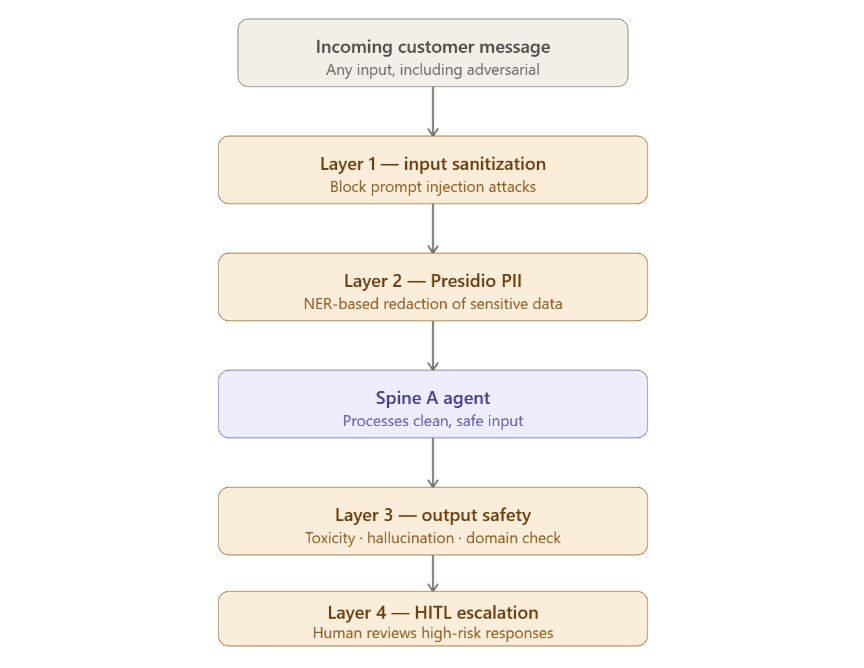
Objective: Gain hands-on experience building a 4-layer guardrail stack on top of Spine A – protecting the system from malicious inputs.
In this lab, you will implement each guardrail layer in sequence. The first layer sanitizes incoming messages to detect and block prompt injection attacks. The second layer runs Microsoft Presidio’s NER-based PII detection. The third layer screens the agent’s output for toxicity, hallucinated claims, and domain-constraint violations. The fourth layer flags responses that cross a risk threshold and routes them through a HITL interrupt for human review before delivery.
By the end of this lab, Spine A will have a production-grade safety envelope around it.
Related Readings:- Is Claude Code Worth Learning for Cloud Engineers? Salary Impact, Time-to-ROI, and Best Resources
Lab 27 : LangSmith + Langfuse Observability: Spine A Upgrade
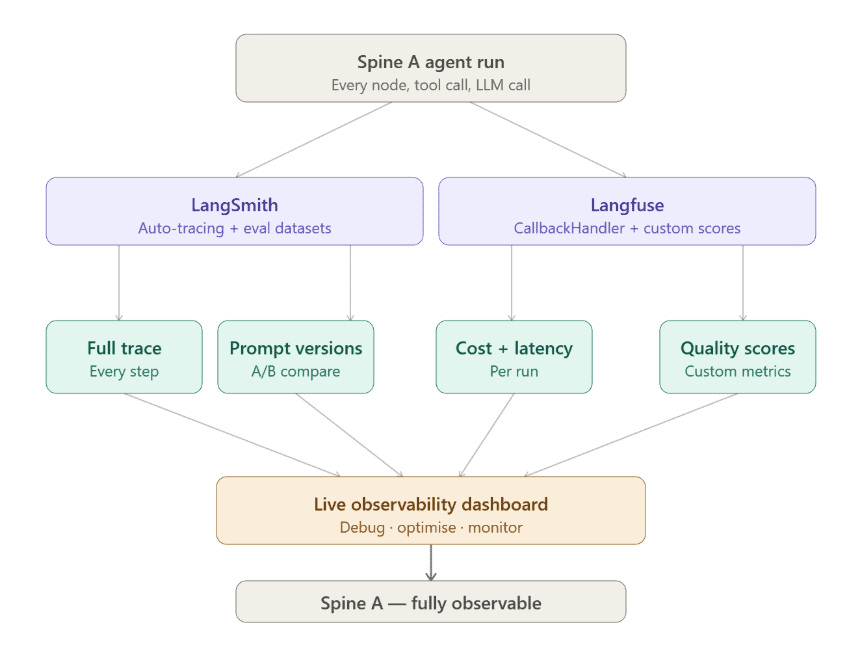
Objective: Gain hands-on experience adding full observability to Spine A using LangSmith and Langfuse – so every agent run is automatically traced, evaluated, and monitored for cost, latency, and quality without changing the core agent code.
In this lab, you will enable LangSmith auto-tracing on Spine A to capture the full execution trace of every run – every node, every LLM call, every tool invocation – and use it to compare prompt versions and build evaluation datasets directly from production traffic.
By the end of this lab, Spine A will have end-to-end observability across both platforms and you will know how to use trace data to debug failures, catch regressions, and make informed decisions about where to optimise.
Lab 28 : MCP & A2A Protocol Deep Dive: FastMCP Server/Client + AgentCard
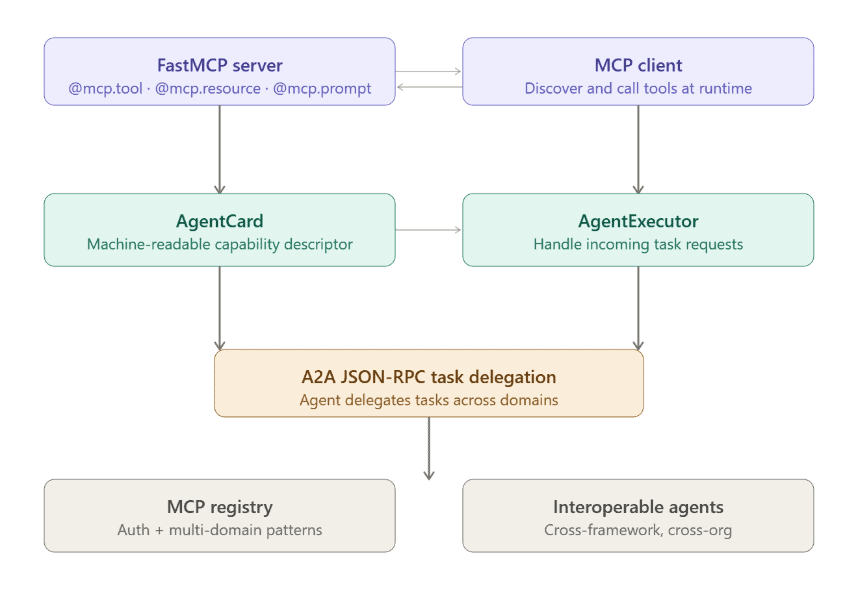
Objective: Gain hands-on experience building a Model Context Protocol (MCP) server and client using FastMCP and implementing the Agent-to-Agent (A2A) protocol so agents can discover, describe, and delegate tasks to each other across domain boundaries.
In this lab, you will build an MCP server using FastMCP’s @mcp.tool, @mcp.resource, and @mcp.prompt decorators to expose agent capabilities as standardised endpoints, then connect a client that discovers and calls those tools at runtime. You will then implement the A2A protocol – creating an AgentCard that describes an agent’s capabilities in a machine-readable format.
By the end of this lab, you will have a working MCP server/client pair and an A2A-enabled agent that can advertise its capabilities and accept delegated tasks.
Lab 29 : Vibe-Code Notebook → Production Stack: FastAPI + nginx + AWS EC2 — Spine A Deployed
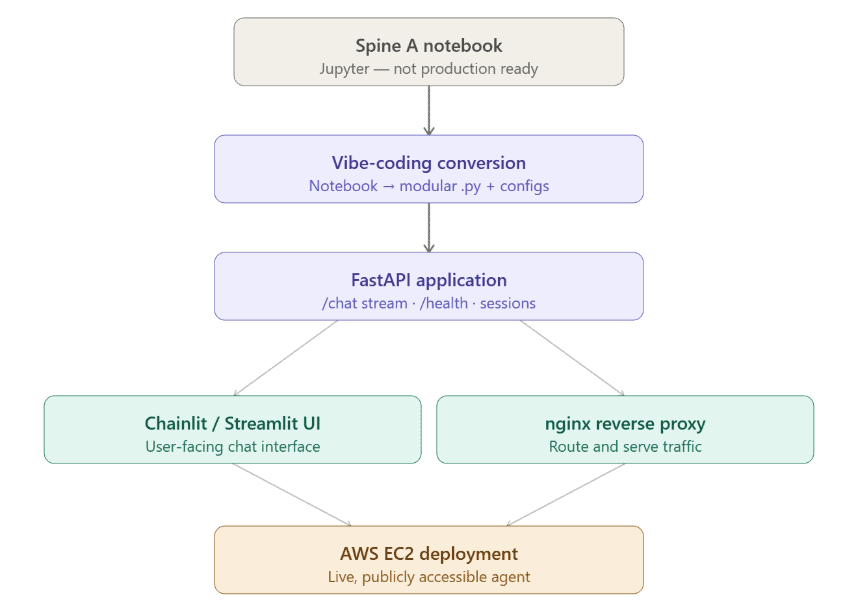
Objective: Gain hands-on experience converting the Spine A Jupyter notebook into a deployable production application.
In this lab, you will use a vibe-coding workflow – working with Claude code or ChatGPT – to convert the Spine A notebook into clean, modular Python files with proper configuration management. You will wrap the agent in FastAPI endpoints including a streaming /chat route, a /health check, and session management, then build a simple Chainlit or Streamlit UI on top.
By the end of this lab, Spine A will be running as a live, publicly accessible agent application with the help of AWS EC2.
Capstone Projects
The industry projects provide an opportunity to apply the concepts learned throughout the labs to real-world business use cases. These projects focus on building production-ready Agentic AI solutions using technologies such as RAG, LangGraph, MCP, Multi-Agent Systems, evaluation frameworks, and cloud deployment platforms. This blog includes five enterprise-focused projects. These projects simulate real-world AI engineering and solution architecture scenarios commonly found in banking, insurance, fintech, and customer support environments.
Each project includes a business objective, estimated completion time, difficulty level, and practical outcome. By completing these projects, learners will develop a strong portfolio and gain hands-on experience solving challenges commonly faced by AI Engineers, LLM Engineers, and AWS Solution Architects/Azure Solution Architects.
Project 1 : Financial Analyst Agentic RAG
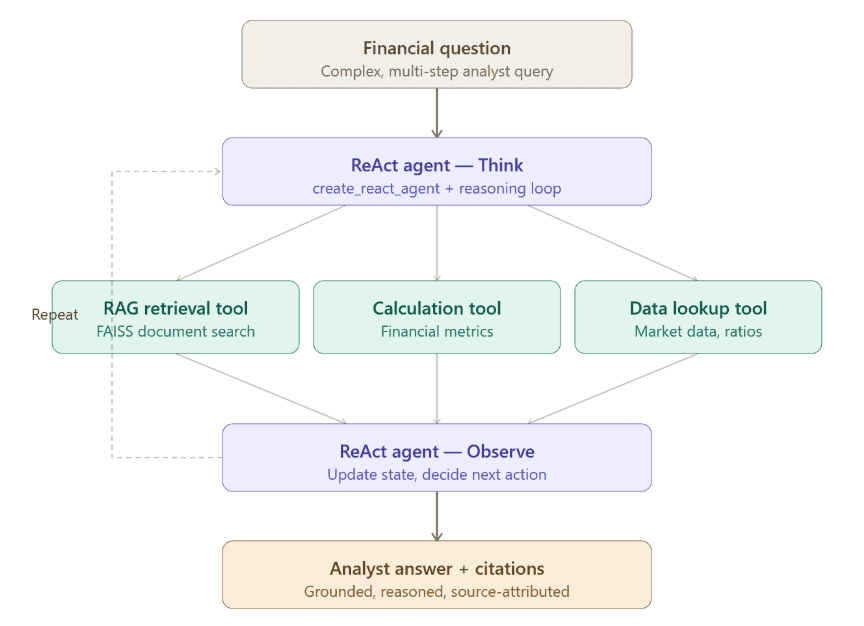
Objective: Build a production-ready Agentic RAG system that acts as an intelligent financial analyst – combining a ReAct agent’s reasoning loop with a RAG retrieval pipeline to answer complex financial questions from real documents, not just training data.
In this project, you will connect the RAG pipeline you built in Module 3 to a ReAct agent built with create_react_agent. The agent will use retrieval as a tool – deciding when to search the document corpus, what to query for, and how to combine multiple retrieved chunks into a reasoned answer.
By the end of this project, you will have a working financial analyst agent that retrieves, reasons, and responds – going beyond simple Q&A to handle multi-step questions that require combining information from multiple sources.
Related Readings:- Agentic AI Protocols: MCP vs A2A vs ACP vs ANP
Project 2 : Customer Support Multi-Agent: Spine A – Supervisor Pattern
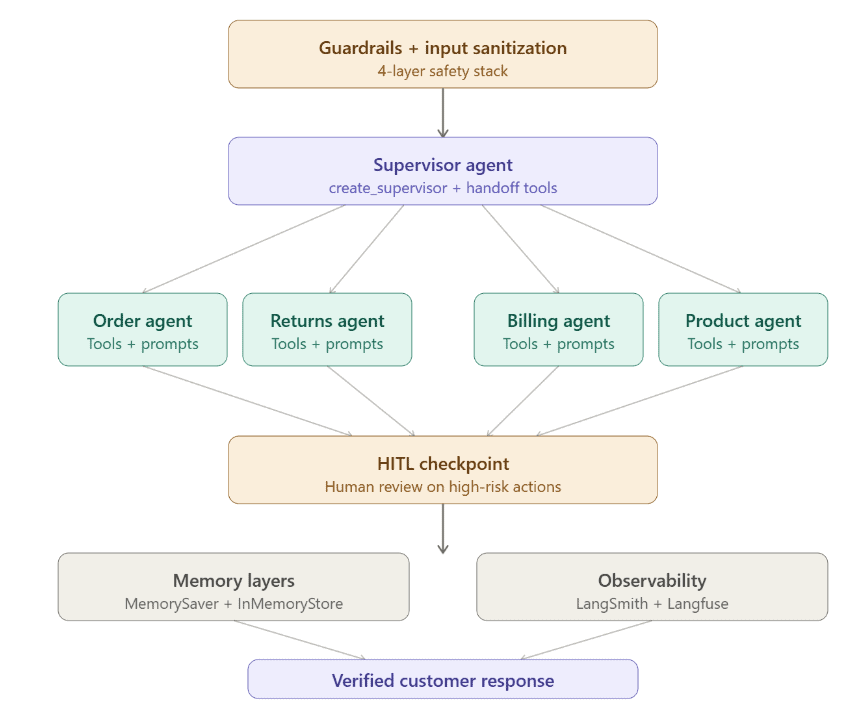
Objective: Build a fully operational multi-agent customer support system using LangGraph’s Supervisor pattern.
In this project, you will bring together everything built across Modules 5–8 into one system. A supervisor agent routes each message to the right specialist – order, returns, billing, or product – each with their own tools and prompts.
By the end of this project, you will have a complete, production-grade customer support agent with routing, safety, memory, and monitoring all wired into one deployable system.
Related Readings:- Claude Code Career Roadmap: Skills Developers and AI Engineers Need in 2026
Project 3 : Compliance Report Generator (Spine B): Orchestrator-Worker + Evaluator-Optimizer
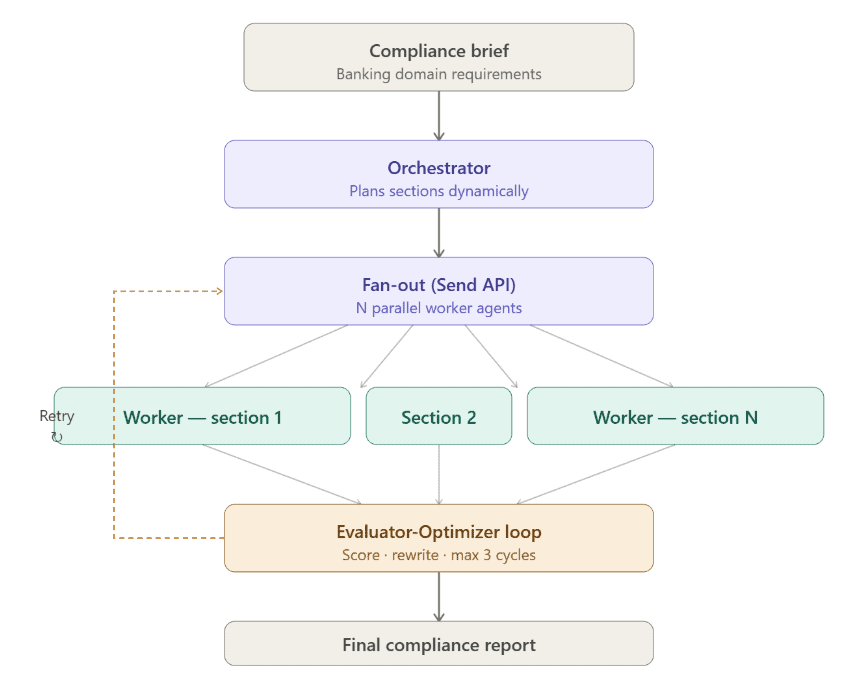
Objective: Build an automated compliance report generation system using LangGraph’s Orchestrator-Worker pattern with an Evaluator-Optimizer loop.
In this project, you will build an orchestrator that reads a compliance brief and fans out to parallel worker agents via the Send API – each writing one report section simultaneously. An evaluator scores each section against a rubric and an optimizer rewrites failing sections up to three cycles before final assembly.
By the end of this project, you will have a fully automated compliance report pipeline that takes a brief and produces a structured, quality-checked report with no manual intervention.
Project 4 : CrewAI Content Pipeline (Fintech)
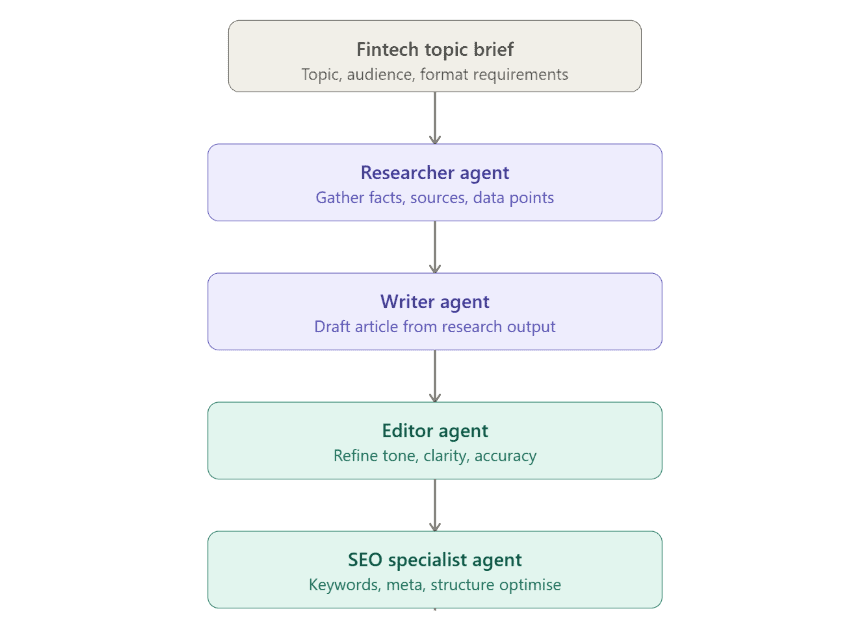
Objective: Build a multi-agent content production pipeline using CrewAI that takes a fintech topic brief and produces a publication-ready article through four specialist agents working in sequence.
In this project, you will define a Crew with a researcher, writer, editor, and SEO specialist – each with their own role, tools, and structured output that feeds directly into the next agent. You will run the full pipeline on real fintech topics and observe how each agent contributes to the final output.
By the end of this project, you will have a fully automated CrewAI pipeline that takes a topic brief and produces a researched, written, edited, and SEO-optimised article ready to publish.
Related Readings:- Claude Code for Solution Architects: Designing and Reviewing Systems with Agentic AI
Project 5 : Secure Insurance Claims + MCP: Spine B Final
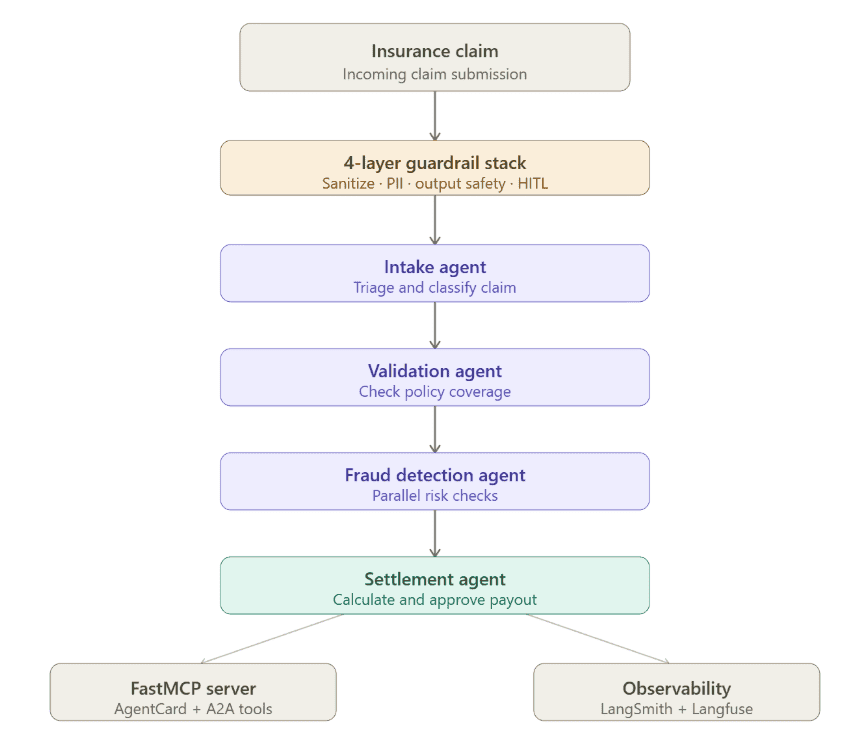
Objective: Build a secure, production-grade insurance claims processing system combining a LangGraph multi-agent pipeline with a FastMCP server.
In this project, you will build a claims pipeline with four agents – intake, validation, fraud detection, and settlement – protected by the full guardrail stack. You will then expose the pipeline via FastMCP, create an AgentCard for A2A task delegation, and add LangSmith and Langfuse observability so every claim is fully traceable.
By the end of this project, you will have a complete, secure, observable claims system with Model Context Protocol (MCP) integration.
Career Opportunities After Learning Agentic AI
Organizations worldwide are actively hiring professionals with Agentic AI expertise.
Companies Hiring Agentic AI Talent
Major employers investing heavily in AI Agents include:
Related Readings:- The Future of AI Agents
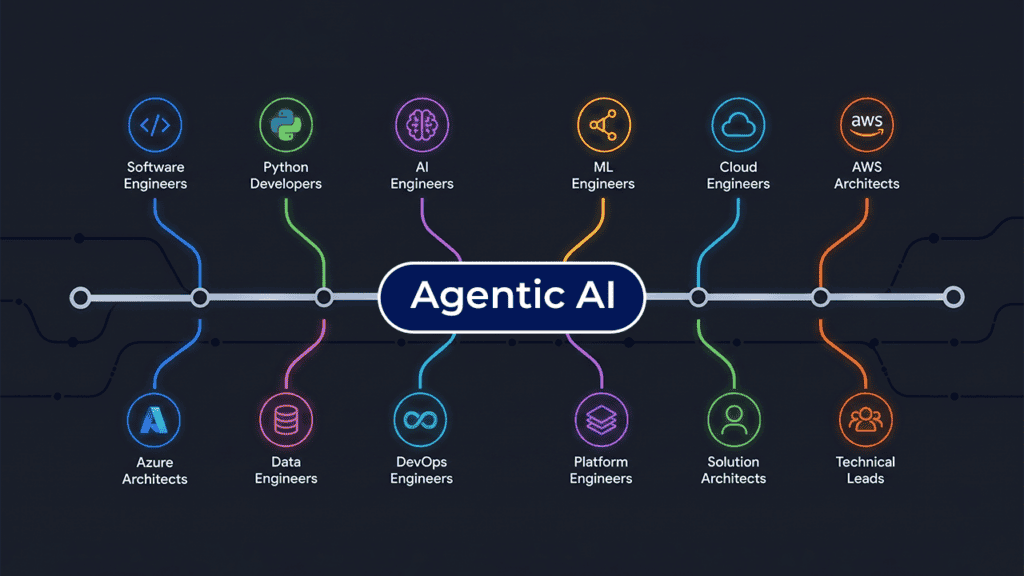
Common job titles include:
8-Week Agentic AI Learning Roadmap
Final Thoughts
The future of AI is not about asking better questions.
It is about building systems capable of achieving goals.
Agentic AI combines LLMs, RAG, MCP, multi-agent collaboration, evaluation frameworks, observability platforms, and production engineering into a single discipline.
Professionals who master these skills will be positioned to lead the next generation of enterprise AI systems across AWS, Azure, banking, healthcare, fintech, cybersecurity, and software engineering.
By completing these 29 hands-on labs and 5 enterprise projects, learners move far beyond prompt engineering and gain the practical experience required to design, build, evaluate, secure, and deploy production-grade AI agents.