




Five years ago, just being a software engineer could have been the stepping stone to a successful career in technology.
Two years ago, machine learning and Python skills made professionals stand out.
Today, inside the AI industry, a new fissure is surfacing.
Companies are pumping money into AI in a big way, including areas like Generative AI, Agentic AI, AI Agents, Large Language Models (LLMs), Retrieval-Augmented Generation (RAG), and LLMOps. But, they are bringing in two very different types of professionals:
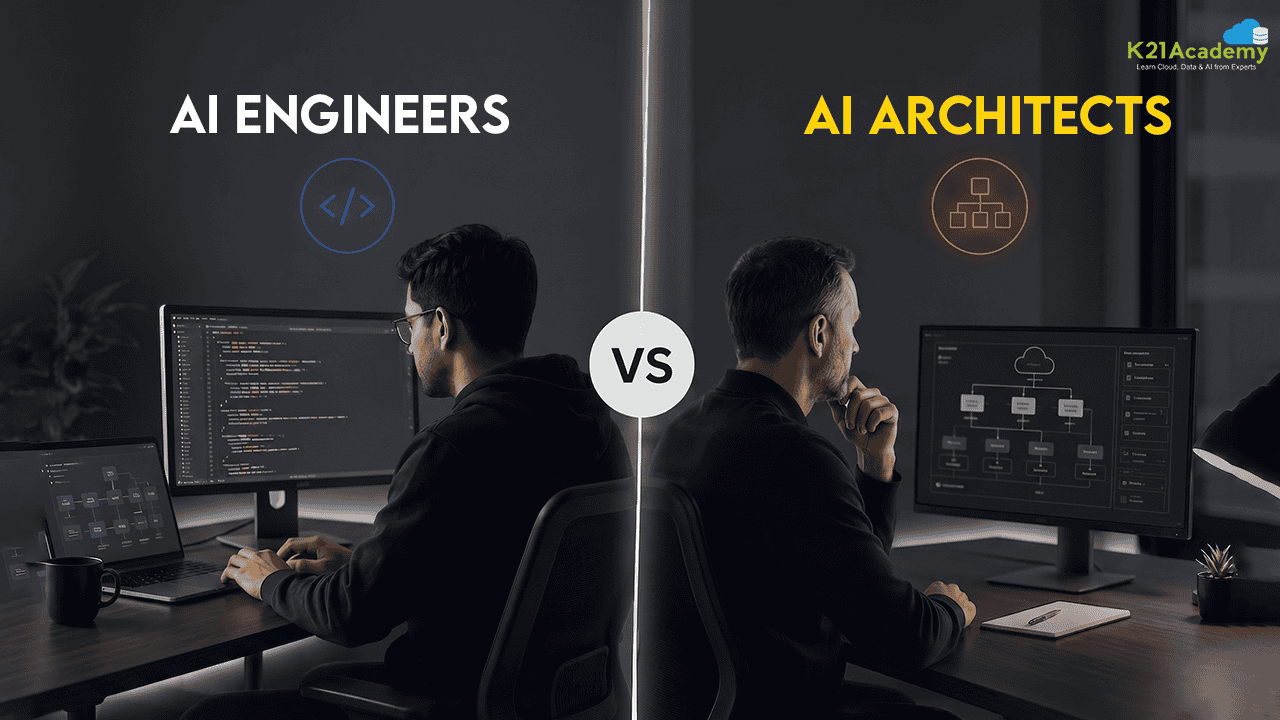
- AI Engineers
- AI Architects
It is a common misconception among IT professionals that these roles are equivalent.
They are actually quite different.
One is all about constructing the AI systems.
The other is concerned with laying out the enterprise-wide AI strategies and architectures.
The distinction might change your salary, career progression, the certifications you choose, your day-to-day work, and even your long-term earning capacity.
If your main work is in software development, cloud computing, AWS, Azure, data engineering, or machine learning, a good grasp of these roles should prevent you from making career mistakes for a long time.

The AI Job Market Is Changing Rapidly
The first wave of AI hiring focused heavily on:
- Machine Learning Engineers
- Data Scientists
- NLP Engineers
- AI Developers
Today, organizations are moving beyond experiments.
They want production-grade AI solutions that integrate with cloud platforms, enterprise applications, databases, APIs, and business workflows.
As a result, demand is increasing for professionals who can:
- Build AI systems
- Design AI platforms
- Manage AI governance
- Implement AI security
- Create Agentic AI architectures
- Deploy scalable AI solutions
This is where AI Engineers and AI Architects play different but equally important roles.
Related Readings:- Claude Code for AI/ML Engineers: Should You Invest the Time? Honest 2026 Worth-It Breakdown
What is an AI Engineer?
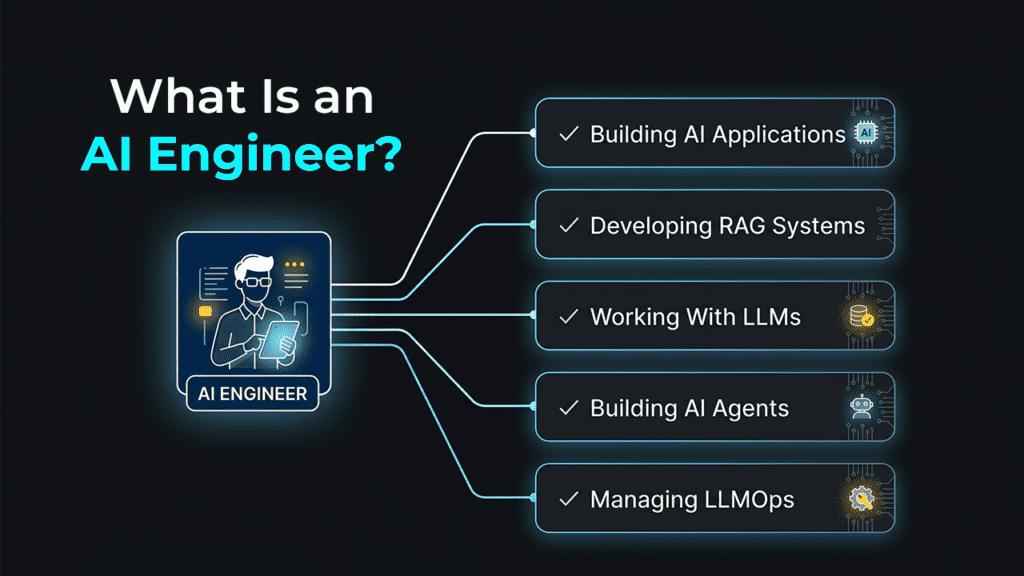
An AI Engineer is a technical professional responsible for building, training, deploying, and maintaining AI-powered systems.
Think of an AI Engineer as the person who turns ideas into working applications.
They write code.
They build models.
They create AI pipelines.
They develop chatbots.
They deploy AI agents.
They integrate APIs.
They solve technical implementation challenges.
An AI Engineer works closer to the technology stack than business strategy.
Core Responsibilities of an AI Engineer
Building AI Applications
Examples include:
- Chatbots
- Virtual assistants
- Recommendation engines
- AI search systems
- Document intelligence solutions
Developing RAG Systems
AI Engineers frequently build:
- Vector databases
- Knowledge retrieval systems
- Semantic search solutions
using technologies such as:
- Pinecone
- Weaviate
- ChromaDB
- Azure AI Search
- Amazon OpenSearch
Related Readings: Claude Code vs GitHub Copilot vs Cursor: Which AI Coding Assistant Should You Learn?
Working With LLMs
Modern AI Engineers use:
- OpenAI models
- Claude models
- Gemini models
- Llama models
to develop enterprise AI applications.
Building AI Agents
Agentic AI is creating significant demand for engineers who understand:
- MCP (Model Context Protocol)
- LangGraph
- CrewAI
- AutoGen
- Semantic Kernel
Managing LLMOps
AI Engineers often handle:
- Model deployment
- Monitoring
- Evaluation
- Performance optimization
- Governance
Skills Required for AI Engineers
Programming
- Python
- SQL
- JavaScript
- API Development
AI Skills
- NLP
- Deep Learning
- Machine Learning
- Prompt Engineering
- RAG
- Fine-Tuning
Cloud Skills
AWS:
- Amazon Bedrock
- SageMaker
- Lambda
- DynamoDB
Azure:
- Azure AI Foundry
- Azure OpenAI
- Azure Machine Learning
- Azure AI Search
AI Frameworks
- LangChain
- LangGraph
- CrewAI
- LlamaIndex
- Semantic Kernel
What is an AI Architect?
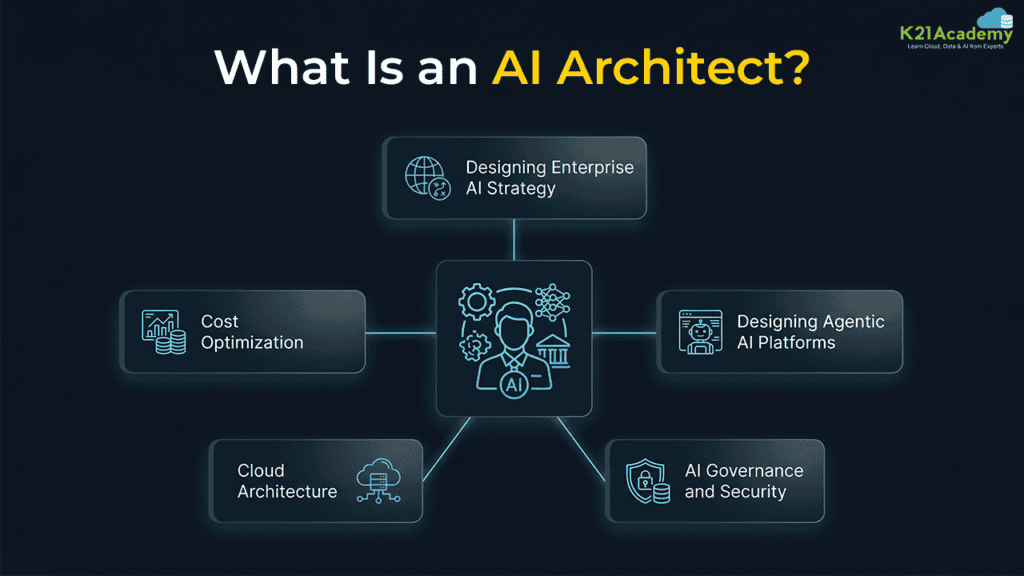
An AI Architect operates at a much higher strategic level.
Instead of focusing primarily on building AI solutions, an AI Architect designs how AI fits into the entire enterprise.
Their responsibility is not just making AI work.
Their responsibility is ensuring AI delivers business value at scale.
AI Architects create the blueprint that AI Engineers implement.
Core Responsibilities of an AI Architect
Designing Enterprise AI Strategy
Questions an AI Architect answers include:
- Which LLM should we use?
- Should we deploy on AWS or Azure?
- How do we manage governance?
- What security controls are required?
- How do we scale AI across departments?
Designing Agentic AI Platforms
AI Architects design systems involving:
- AI Agents
- Multi-agent systems
- MCP integrations
- Enterprise workflows
- Autonomous systems
AI Governance and Security
Modern AI implementations must address:
- Data privacy
- Regulatory compliance
- Responsible AI
- Risk management
Architects often own these decisions.
Cloud Architecture
AI Architects determine:
- Infrastructure design
- Networking
- Security architecture
- High availability
- Disaster recovery
for enterprise AI solutions.
Related Readings: Top 10 Claude Code Use Cases Every Developer Should Know
Cost Optimization
One poorly designed AI solution can cost millions annually.
Architects ensure efficient use of:
- GPU resources
- LLM APIs
- Cloud infrastructure
- Data pipelines
Skills Required for AI Architects
Technical Skills
- AI Engineering
- Machine Learning
- Generative AI
- Agentic AI
- LLMOps
- RAG
Architecture Skills
- Solution Architecture
- Enterprise Architecture
- Cloud Architecture
- Security Architecture
Cloud Expertise
AWS:
Azure:
- Azure AI Foundry
- Azure OpenAI
- Azure Kubernetes Service
- Azure Machine Learning
Leadership Skills
- Stakeholder management
- Project planning
- Technical leadership
- Strategic decision-making
Related Readings:- Is Claude Code Worth Learning for Cloud Engineers? Salary Impact, Time-to-ROI, and Best Resources
AI Engineer vs AI Architect: Detailed Comparison
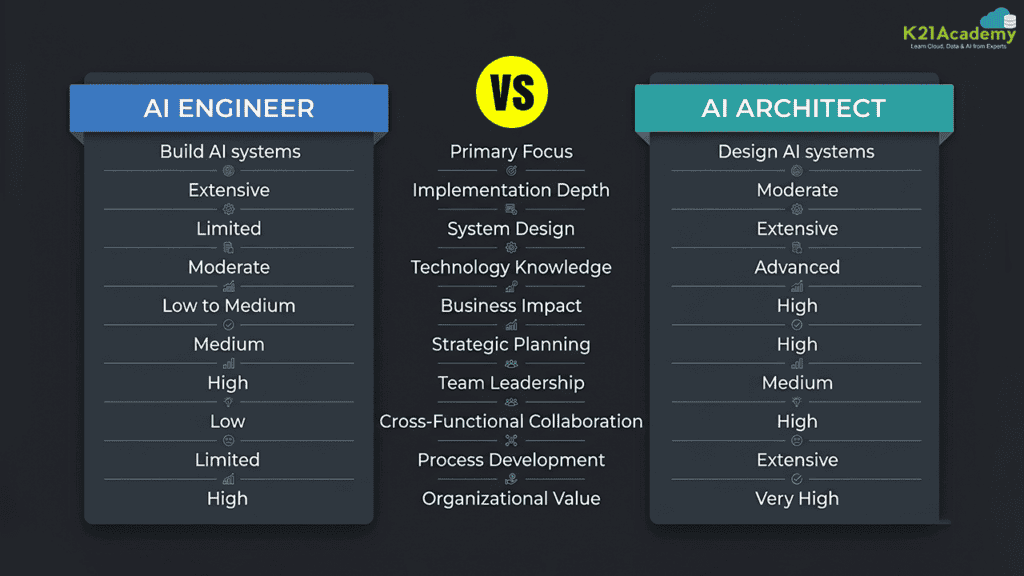
Salary Comparison in India
AI Engineer Salaries
| Experience | Salary Range |
|---|---|
| 0-2 Years | ₹6–15 LPA |
| 3-5 Years | ₹15–30 LPA |
| 5-8 Years | ₹25–45 LPA |
| 8+ Years | ₹40–70 LPA |
AI Architect Salaries
| Experience | Salary Range |
|---|---|
| 5-8 Years | ₹30–60 LPA |
| 8-12 Years | ₹50–90 LPA |
| 12+ Years | ₹80 LPA–₹1.5 Crore+ |
Large enterprises, consulting firms, and global technology companies often pay significantly more.
Global Salary Comparison
| Role | Average Salary |
|---|---|
| AI Engineer | $130K–$220K |
| Senior AI Engineer | $180K–$300K |
| AI Architect | $200K–$350K |
| Principal AI Architect | $300K–$500K+ |
Best Certifications for AI Engineers
Beginner Level
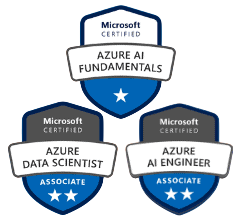
Azure AI Fundamentals
AI-901 Excellent starting point for:
- AI concepts
- NLP
- Computer vision
- Generative AI
AI Practitioner Certification
AIP Cert is ideal for professionals entering AI from cloud, development, or business backgrounds.
Intermediate Level
AI-103: Developing AI Apps and Agents on Azure
AI-103 is one of the most valuable certifications for practical AI implementation.
AWS Machine Learning Engineer
MLA Cert is focuses on real-world machine learning deployment.
Databricks Machine Learning Associate
Useful for AI and data professionals.
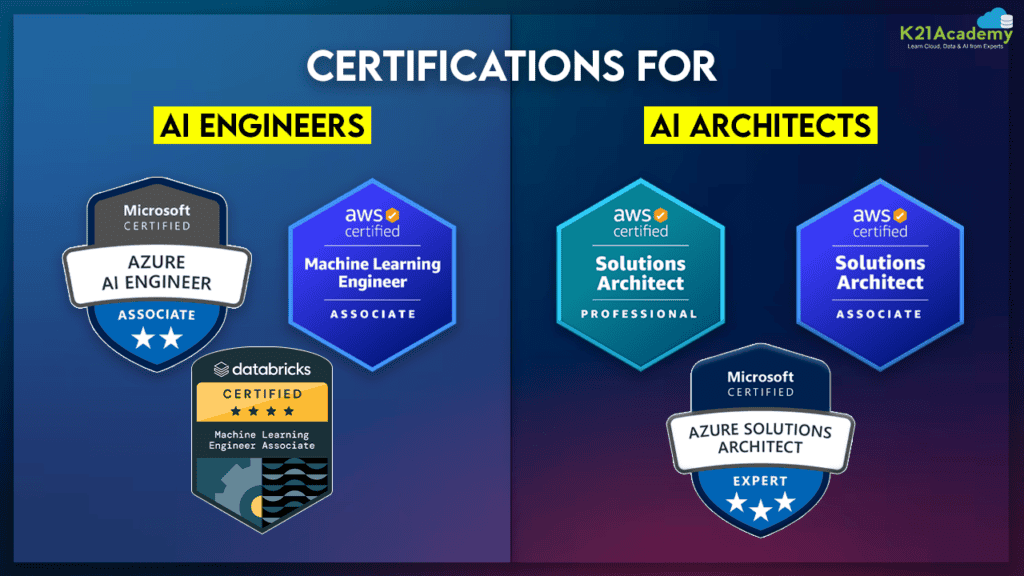
Best Certifications for AI Architects
AWS Solutions Architect Associate
SAA is essential for understanding cloud architecture.
AWS Solutions Architect Professional
AWS SAP is highly respected for enterprise-scale design expertise.
Azure Solutions Architect(AZ-305)
AZ-305 is excellent credential for Microsoft-focused organizations.
Azure Certified Operationalizing Machine Learning and Generative AI Solutions [AI-300]
AI-300 is strong foundation before moving into AI architecture.
Claude Code: Why It Matters for Both Roles
One technology rapidly changing both careers is Claude Code.
For AI Engineers, Claude Code accelerates:
- Python development
- Agent creation
- API integration
- Testing
- Debugging
For AI Architects, Claude Code helps:
- Create architecture prototypes
- Generate technical documentation
- Build proof-of-concepts
- Design AI workflows
Many professionals now consider Claude Code among the best AI coding assistants available in the market.
Related Readings:- Claude Code Career Roadmap: Skills Developers and AI Engineers Need in 2026
Which Role Has Better Long-Term Growth?
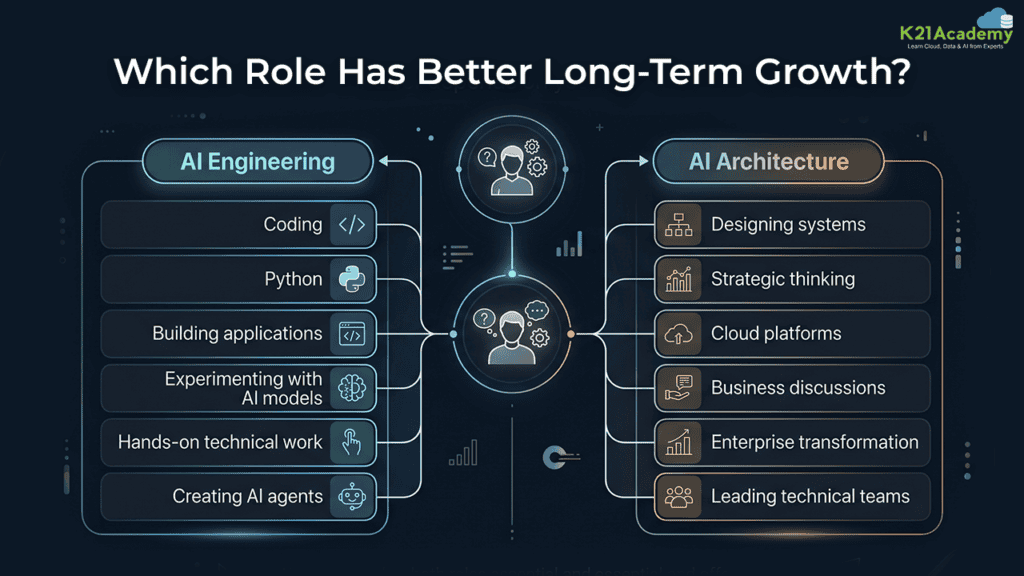
The answer depends on your personality.
Choose AI Engineering If You Enjoy
- Coding
- Python
- Building applications
- Experimenting with AI models
- Hands-on technical work
- Creating AI agents
You will spend most of your day solving technical problems.
Choose AI Architecture If You Enjoy
- Designing systems
- Strategic thinking
- Cloud platforms
- Business discussions
- Enterprise transformation
- Leading technical teams
You will spend more time designing than coding.
Related Readings:- Claude Code for Solution Architects: Designing and Reviewing Systems with Agentic AI
Final Verdict
If you’re early in your career, become an AI Engineer first.
The strongest AI Architects almost always start as engineers because architecture without implementation experience creates knowledge gaps.
Learn Python, NLP, LLMs, RAG, AI Agents, MCP, AWS Bedrock, Azure AI Foundry, and LLMOps.
Build real projects.
Gain hands-on experience.
Then evolve into AI Architecture.
AI Engineers build the future.
AI Architects decide what that future looks like.
Professionals who master both will be among the highest-paid technology leaders of the AI era.