




In today’s competitive landscape, evaluating and comparing the best AI chatbots or conversational ai for your business is essential for success. AI has changed the way that businesses interact with customers, automate processes, and handle large amounts of information. One of the most significant advances in this area is the AI chatbot. Initially simple rule based systems, they have now transformed into smart assistants that can understand the context, create human-like responses, and handle complex tasks.
Nowadays, companies deploy AI chatbots for customer support, sales automation, lead generation, internal knowledge management, and workflow automation. But with so many chatbot platforms on the market, it can be quite a challenge to find the right one.
This article will review some of the leading AI chatbots in the market, analyze their features and assist you in deciding which one suits your business the best.
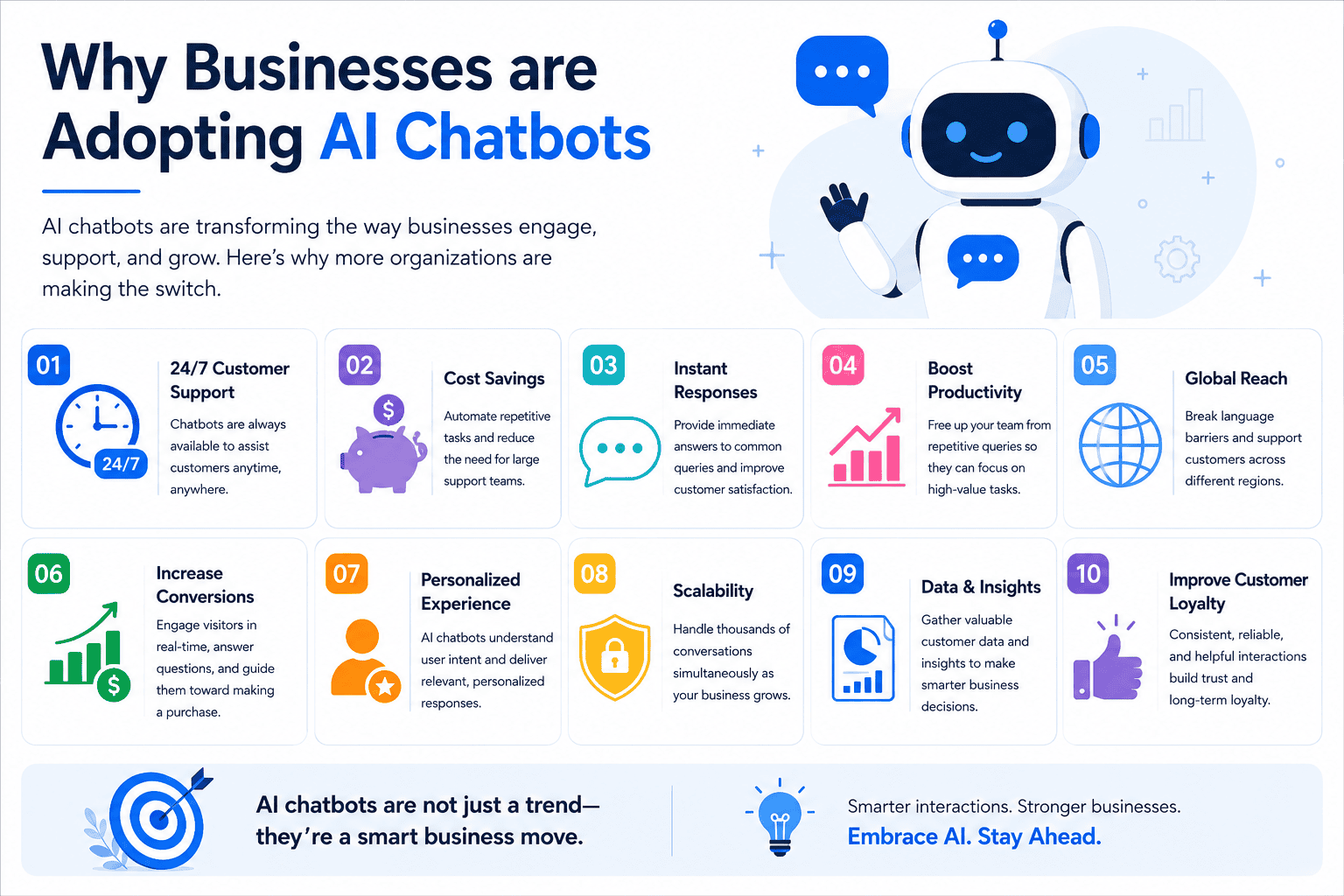
Why Businesses Are Adopting AI Chatbots?
Before comparing different chatbot platforms, it’s important to understand why organizations are rapidly adopting AI chatbots.
1. 24/7 Customer Support
With AI chatbots, companies can offer round the clock instant replies to customers queries. This not only increases customer satisfaction but also eases the burden on human support staff.
2. Automation of Repetitive Tasks
A large number of customer requests are simple questions like order status, account information, or product details. AI chatbots can take care of these usual tasks automatically which free up human agents to concentrate on challenging problems.
3. Improved Customer Engagement
Today’s AI chatbots are capable of providing personalized experiences, suggesting products, and even leading customers through services in a natural dialog.
4. Cost Efficiency
By automating communication and support functions, companies can slash their running expenditures and simultaneously keep the service level up.
Before comparing different chatbot platforms, it is necessary to grasp the reasons why businesses are rapidly embracing AI chatbots.
Related Readings: How to Build Your Own AI Bot in 2026: A Complete Guide
Top AI Chatbots for Businesses
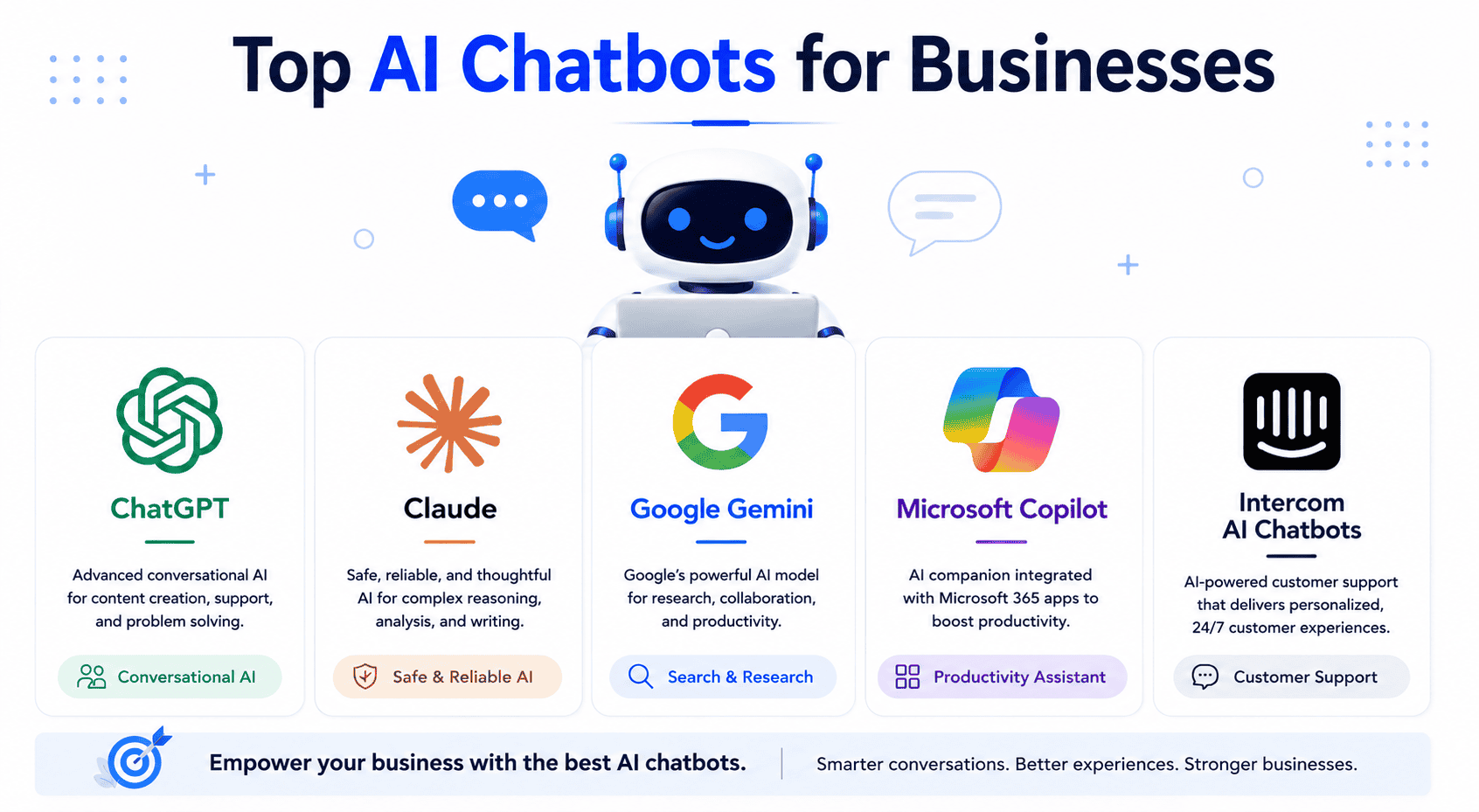
Different chatbots are designed with different strengths. Some focus on advanced reasoning and long conversations, while others excel in enterprise integrations and workflow automation.
Below are some of the most widely used AI chatbot solutions.
1. ChatGPT
One of the most well-known AI chatbots is ChatGPT, developed by OpenAI. It has become popular across industries for its ability to generate natural conversations and assist with a wide range of tasks.
Key Strengths
- Natural and Human-like Conversations
ChatGPT is known for producing high-quality conversational responses, making interactions feel natural and engaging.
- Versatility Across Use Cases
Businesses use it for multiple purposes, including:
- Customer support automation
- Content generation
- Internal knowledge assistants
- Software development assistance
- API Integration
Developers can integrate ChatGPT into websites, applications, and internal systems, enabling companies to build customized AI-powered solutions.
- Best For
Businesses that need flexible AI solutions that can handle multiple types of tasks and integrations.
Related Readings: Generative AI vs Agentic AI: Key Differences
2. Claude
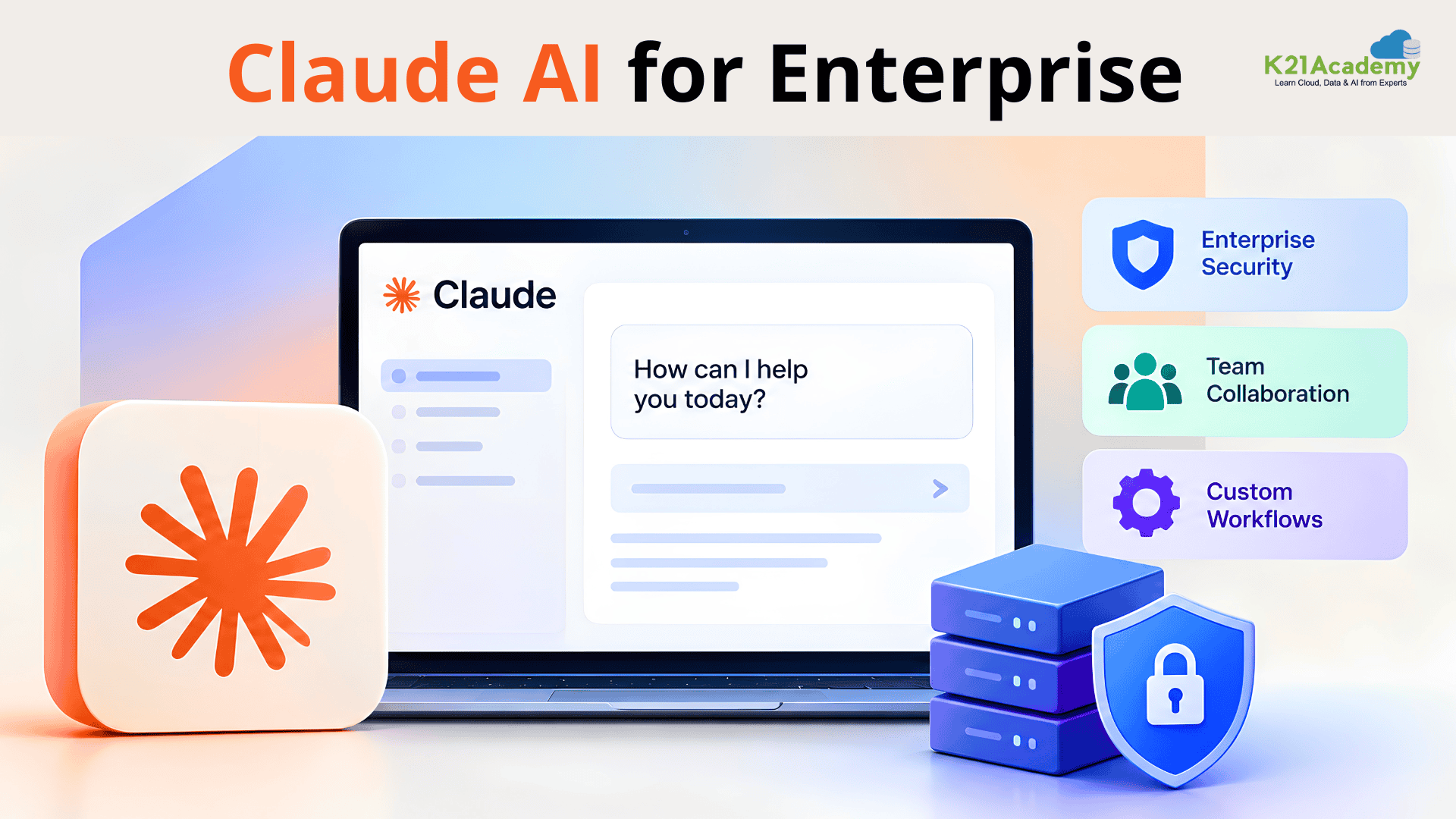
Claude, developed by Anthropic, is another advanced AI chatbot designed with a strong focus on safety, reasoning, and long-context understanding.
Key Strengths
- Strong Context Retention
Claude performs particularly well in long conversations and complex documents, making it useful for research-heavy or documentation-focused workflows.
- Structured and Accurate Responses
Businesses appreciate Claude for its ability to analyze large pieces of information and summarize them clearly.
- Enterprise Safety Focus
Claude was designed with strong safety and reliability principles, making it appealing for organizations handling sensitive data.
- Best For
Companies that require document analysis, knowledge management, and structured information processing.
Related Readings:- Learn about conversational bot
3. Google Gemini
Google Gemini is Google’s advanced AI chatbot designed to integrate deeply with the Google ecosystem.
Key Strengths
- Multimodal Capabilities
Gemini can process text, images, and other data types, enabling more powerful interactions.
- Integration with Google Workspace
It connects seamlessly with tools like Google Docs, Gmail, and Google Sheets, helping teams automate tasks and improve productivity.
- Strong Data and Search Capabilities
With Google’s data infrastructure behind it, Gemini performs well when it comes to search-based insights and contextual responses.
- Best For
Organizations that already rely heavily on Google Workspace and cloud services.
Related Readings:- Create Azure OpenAI Service Resources using Console & CLI
4. Microsoft Copilot
Microsoft has integrated AI capabilities into its ecosystem through Copilot, making it a powerful assistant for businesses using Microsoft tools.
Key Strengths
- Deep Integration with Microsoft Products
Copilot works inside applications like:
- Microsoft Word
- Excel
- PowerPoint
- Teams
- Outlook
This allows users to automate everyday tasks directly within the tools they use daily.
- Productivity Enhancement
Copilot helps teams generate reports, analyze data, summarize meetings, and automate workflows.
- Enterprise Security
Microsoft focuses heavily on enterprise-grade security and compliance, which is essential for large organizations.
- Best For
Businesses that already operate within the Microsoft ecosystem and want AI built directly into their workflow.
Related Readings:- Comparing Copilot (Azure) Vs Amazon Q Vs Gemini
5. Intercom AI Chatbots
Intercom focuses specifically on customer communication and support automation.
Key Strengths
- Customer Support Automation
Intercom chatbots are designed to answer common customer questions automatically, reducing support workload.
- Lead Generation
The chatbot can interact with website visitors, qualify leads, and route potential customers to sales teams.
- Personalization
Intercom allows businesses to deliver personalized customer experiences based on behavior and user data.
- Best For
SaaS companies and businesses focused on customer support and sales automation.

Key Factors to Consider When Choosing an AI Chatbot
Selecting the right chatbot requires evaluating several important factors.
1. Integration Capabilities
A chatbot should integrate easily with your existing tools such as:
- CRM systems
- Customer support platforms
- Cloud infrastructure
- Internal knowledge bases
Strong integration capabilities allow the chatbot to become a core part of your business workflows.
2. Scalability
Businesses must ensure their chatbot solution can handle increasing workloads and user interactions without performance issues.
Cloud-based solutions typically offer better scalability for growing companies.
3. Customization and Flexibility
Different organizations have different requirements. The ideal chatbot platform should allow:
- Custom workflows
- Fine-tuned responses
- Integration with proprietary data
Customization ensures the chatbot aligns with specific business needs.
Related Readings:- How GPT Technology Powers the Best AI Chatbots: Everything You Need to Know in 2026
4. Security and Compliance
For companies handling sensitive information, security is a critical factor. Enterprise-grade chatbot solutions should include:
- Data protection policies
- Compliance with regulations
- Access control mechanisms
5. Cost and Pricing Model
AI chatbot platforms often offer different pricing models such as:
- Subscription-based pricing
- Usage-based pricing
- Enterprise licensing
Businesses should evaluate costs carefully to ensure the chatbot delivers long-term value.
Related Readings:- The Future of AI Agents
Real Business Use Cases of AI Chatbots
AI chatbots are being used across multiple industries in innovative ways.
- Customer Support Automation
Many companies use chatbots to handle frequently asked questions, account issues, and order tracking, improving response times while reducing support costs.
- Internal Knowledge Assistants
Organizations are deploying AI chatbots internally to help employees search company documentation, policies, and technical resources quickly.
- Sales and Lead Generation
Chatbots can interact with website visitors, recommend products, and collect information that helps sales teams identify potential customers more efficiently.
- Workflow Automation
Advanced chatbots can automate tasks such as:
- Scheduling meetings
- Generating reports
- Summarizing emails and documents
This improves productivity across teams.
Register for our free Agentic AI Webinar.
Challenges Businesses Should Consider
While AI chatbots offer many advantages, there are also challenges to keep in mind.
- Data Quality Issues
If the chatbot is trained on inaccurate or outdated information, it may produce incorrect responses.
- Integration Complexity
Some businesses may face technical challenges when integrating chatbots into existing systems.
- Human Oversight
AI chatbots still require human monitoring and oversight to ensure quality responses and prevent errors.
Related Readings:- What is Generative AI & How it works?
Future of AI Chatbots in Business
AI chatbot technology continues to evolve rapidly. Future advancements will likely include:
- More powerful reasoning capabilities
- Better personalization using user data
- Deeper integrations with enterprise systems
- Advanced multi-agent automation systems
As these technologies mature, chatbots will become central components of digital business operations.
Related Readings:- AI Chatbots and Conversational AI: Transforming Customer Interaction in 2026
Conclusion
AI chatbots have evolved far beyond the traditional role of answering simple queries only. They now serve as smart helpers with the ability to revolutionize business processes, enhance customer interaction, and carry out complex workflow automation. That being said, there isn’t one chatbot that suits all types of businesses. A suitable chatbot depends largely on your particular requirements, your existing technological environment, and your future plans.
On one hand, ChatGPT is more versatile and has extensive capabilities; on the other hand, Claude Code is better at complex reasoning and document processing; Gemini is a good match with Google’s ecosystem; Microsoft Copilot is a productivity tool that complements Microsoft tools, and Intercom is a customer communication tool. When businesses thoroughly assess their needs and pick the right solution, they will be able to exploit the capabilities of AI chatbots fully and create more efficient, scalable operations for the future.
Related Readings:- Claude Code vs GitHub Copilot vs Cursor: Which AI Coding Assistant Should You Learn?