




Something uncomfortable is happening inside the AI industry right now.
The engineers who once laughed at AI coding tools are slowly starting to fear them.
Not because AI has become “super intelligent.”
But because developers using AI systems are suddenly moving much faster than developers who are not.
In 2026, AI engineering is no longer just about writing models or training neural networks. Companies now expect engineers to:
- build production-ready AI systems,
- ship features rapidly,
- integrate new models constantly,
- handle infrastructure,
- manage deployments,
- optimize inference,
- and adapt to changing frameworks almost every month.
That pressure is creating a major divide in the industry.
On one side are engineers still working entirely manually.
On the other side are engineers using AI coding agents like Claude Code to accelerate huge parts of their workflow.
And whether people like it or not, that productivity gap is becoming very real.
For AI/ML engineers, this raises an important question:
Is Claude Code actually worth learning, or is it just another overhyped AI tool that will disappear in a year?
The answer is more complicated than most people think.
Because Claude Code is both:
- genuinely powerful,
- and massively misunderstood.
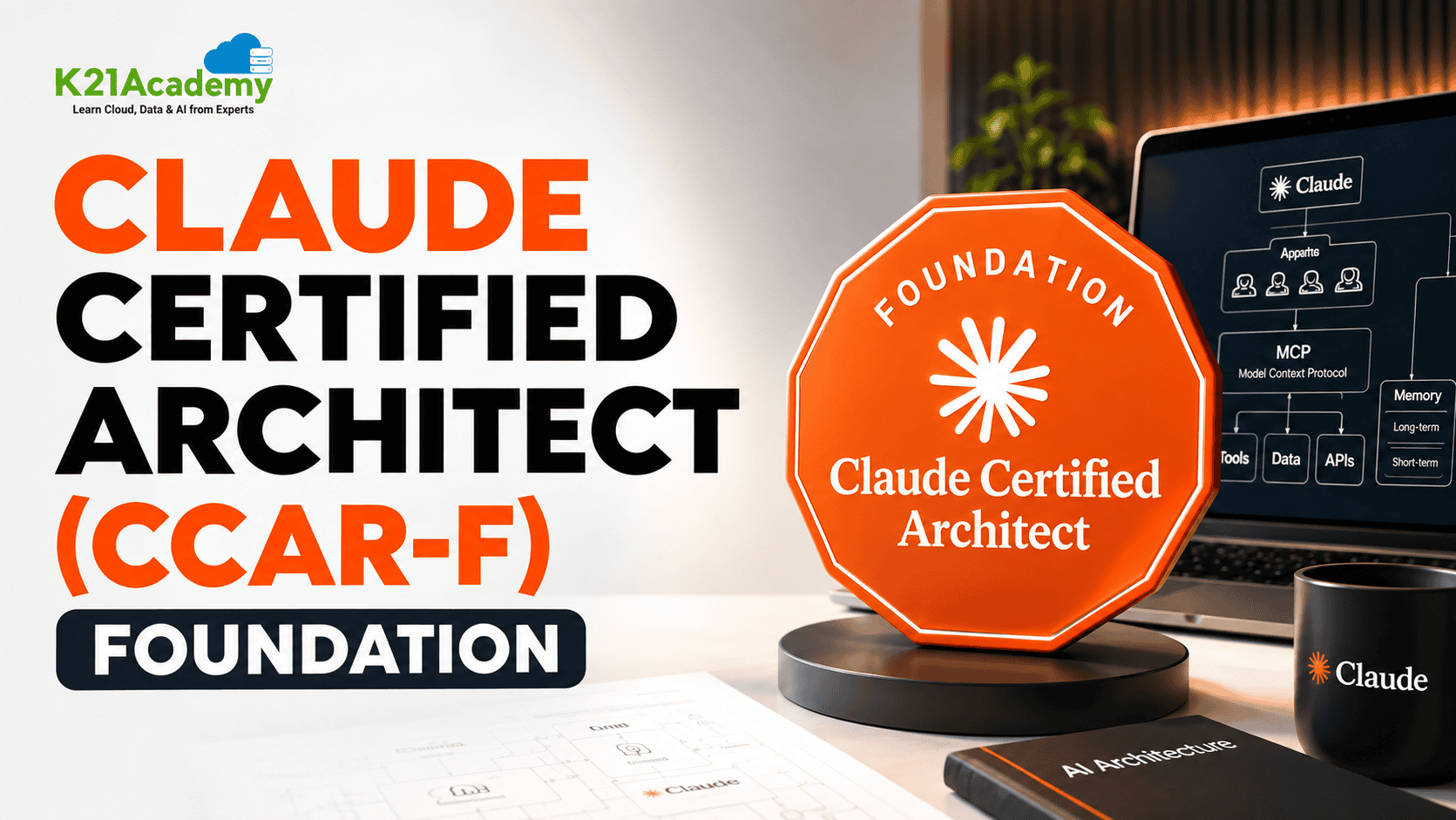
But if you really want to master Claude you can also prepare for this official certification: Claude Certified Architect Foundations (CCA-F) Certification

What Exactly Is Claude Code?

Claude Code is Anthropic’s AI coding agent designed for real engineering workflows.
Unlike older coding assistants that mainly autocomplete functions or generate snippets, Claude Code operates more like an engineering collaborator. It can inspect repositories, understand multiple files, execute terminal commands, debug errors, refactor systems, and work through complex coding tasks step-by-step.
That distinction matters a lot for AI/ML engineers.
Modern machine learning projects are rarely simple. Even a small AI product may involve:
- APIs,
- vector databases,
- orchestration frameworks,
- GPU infrastructure,
- inference systems,
- evaluation pipelines,
- Docker containers,
- monitoring tools.
Managing all of that manually becomes exhausting very quickly.
Claude Code attempts to reduce that engineering burden by functioning as an intelligent workflow assistant rather than just a chatbot.
And in many cases, it actually works surprisingly well.
What Makes Claude Code Different?
The biggest difference is context awareness.
Traditional coding assistants often fail once projects become large or complicated. They lose track of relationships between files, dependencies, architecture, or long conversations.
Claude Code performs much better in large-context workflows.
Instead of only focusing on isolated snippets, it can maintain awareness across broader sections of a repository. That allows it to:
- trace bugs across files,
- understand project structure,
- update systems consistently,
- reason through architecture-level changes.
For AI engineers, this becomes extremely valuable because AI systems are usually interconnected in messy ways.
One broken dependency can silently affect:
- retrieval quality,
- inference performance,
- model evaluation,
- latency,
- deployment stability.
Claude Code’s ability to “see the bigger picture” is one of the main reasons developers are paying attention to it in 2026.
Related Readings: Claude Code vs GitHub Copilot vs Cursor: Which AI Coding Assistant Should You Learn?
Why Are AI/ML Engineers Suddenly Paying Attention ?
AI engineering has become brutally fast-moving.
Frameworks evolve constantly. APIs change every few months. Infrastructure stacks become more complicated every year.
At the same time, businesses expect AI teams to move faster than ever before.
This creates a dangerous productivity problem.
A huge amount of engineering time is wasted on repetitive work:
- debugging pipelines,
- fixing environments,
- restructuring repositories,
- updating integrations,
- writing infrastructure code,
- tracing obscure failures.
Claude Code helps remove some of that friction.
And honestly, that may be its biggest advantage.
Most AI engineers are not spending their entire day designing new neural architectures, AI agents. They are dealing with engineering chaos.
Anything that reduces that chaos becomes valuable very quickly.
Related Readings: Top 10 Claude Code Use Cases Every Developer Should Know
The Biggest Advantage: Large Context Understanding

This is where Claude Code genuinely feels different from many competitors.
AI/ML projects often become massive very quickly. Even medium-sized repositories may contain:
- multiple services,
- experimental branches,
- evaluation frameworks,
- deployment scripts,
- monitoring systems,
- cloud integrations.
Most AI assistants struggle once the project becomes too large.
Claude Code handles long-context workflows much better than many older coding systems. It can process larger repositories while maintaining stronger consistency across conversations and tasks.
For AI engineers, that means:
- fewer repeated explanations,
- better repository awareness,
- stronger debugging support,
- more useful architectural reasoning.
This becomes especially important during complex refactoring or infrastructure-heavy work.
Instead of treating every file separately, Claude often understands how systems connect together.
That changes the workflow dramatically.
Related Readings: The Best Chatbot Development Tools
Where Claude Code Is Surprisingly Good for ML Work ?
One of the most interesting things about Claude Code is that its biggest strengths are not always the obvious ones.
Most people expect AI coding tools to simply generate functions.
But Claude Code becomes much more useful during complex engineering workflows.
1. Debugging Pipeline Failures
This is probably one of the highest-value use cases.
Machine learning systems break constantly:
- dependency conflicts,
- GPU allocation issues,
- inference bugs,
- environment mismatches,
- API failures.
Claude Code can inspect logs, trace failures, analyze project structure, and suggest fixes far faster than traditional debugging workflows in many situations.
For engineers dealing with production AI systems, that can save enormous amounts of time.
Related Readings: Comparing the Best AI Chatbots for Your Business: What’s Best for You?
2. Repository-Wide Refactoring
ML repositories become chaotic very quickly.
Especially startup codebases.
Claude performs surprisingly well when handling:
- duplicated logic,
- utility cleanup,
- modularization,
- import restructuring,
- code organization.
This matters because technical debt grows aggressively inside AI teams moving at startup speed.
Related Readings:- What is Generative AI & How It Works?
3. Rapid Prototyping
Claude Code is extremely useful for MVP development and experimentation.
AI engineers building:
- RAG systems,
- copilots,
- AI agents,
- vector search applications,
- evaluation frameworks,
can often accelerate development dramatically using AI-assisted workflows.
Instead of manually wiring every component together, engineers can focus more on experimentation and iteration speed.
4. Infrastructure and Glue Code
This may honestly be the least glamorous but most valuable advantage.
AI engineers spend huge amounts of time writing repetitive engineering code:
- wrappers,
- logging utilities,
- deployment scripts,
- AI integrations,
- monitoring hooks,
- config systems.
Claude handles this type of work very efficiently.
That allows engineers to spend more time focusing on:
- modeling,
- evaluation quality,
- system optimization,
- product direction.

The Hype Problem Nobody Wants to Admit
Now let’s talk about the dangerous side.
The internet massively exaggerates what Claude Code can do.
Some people online talk as if engineers are already obsolete. Others claim AI agents can build production-ready systems almost independently.
That is simply not true.
Claude Code still makes mistakes:
- hallucinated logic,
- weak abstractions,
- inconsistent architecture,
- security issues,
- unreliable edge-case handling.
And AI-generated code can sometimes look correct while hiding serious underlying problems.
This becomes especially risky in AI/ML systems because failures are often subtle. A pipeline may technically “work” while still producing poor evaluations, unstable outputs, or hidden scalability issues.
Claude Code accelerates development.
But it can also accelerate technical debt if engineers stop thinking critically.
That is the part social media rarely discusses.
Related Readings:- 7 System Design Patterns Every Cloud AI Engineer Should know
The Learning Curve Nobody Talks About

A lot of people assume AI coding agents are beginner tools.
Ironically, experienced engineers often benefit the most.
Because Claude Code still requires:
- strong engineering judgment,
- architectural thinking,
- workflow organization,
- clear instructions,
- careful review.
The AI performs best when guided properly.
If your repository is disorganized, your prompts are vague, or your architecture is already unstable, Claude’s outputs can quickly become messy.
The engineers getting the biggest productivity gains are usually the ones who already understand:
- software design,
- debugging,
- infrastructure,
- scalability,
- repository structure.
In many ways, Claude amplifies engineering skill rather than replacing it.
Related Readings: Generative AI vs Agentic AI: Key Differences
Is It Better Than ChatGPT for AI Engineers?
This depends entirely on your workflow.
Claude Code is generally stronger for:
- repository reasoning,
- long-context coding,
- multi-file edits,
- debugging,
- architecture-level engineering.
But ChatGPT still dominates in several other areas:
- multimodal workflows,
- voice interaction,
- advanced data analysis,
- image generation,
- broader productivity features,
- ecosystem integrations.
A lot of AI engineers in 2026 now use both.
Related Readings: MLOps, AIOps and different -Ops frameworks
Claude for:
- deep coding work,
- repository management,
- engineering tasks.
ChatGPT for:
- research,
- brainstorming,
- analysis,
- multimodal workflows,
- general productivity.
The tools are becoming complementary rather than direct replacements for each other.
Related Readings:- How to Build Your Own AI Bot in 2026: A Complete Guide
The Cost Question: Is the ROI Actually Real?
For casual users, maybe not.
But for active AI engineers building products daily, the ROI can become very obvious very quickly.
Claude Code can significantly reduce:
- debugging time,
- repetitive implementation work,
- infrastructure overhead,
- boilerplate engineering.
That time savings compounds over weeks and months.
However, there is an important catch.
AI-generated work still requires:
- testing,
- review,
- architectural oversight,
- production validation.
Claude improves engineering speed.
It does not eliminate engineering responsibility.
The engineers treating it like a replacement for critical thinking usually run into problems eventually.
Claude Code Career ROI
| Investment | Cost | Potential Career Benefit |
|---|---|---|
| Claude Code Subscription | $20–$100/month | Faster development workflow |
| Annual Tool Cost | $240–$1,200/year | Small compared to engineering salary |
| Productivity Improvement | 20–50%+ (varies by workflow) | More output with same engineering time |
| Career Upskilling Period | 3–6 months | Builds AI engineering capability |
| Potential Salary Growth | $20K–$60K+ (market dependent) | Higher-value AI roles |
Related Readings:- The Future of AI Agents
AI/ML Engineer Salary Comparison (Before vs After AI Skills)
| Engineer Profile (2026) | Typical Salary Range (USA) | Impact of Claude Code / Agentic AI Skills |
|---|---|---|
| Traditional Software Engineer | $120K–$170K | Limited AI workflow experience |
| Machine Learning Engineer | $130K–$180K | Builds ML models and pipelines |
| AI/ML Engineer with LLM Skills | $160K–$220K | Builds RAG, AI apps, LLM integrations |
| AI Engineer with Claude Code + Agentic AI Skills | $180K–$250K+ | Builds AI agents, automation workflows, production systems |
| Senior AI Platform Engineer | $220K–$350K+ | Designs enterprise AI infrastructure and platforms |
Global Salary Comparison (USA, UK, India)
| Region | Traditional AI/ML Engineer | AI Engineer + Agentic AI Skills | Senior AI Platform Roles |
|---|---|---|---|
| 🇺🇸 USA | $130K–$180K | $180K–$250K+ | $250K–$400K+ |
| 🇬🇧 UK | £60K–£100K | £90K–£150K+ | £140K–£220K+ |
| 🇮🇳 India | ₹12L–₹30L/year | ₹25L–₹60L+/year | ₹50L–₹1Cr+/year |
Cloud + AI Engineer Salary Impact
| Skill Combination | Expected Salary Range (2026) | Market Demand |
|---|---|---|
| Cloud Engineer (AWS/Azure only) | $120K–$160K | High |
| Cloud Engineer + Python Automation | $140K–$180K | Very High |
| Cloud Engineer + LLM Applications | $160K–$220K | Extremely High |
| Cloud Engineer + Claude Code + AI Agents | $180K–$250K+ | Premium AI Infrastructure Roles |
| AI Cloud Architect | $220K–$350K+ | Enterprise Demand |
The Real Skill Shift Happening in 2026

This is the biggest change most people still do not fully understand.
The highest-value engineering skill is slowly shifting.
The industry no longer rewards only manual coding speed.
Now it increasingly rewards:
- system direction,
- workflow orchestration,
- architecture thinking,
- AI supervision,
- validation,
- strategic engineering decisions.
In other words, engineers are moving from: “typing every line manually” toward “directing intelligent systems effectively.”
That shift is already happening across the AI industry.
And tools like Claude Code are accelerating it.
Related Readings:- Learn about conversational bot
Final Verdict
So, should AI/ML engineers invest time into Claude Code in 2026?
Yes.
But with realistic expectations.
Claude Code is not replacing experienced engineers anytime soon. It still requires oversight, validation, architecture thinking, and strong technical judgment.
What it does offer is something equally important:
A massive productivity advantage for engineers who know how to use it correctly.
The developers getting the most value from Claude Code are not blindly “vibe coding.”
They are using AI strategically:
- accelerating repetitive work,
- reducing debugging time,
- improving iteration speed,
- focusing more energy on high-level engineering decisions.
And honestly, that may be the biggest lesson of all.
The future of AI engineering is probably not humans versus AI.
It is engineers who effectively use AI versus engineers who refuse to adapt to it.