




In 2026 AI is not simply about building models anymore, it’s about building intelligent systems. One that thinks, acts, and adapts contextually. As an AI engineer working across AIML workflows, you’ve probably seen it yourself. Simply having a great LLM under your command is no longer a differentiation.
It’s about how you influence your model’s behavior. And this is the point where Prompt Engineering and Context Engineering become important. Where these two disciplines together are the foundation of all modern agents in AI are where AI agents don’t just respond to their reason, retrieve and act.

The Shift from Models to Systems
A few years ago, building AI meant training models. Today, it means building systems around models.
Modern AI solutions combine:
- LLMs (for reasoning and generation)
- RAG pipelines (for knowledge retrieval)
- MCP integrations (for tools and APIs)
- Memory systems (for personalization)
This shift has transformed developers into AI system architects.
Instead of asking:
“Which model should I use?”
The better question now is:
“How should I design the prompt, context, and workflow?”
What is Prompt Engineering?
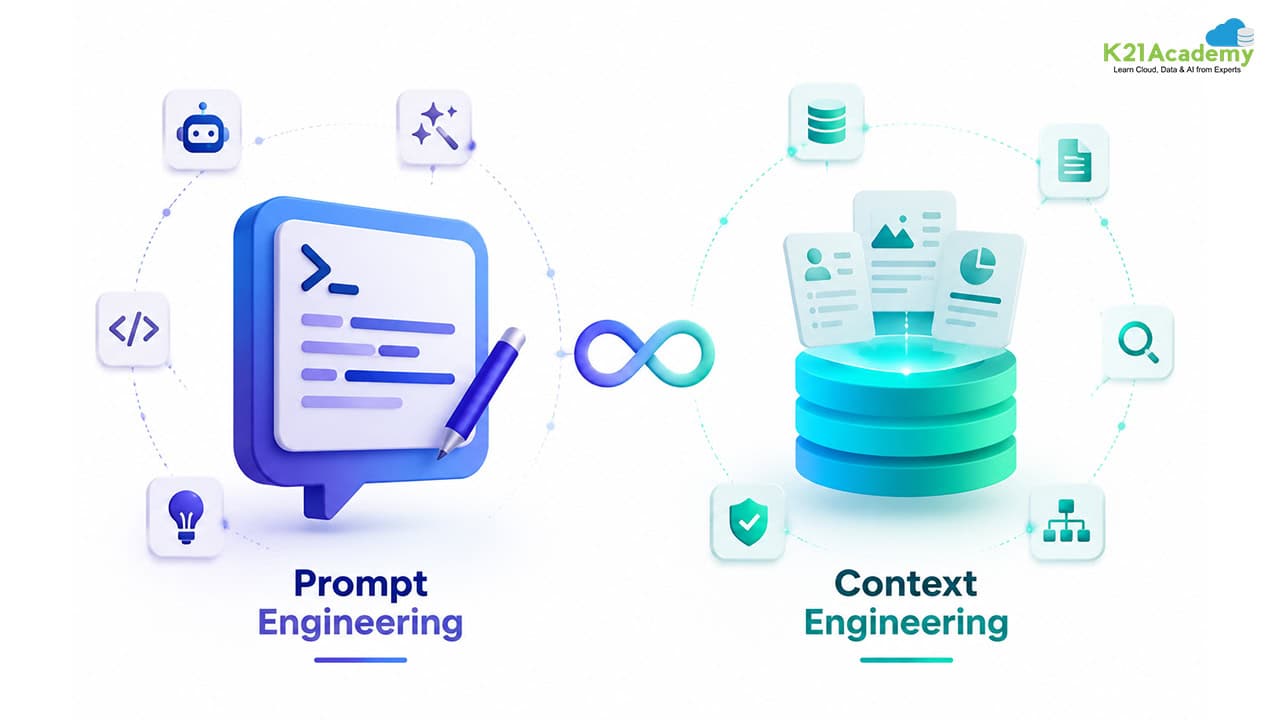
Prompt engineering is the process of designing inputs (prompts) to control how an LLM behaves.
It includes:
- Instructions
- Examples
- Output format
- Tone and constraints
Why it matters
- Improves response quality
- Reduces hallucinations
- Enables task-specific outputs
Think of it as “programming AI without writing traditional code.”
What is Context Engineering?
Context engineering is the process of providing relevant data, memory, and tools to an AI system so it can generate accurate and meaningful outputs.
It includes:
- External documents (PDFs, databases)
- User history (memory)
- APIs and tools
- Real-time data
If prompt = question, then context = knowledge + environment
Related Readings:- Claude Code Career Roadmap: Skills Developers and AI Engineers Need in 2026
Why Prompt Engineering Alone is Not Enough
Prompt engineering is powerful, but limited when used in isolation.
You can:
- Control tone
- Structure output
- Improve clarity
But you cannot:
- Inject real-time data
- Ensure factual accuracy
- Access enterprise knowledge
That’s why many early AI applications failed in production, they relied only on prompts without grounding.
This is where Context Engineering + RAG fills the gap.
Related Readings:- Top 12 Prompt Engineering Tools for AI Projects in 2026 (Tested & Compared)
Deep Dive: Context Engineering in Real Systems
Context engineering goes beyond just adding data, it’s about curating the right information at the right time.
In production AI systems, context includes:
- Enterprise documents (PDFs, policies, reports)
- User memory (preferences, history)
- APIs (weather, payments, CRM tools)
- Databases (structured and unstructured data)
The challenge is not lack of data, it’s selecting the most relevant context efficiently.
That’s why techniques like:
- Semantic search
- Vector embeddings
- Smart chunking
are essential in modern RAG pipelines.
Related Readings:- Claude Code for AI/ML Engineers: Should You Invest the Time? Honest 2026 Worth-It Breakdown
Prompt vs Context Engineering
| Feature | Prompt Engineering | Context Engineering |
| Focus | Input instructions | Data + memory + tools |
| Goal | Better responses | Accurate & grounded outputs |
| Scope | Single interaction | Full AI system |
| Usage | Chatbots | Enterprise AI systems |
In real-world AI: You need both together.
RAG: The Backbone of Reliable AI
What is RAG?
RAG is a system where AI:
- Retrieves relevant data
- Injects it into context
- Generates accurate output
Why RAG is critical
- Eliminates outdated model knowledge
- Enables real-time answers
- Reduces hallucination
Simple workflow
User Query → Vector DB → Retrieve → Inject → Generate
Without RAG, LLMs rely only on their training data, which is:
- Static
- Outdated
- Sometimes incorrect
RAG transforms this by enabling dynamic knowledge retrieval.
In real-world systems:
- A chatbot retrieves company policies
- A finance AI fetches latest reports
- A healthcare assistant accesses medical databases
This ensures:
- Higher accuracy
- Lower hallucination
- Better trust
RAG is not just a feature, it’s a requirement for production AI.
Related Readings:- Understanding RAG with LangChain
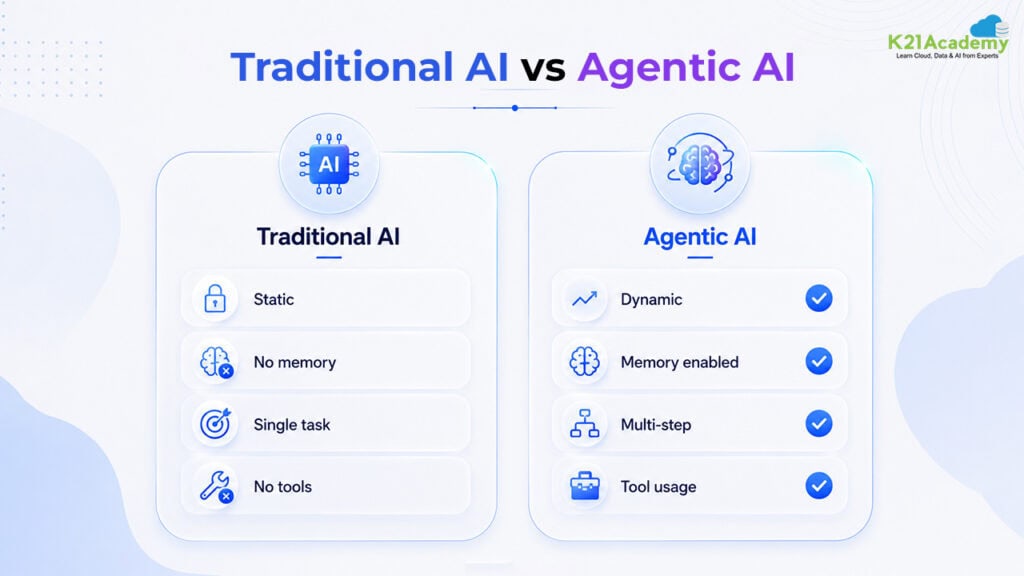
Agentic AI and Multi-Step Reasoning
AI is evolving from tools → assistants → agents
What is Agentic AI?
Agentic AI is an AI systems that:
- Think step-by-step
- Use tools (APIs, DBs)
- Take actions
- Improve with feedback
Capabilities
- Multi-step reasoning
- Autonomous execution
- Tool integration (MCP)
- Memory-based decisions
Agents are not just answering, they are doing work.
AI agents are changing how applications are built.
Instead of:
One prompt → One response
We now have:
Multi-step workflows → Tool usage → Decision-making
An AI agent can:
- Understand a task
- Break it into steps
- Call APIs or tools
- Retrieve data
- Generate final output
For example:
A travel AI agent can:
- Search flights
- Compare prices
- Recommend hotels
- Generate itinerary
All in one flow.
This is the power of agentic AI systems.
Related Readings:- Agentic AI real world use cases
How MCP is Standardizing AI Development
One major challenge in AI development has been integration.
Different tools, APIs, and models created fragmentation.
MCP (Model Context Protocol) is solving this by:
- Standardizing communication between models and tools
- Enabling plug-and-play architectures
- Reducing development complexity
With MCP:
- AI agents can easily connect to external systems
- Developers can scale solutions faster
- Teams can reuse components across projects
This is similar to how APIs transformed web development.
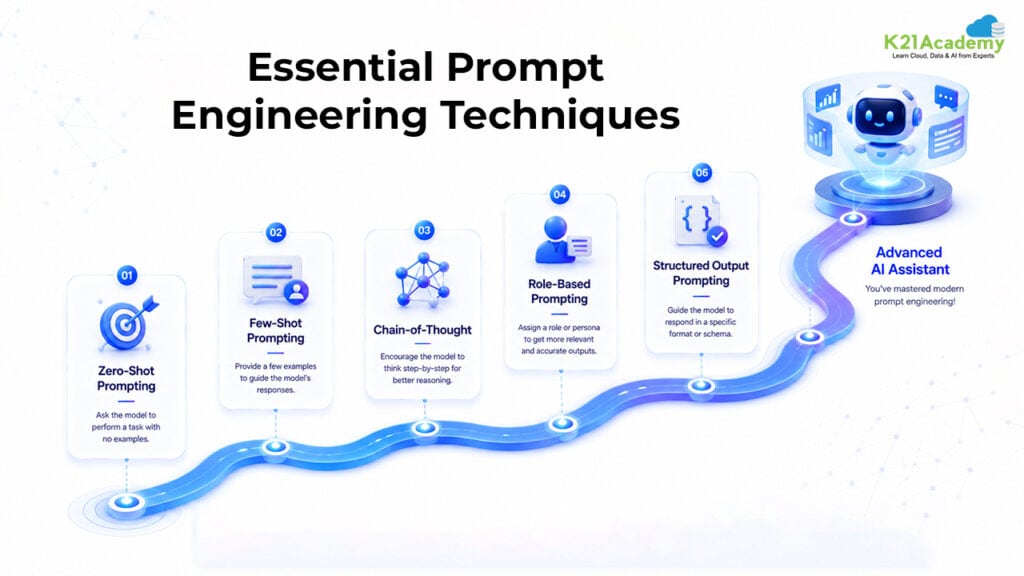
Prompt Engineering Techniques (2026)
Context Engineering Techniques
1. RAG Pipelines
- Vector DB (Pinecone, FAISS)
- Embeddings
- Semantic search
2. Memory Systems
- Short-term (chat history)
- Long-term (user data)
3. Tool Integration
- APIs
- Python execution
- Databases
4. Data Chunking
- Break large docs into smaller pieces
5. Re-ranking
- Improve retrieval relevance
Related Readings:- Comparing the Best AI Chatbots for Your Business: What’s Best for You?
Real-World Use Cases
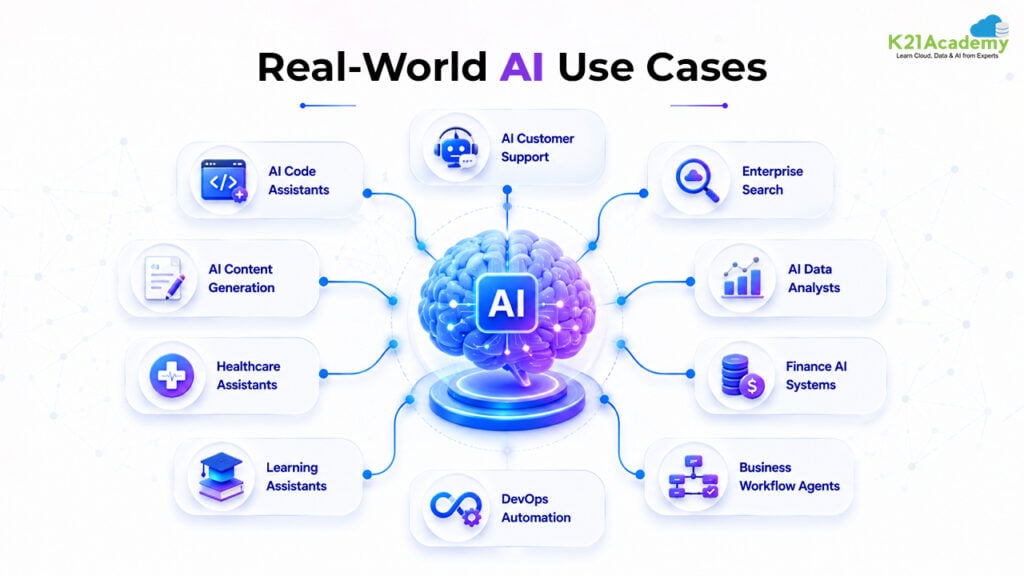
Modern AI Workflow (AIML)
Traditional ML
Data → Train → Deploy
Modern AI
Prompt + Context + RAG + Agent + Tools
This is the biggest shift in AI.
Traditional AI vs Agentic AI
Productivity Impact
Developers using modern AI stack:
- 3–5x faster development
- Faster prototyping
- Rapid iteration
- Better decision making
Related Readings:- 7 System Design Patterns Every Cloud AI Engineer Should know
Salary Trends (AI Engineers 2026)
India
₹12 LPA – ₹40 LPA
Global
$100K – $180K
High-demand skills
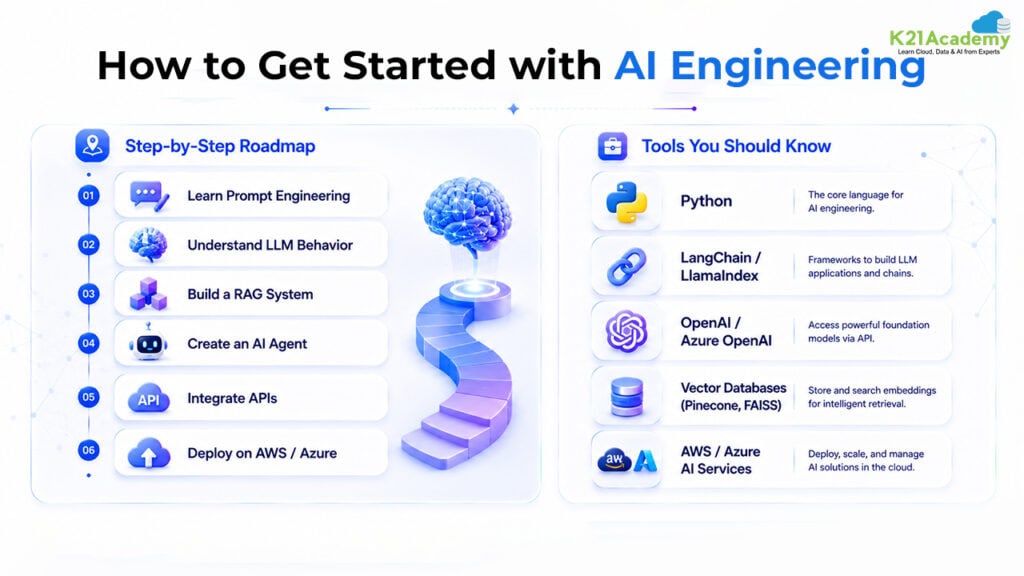
How to Get Started
Key Takeaways
- Prompt engineering controls output
- Context engineering ensures accuracy
- RAG is essential for production AI
- Agentic AI is the future
- MCP simplifies integrations
- AI engineers are becoming system architects
The Role of Python in Modern AI Workflows
Even in the age of no-code tools, Python remains the backbone of AI engineering.
Why?
- Easy integration with LLM APIs
- Strong ecosystem (LangChain, LlamaIndex)
- Data processing capabilities
- Cloud compatibility (AWS, Azure)
In real-world workflows, Python is used to:
- Build RAG pipelines
- Manage embeddings
- Orchestrate AI agents
- Connect APIs and databases
Related Readings:- AI Learning Path for IT Leaders and Managers (No Deep Coding Required)
Cloud + AI: AWS and Azure Integration
Modern AI systems are cloud-native.
Platforms like:
- AWS (Bedrock, Lambda, S3)
- Azure (Azure AI services, AI Foundry)
enable:
- Scalable deployments
- Secure data handling
- Faster experimentation
For example:
- Azure AI Foundry helps manage & create an AI agents
- AWS Bedrock provides model access with security
Cloud + AI is now a default combination, not an option.
Common Mistakes Developers Still Make
Even in 2026, many developers struggle because they:
- Rely only on prompts
- Ignore context design
- Skip evaluation and testing
- Don’t use RAG properly
- Build monolithic AI systems
The result?
- Inaccurate outputs
- Poor user experience
- Failed production deployments
Related Readings:- 5 Resume Mistakes That Stop AI Professionals From Getting Interview Calls
What Top AI Engineers Do Differently
Top-performing AI engineers focus on:
- Modular agent design
- Strong prompt + context layering
- Continuous feedback loops
- Observability (logs, tracing)
- Safety and guardrails
They treat:
- Prompts as code
- Context as data pipelines
- Agents as microservices
Related Readings:- Generative AI vs Agentic AI
Future of AI Development (2026 and Beyond)
We are moving toward:
- Autonomous AI agents
- Self-improving systems
- Real-time decision engines
- Multi-agent collaboration
In the near future:
- AI agents will talk to each other
- Systems will self-optimize
- Human intervention will reduce
The role of developers will evolve into:
AI Orchestrators
Related Readings:- The Future of AI Agents
Final Thought
If you’re working in AI, AIML, or software development, this is the skill stack you cannot ignore:
- Prompt Engineering
- Context Engineering
- RAG Pipelines
- Agentic AI Systems
- MCP Integrations
Because in 2026, success is not about using AI.
It’s about engineering intelligence into systems.