



The AWS Certified Solutions Architect – Professional (SAP-C02) certification is one of the most respected and in-demand cloud certifications for experienced AWS professionals. As organizations continue adopting cloud-native and scalable architectures, the demand for skilled AWS Solutions Architects continues to grow across industries worldwide.
Among the advanced AWS certifications, the AWS Certified Solutions Architect – Professional (SAP-C02) certification is considered one of the most valuable credentials for experienced cloud architects and IT professionals. Unlike foundational or associate-level certifications, the SAP-C02 exam focuses on advanced architectural decision-making, complex AWS environments, migration strategies, security, governance, and cost-optimized solution design using the AWS Well-Architected Framework.
Additionally, The AWS Certified Solutions Architect – Professional exam is known for its depth and real-world scenario-based approach, making it ideal for professionals who already have hands-on AWS experience and want to validate their expertise in designing enterprise-scale cloud solutions.

In this blog, we’ll cover everything you need to know about the AWS Certified Solutions Architect – Professional (SAP-C02) exam, including exam domains, important topics, preparation strategies, scoring details, emerging technologies, and expert tips to help you prepare effectively.

What is AWS Certified Solutions Architect – Professional Exam (SAP-C02)?
The AWS Certified Solutions Architect – Professional (SAP-C02) certification is designed for experienced cloud professionals who perform a solutions architect role and work with complex AWS environments.
Furthermore, the exam validates a candidate’s advanced technical skills and experience in designing secure, scalable, resilient, and cost-optimized AWS solutions based on the AWS Well-Architected Framework.
The SAP-C02 exam covers the following content domains:
- Domain 1: Design Solutions for Organizational Complexity (26% of scored content)
- Domain 2: Design for New Solutions (29% of scored content)
- Domain 3: Continuous Improvement for Existing Solutions (25% of scored content)
- Domain 4: Accelerate Workload Migration and Modernization (20% of scored content)
The certification focuses heavily on real-world architectural decision-making, modernization strategies, governance, networking, security, reliability, and performance optimization across enterprise-scale AWS workloads.
AWS SAP-C02 Exam Information
| Exam Component | Details |
|---|---|
| Certification Name | AWS Certified Solutions Architect – Professional (SAP-C02) |
| Target Audience | Experienced professionals performing a Solutions Architect role |
| Exam Provider | AWS Training and Certification |
| Exam Delivery | Pearson VUE and PSI |
| Question Format | Multiple-choice and multiple-response questions |
| Exam Duration | 180 minutes |
| Number of Questions | 65 scored questions + additional unscored pretest questions |
| Passing Score | Minimum scaled score of 750 out of 1000 |
| Exam Cost | USD 300 (pricing may change over time) |
| Available Languages | English, Japanese, Korean, Simplified Chinese, and Spanish (Latin America) |
Also read: All you need to know about AWS Free Tier Account Services
How to Book the AWS Certified Solutions Architect – Professional (SAP-C02) Exam
Follow these steps to schedule the AWS SAP-C02 certification exam:
- Visit the AWS Training and Certification portal.
- Navigate to the certification section and select AWS Certified Solutions Architect – Professional (SAP-C02) from the available certification list.
- Choose your preferred exam delivery provider, such as Pearson VUE or PSI.
- Select the exam mode:
- Online proctored exam (from home)
- Test center-based exam
- Choose your preferred exam date and time slot based on availability.
- Review and accept the exam policies and terms & conditions.
- Complete the payment process to confirm your exam registration.
Read this blog where we have discussed the 5 Pillars of AWS Well-Architected Framework and their design principles.
AWS SAP-C02 Exam Topics
 Domain 1: Design for Organizational Complexity (26%)
 Domain 1: Design for Organizational Complexity (26%)
- Cross-account authentication and access strategy for complex organizations (for example, an organization with varying compliance requirements, multiple business units, and varying scalability requirements)
- How to design networks for complex organizations (for example, an organization with varying compliance requirements, multiple business units, and varying scalability requirements)
- Determine how to design a multi-account AWS environment for complex organizations (for example, an organization with varying compliance requirements, multiple business units, and varying scalability requirements)
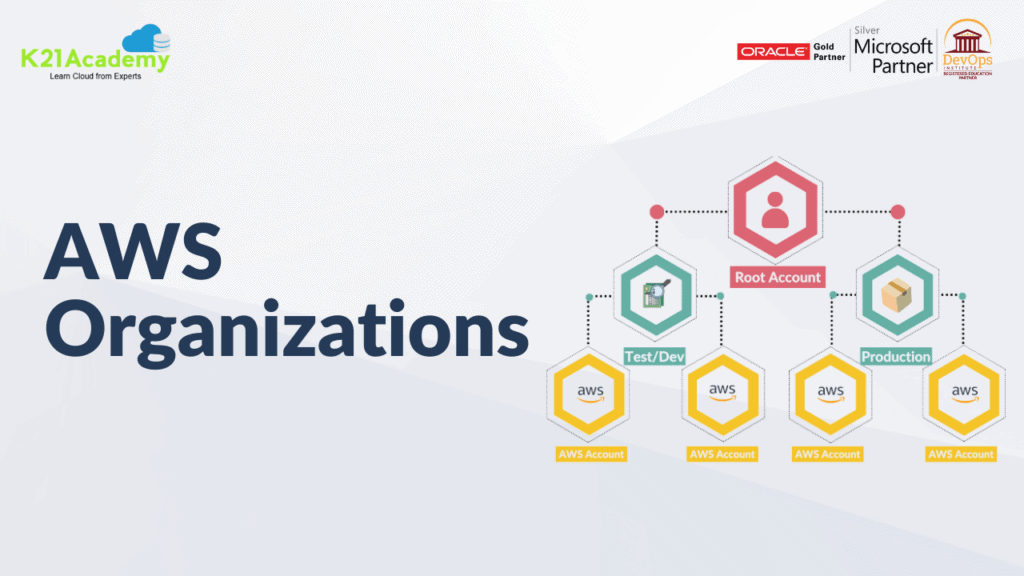
Read about Multi-Account Management Using AWS Organizations here. In this post, we will resolve all these problems by introducing AWS Organization to make account management simple.
Domain 2: Design for New Solutions (29%)
- Identify security requirements and controls when designing and implementing a solution
- Determine a solution design and implementation strategy to meet reliability requirements
- Identify a solution design to ensure business continuity
- Solution design to meet performance objectives
- Identify a deployment strategy to meet business requirements when designing and implementing a solution
Read about AWS Elastic Beanstalk here. In this post, we discuss what Elastic Beanstalk is, what is advantages, and the working of Elastic Beanstalk.
Domain 3: Continuous Improvement for Existing Solutions (25%)
- Troubleshoot solution architectures
- Determine a strategy to improve an existing solution for operational excellence
- Determine a strategy to improve the reliability of an existing solution
- Determine a strategy to improve the performance of an existing solution
- Determine a strategy to improve the security of an existing solution
- Determine how to improve the deployment of an existing solution

Domain 4: Accelerate Workload Migration and Modernization (20%)
- Select existing workloads and processes for a potential migration to the cloud
- Select migration tools and/or services for new and migrated solutions based on detailed AWS knowledge
- Determine a new cloud architecture for an existing solution
- Determine a strategy for migrating existing on-premises workloads to the cloud
Enroll Now & Start Your AWS Pro Journey!
Important Exam Topics and Preparation Tips for AWS SAP-C02
The AWS SAP-C02 exam is broad and deep. It covers a huge number of AWS services and can require deep knowledge of quite a few of them. One of the most important skills is knowing how AWS services work together to form solution architectures. Knowledge of the factors that can influence design decisions when using multiple service solutions architectures is key to passing. That’s why hands-on skills are extremely important for this exam.
Now let’s see details on the topics you’re likely to see come up on your exam.
Compute:
- You need to understand when to use an NLB vs an ALB, e.g., requirement to whitelist IP addresses.
- Which compute pricing models to use when you are given a scenario?
- How can you scale for performance – Amazon EC2, AWS Lambda, Amazon ECS options?
- Understand deployment options for Auto Scaling with instances, containers, and serverless.
Storage:
- Choose the best storage architecture for given requirements, object, block, file, HPC use cases, etc.
- Learn Amazon S3, Amazon EFS, AWS Storage Gateway, and Amazon FSx (for Windows File Server or Lustre).
- Identify Performance characteristics of different storage options, tiers, classes, and volume types.
Database:
- Identify when to use relational vs non-relational databases – Amazon DynamoDB, Amazon RDS
- How to refactor existing databases to AWS-managed services.
- Using caching solutions for performance – DynamoDB DAX, Amazon ElastiCache
- Understand scaling, read performance, multi-AZ, multi-Region, and multi-active databases.
- Use of data warehouses (Amazon RedShift) and graph DBs (Amazon Neptune).
Migration and Transfer:
- How can you use the Application Discovery Service (ADS) to plan migrations?
- Understand migrating from on-premises Microsoft Hyper-V, VMware, and physical servers.
- Migrating with AWS Services like SMS, DMS, SCT, and DataSync.
- When to convert schemas with SCT, e.g., Oracle to DynamoDB.
- Understand when you need to use the Snow family of devices vs online migrations.
Networking and Content Delivery:
- You need to be highly familiar with Amazon VPC, including IP CIDR blocks, subnets, and route tables.
- Understand when to use a NAT Gateway or a NAT instance.
- VPC endpoint architecture and how you can deploy gateway and interface endpoints.
- Using policies to restrict access through endpoints.
- Security group and NACL best practices and use cases.
- Route 53 for resolution and traffic direction. Important to know the routing options and use cases.
- In which case, we need to use AWS Direct Connect and learn how to deploy redundantly.
- Architecture and use cases for AWS VPN, AWS Transfer Gateway, and AWS Direct Connect gateway.
- API Gateway deployment options and performance optimizations.
- AWS Global Accelerator and Amazon CloudFront – know the use cases and differences.
Developer Tools:
- Understand the complete CI/CD pipeline and how each tool fits in given scenarios – AWS CodeBuild, CodeCommit, CodeDeploy, CodePipeline.
- How to implement a CodePipeline with GitHub (webhooks) and Jenkins, and other similar tools.
- How to do tracing with AWS X-Ray.
- Understand the various deployment options provided by AWS and when to use them, e.g., in-place, all-at-once, canary, blue/green.
Management and Governance:
- AWS Organizations SCPs – Understand the structure of applying SCPs and the inheritance.
- Understand your CloudFormation and how to use StackSets and Change Sets.
- Auto Scaling for relevant services use.
- Understand which metrics you can get with CloudWatch and when you require custom metrics.
- What to capture with CloudTrail and how to use EventBridge or CloudWatch Alarms.
- Understand Systems Manager Parameter Store use cases and patching services.
- OpsWorks use cases and deployment options are available.
Analytics:
- Understand how to analyze data from various sources such as data lakes on S3 or Kinesis Data Streams.
- Root-level knowledge of Athena, RedShift, EMR, Elasticsearch, Kinesis, QuickSight, and AWS Glue.
Security, identity, and compliance:
- IAM policies.
- How to enable and use cross-account access with roles + external ID.
- AWS Directory Service.
- Secrets Manager service use cases.
- AWS Single Sign-on and Cognito – know the use cases for these services.
- KMS, Certificate Manager, CloudHSM.
- AWS WAF
- Learn defense in depth using WAF, security groups, NACLs, and other security measures.
- How to use Shield and other DDoS mitigation techniques.
Front-end Web and Mobile:
- Use cases for AWS AppSync.
Application Integration:
- Understand when to use each service, including SQS, SNS, SWF, and Step Functions.
- Use cases for Amazon MQ such as migrating existing applications using these protocols.
- Amazon EventBridge for coordinating message flows between services.
- Learn Scaling options with ASG and SQS.
Cost management:
- AWS Organizations for centralized billing.
- How can we report on costs for individual cost centers
- Using different savings plans and reservation options in AWS.
End-user computing:
- WorkSpaces and AppStream.
Internet of Things:
- IoT Core deployment options and use cases.
AWS Solutions Architect Professional certification_Exam_Guide.pdf
Exam Results
Your results for the examination are scored on a scale of 100-1,000, with a minimum passing score of 750.
The examination uses a standard scoring system established by AWS professionals in accordance with industry best practices and guidelines.
Scaled scoring models are used to equate scores across multiple exam forms that may have slightly different difficulty levels.
Your score report will contain a table of classifications of your performance at each section level. This information is designed to provide topic-wise feedback on your performance. As a result, it is not necessary to pass the individual sections; only the overall examination score will determine pass or fail.
Related/References
- Overview of Amazon Web Services & Concept
- AWS CloudFormation
- AWS Elastic Beanstalk
- AWS Management Console Walkthrough
- AWS CodeCommit Overview & It’s Benefits
- Deploy Web App On AWS Using CodePipeline
- AWS Free Tier Account Services
- AWS EFS, EBS, and S3: Best AWS Storage Option
- AWS Trusted Advisor Best Practices
- AWS Certificate Manager (ACM): Overview, Features and How it Works?
- AWS Certification Savings Guide: Maximizing Discounts with Expert Navigation
Frequently Asked Questions
It’s an advanced-level certification that validates your ability to design and deploy complex AWS solutions, including multi-tier architectures and enterprise-wide applications.
Experienced AWS architects, engineers, and developers who already hold associate-level certifications and want to deepen their architectural expertise should consider taking this exam.
It is considered one of the most challenging AWS certifications, requiring in-depth knowledge of AWS services, architecture best practices, and real-world scenario handling.
The exam consists of 75 questions, and you need a minimum score of 750 out of 1000 to pass
You’ll face multiple-choice and multiple-response scenario-based questions that test your understanding of service interactions, architecture designs, and decision-making skills. 1. What is the AWS SAP-C02 certification?
2. Who should take the AWS Solutions Architect – Professional exam?
3. How difficult is the SAP-C02 exam?
4. How many questions are on the SAP-C02 exam and what is the passing score?
5. What types of questions are asked in SAP-C02?
Next Task For You
Begin your journey towards an AWS Cloud by joining our FREE Informative Class on Amazon Cloud Free Class by clicking on the image below.