





Your CI/CD Pipeline Is About to Get a New Team Member
For years, CI/CD pipelines have been responsible for automating software delivery.
They build code.
They run tests.
They deploy applications.
They monitor releases.
But despite all this automation, one major bottleneck remains:
Human decision-making.
Engineers still spend hours reviewing pull requests, analyzing failed deployments, troubleshooting logs, creating release notes, validating configurations, and investigating incidents.
This is where AI is changing the game.
Tools like Claude AI and Claude Code are transforming CI/CD pipelines from simple automation workflows into intelligent systems capable of reasoning, analyzing, and taking action.
The question is no longer:
“Can AI help in CI/CD?”
The real question is:
“How much of your software delivery process should AI handle?”
In this guide, we’ll explore three practical patterns for integrating Claude AI into modern CI/CD pipelines from beginner-friendly automation to fully agentic DevOps workflows.
Why Claude AI Is Becoming Popular in DevOps ?
Most organizations initially adopted AI for chatbots and content generation.
Today, engineering teams are discovering a different use case.
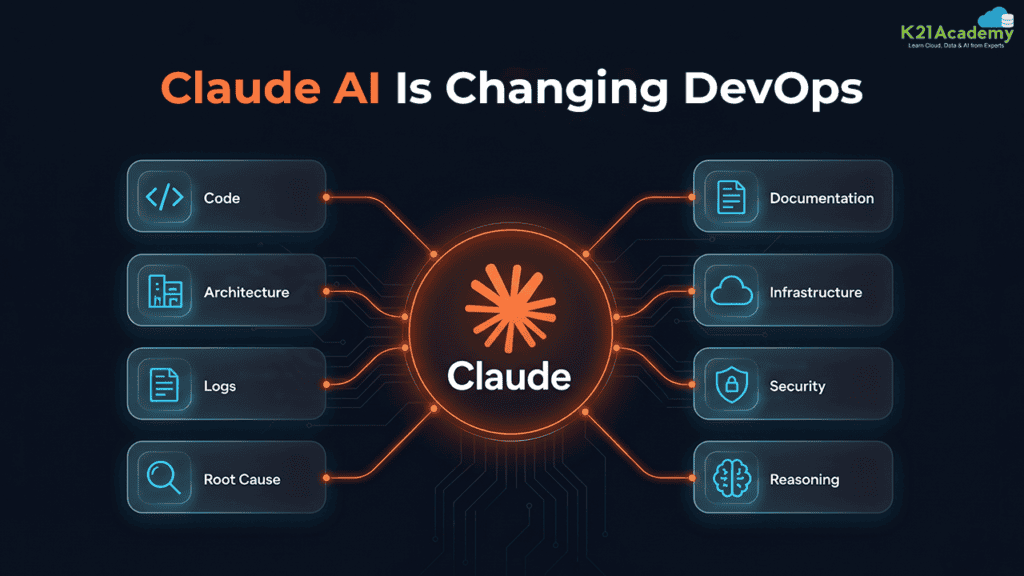
Claude excels at:
- Code understanding
- Architecture analysis
- Log interpretation
- Root cause analysis
- Documentation generation
- Infrastructure review
- Security recommendations
- Multi-step reasoning
Unlike traditional automation scripts, Claude can understand context and provide intelligent recommendations.
This makes it particularly useful in CI/CD environments where failures often require reasoning rather than simple rule-based responses.
Related Readings: Top 10 Claude Code Use Cases Every Developer Should Know
What Is an AI-Powered CI/CD Pipeline?
Traditional CI/CD follows this pattern:
Developer → Git Commit → Build → Test → Deploy
An AI-enhanced CI/CD pipeline introduces an intelligence layer:
Developer → Git Commit → AI Analysis → Build → AI Validation → Test → AI Review → Deploy → AI Monitoring
The AI layer continuously analyzes:
- Code quality
- Security risks
- Infrastructure changes
- Test failures
- Deployment issues
- Production incidents
As organizations adopt Agentic AI, this intelligence layer becomes increasingly autonomous.
Related Readings:- Comparing the Best AI Chatbots for Your Business: What’s Best for You?
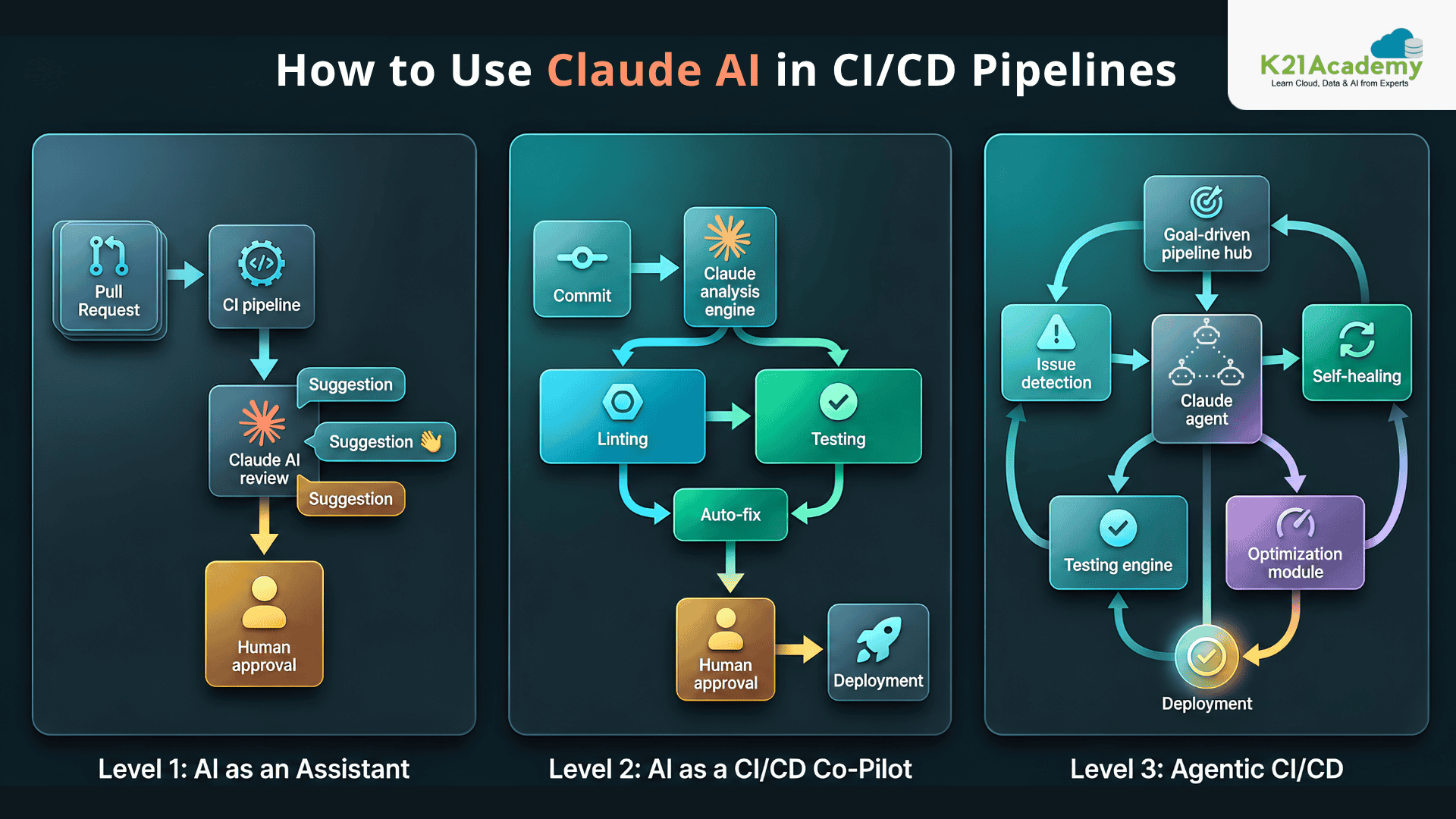
Pattern 1: AI as an Assistant (Beginner Level)
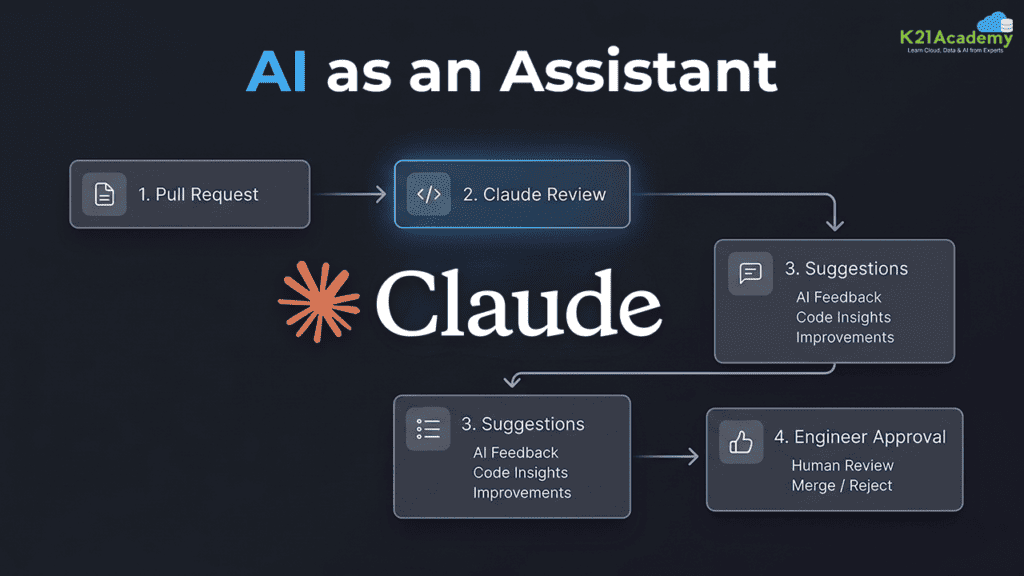
This is the safest and easiest way to introduce Claude AI into your CI/CD process.
The AI acts as an advisor.
Humans remain fully in control.
Typical Workflow
- Developer creates pull request
- CI pipeline triggers Claude
- Claude reviews code changes
- Claude provides recommendations
- Engineer decides what to do
Related Readings:- 7 System Design Patterns Every Cloud AI Engineer Should know
Common Use Cases
Pull Request Reviews
Claude can analyze:
- Code quality
- Naming conventions
- Potential bugs
- Security concerns
before a human reviewer even opens the PR.
Release Notes Generation
Instead of manually writing release notes:
Claude analyzes commits and automatically generates:
- Features added
- Bugs fixed
- Breaking changes
Documentation Updates
Claude can generate:
- API documentation
- Deployment instructions
- Architecture summaries
from source code changes.
Benefits
- Low risk
- Easy implementation
- Immediate productivity gains
- Minimal organizational change
Limitations
- Human approval required
- Limited automation
- No autonomous actions
This approach is ideal for teams beginning their AI journey.
Related Readings:- How to Build Your Own AI Bot in 2026: A Complete Guide
Pattern 2: AI as a CI/CD Co-Pilot (Intermediate Level)
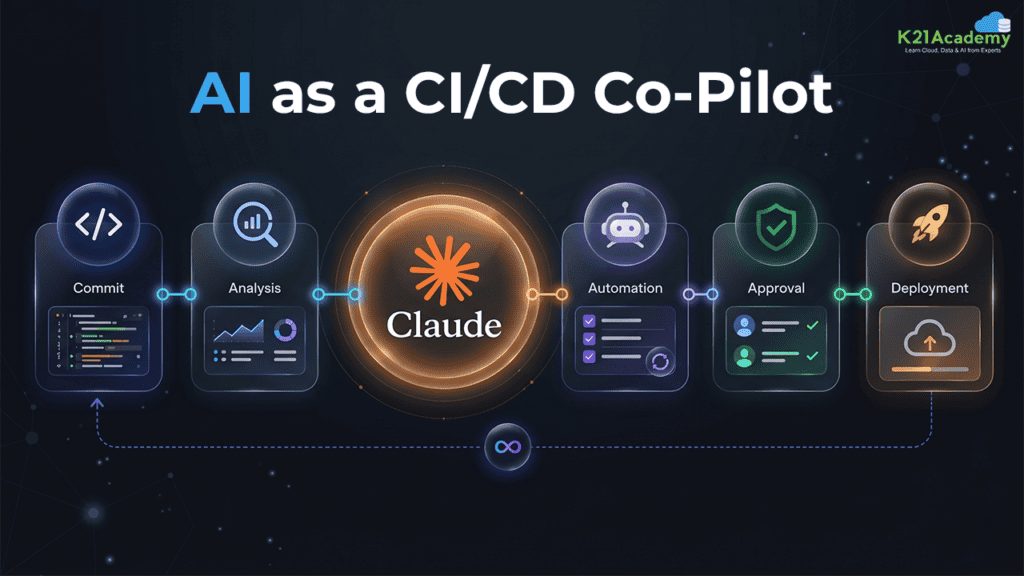
In this pattern, Claude moves beyond recommendations.
It actively participates in the software delivery process.
Humans still approve major decisions, but Claude performs many operational tasks automatically.
Workflow
Developer → Commit → Claude Analysis → Automated Actions → Human Approval → Deployment
Example Use Cases
Test Failure Analysis
When a test fails:
Claude automatically:
- Reads logs
- Identifies likely root causes
- Suggests fixes
- Creates a troubleshooting report
Instead of spending 30 minutes investigating a failure, engineers immediately receive probable explanations.
Infrastructure Review
Before deployment:
Claude reviews:
- Terraform code
- AWS CloudFormation templates
- Azure Bicep templates
and flags:
- Security issues
- Cost risks
- Architecture concerns
Related Readings:- AI Engineer vs AI Architect
Security Validation
Claude can analyze:
- Dependency updates
- Container configurations
- Infrastructure changes
and identify potential vulnerabilities before deployment. This automated Predictive Risk Analysis ensures that security risks are caught and mitigated early in the development lifecycle.
AWS Example
Claude reviews:
- Amazon ECS deployments
- AWS Lambda changes
- Amazon EKS manifests
- Terraform infrastructure
before promotion to production.
Azure Example
Claude validates:
- Azure Kubernetes Service deployments
- Azure AI Foundry resources
- Azure Functions
- Infrastructure-as-Code templates
before release approval.
Pattern 3: Agentic CI/CD (Advanced Level)
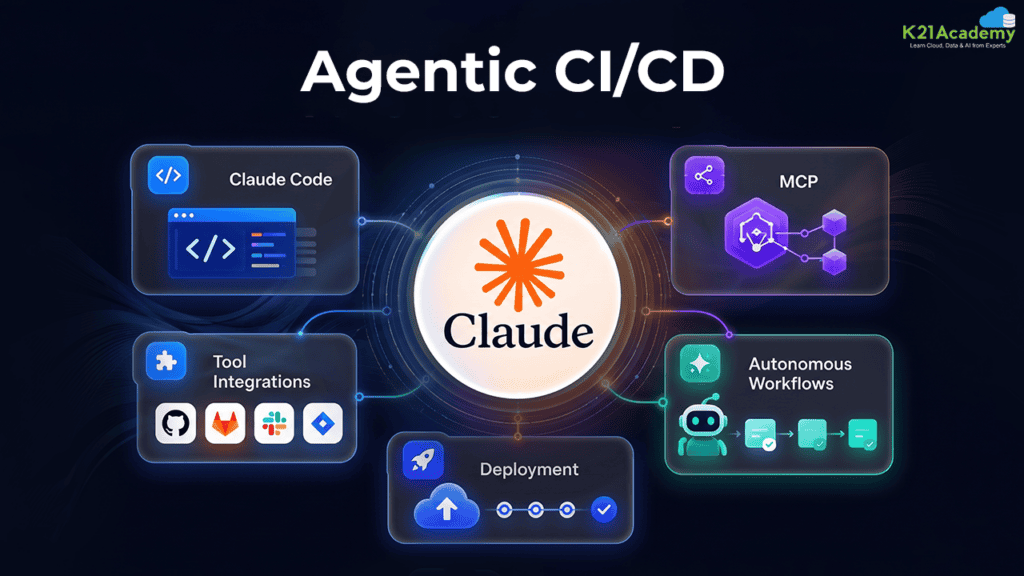
This is where things become truly transformative.
Instead of simply reviewing information, Claude operates as an AI Agent within the pipeline.
The goal shifts from:
“Analyze this deployment.”
to
“Ensure this deployment succeeds.”
Related Readings:- Claude Code vs GitHub Copilot vs Cursor: Which AI Coding Assistant Should You Learn?
What Is Agentic DevOps?
Agentic DevOps combines:
- Claude AI
- Claude Code
- AI Agents
- MCP (Model Context Protocol)
- Tool integrations
- Autonomous workflows
to create systems capable of making decisions and executing tasks.
Agentic Workflow
Developer → Commit → AI Agent → Deployment → Monitoring → Remediation
The agent:
- Reviews code
- Runs tests
- Analyzes failures
- Applies fixes
- Re-runs validation
- Creates reports
- Escalates only when necessary
Example: Autonomous Incident Response
A deployment fails.
Traditional process:
- Alert engineer
- Engineer investigates
- Engineer identifies root cause
- Engineer applies fix
- Engineer redeploys
Agentic process:
- Agent detects failure
- Agent analyzes logs
- Agent identifies root cause
- Agent proposes fix
- Agent validates fix
- Agent redeploys
- Agent creates incident summary
Human involvement occurs only if confidence drops below a threshold.
Related Readings:- Claude Code for AI/ML Engineers: Should You Invest the Time? Honest 2026 Worth-It Breakdown
Using Claude Code in CI/CD
Claude Code is becoming a powerful addition to modern engineering workflows.
For DevOps and Platform Engineers, Claude Code can:
Generate CI/CD Pipelines
Examples include:
- GitHub Actions
- GitLab CI
- Jenkins
- Azure DevOps Pipelines
Related Readings:- GitHub Actions vs Jenkins
Debug Pipeline Failures
Claude Code can:
- Analyze stack traces
- Inspect logs
- Recommend corrections
Generate Infrastructure Automation
Using:
Claude Code accelerates infrastructure development significantly.
MCP: The Missing Piece for Agentic Pipelines
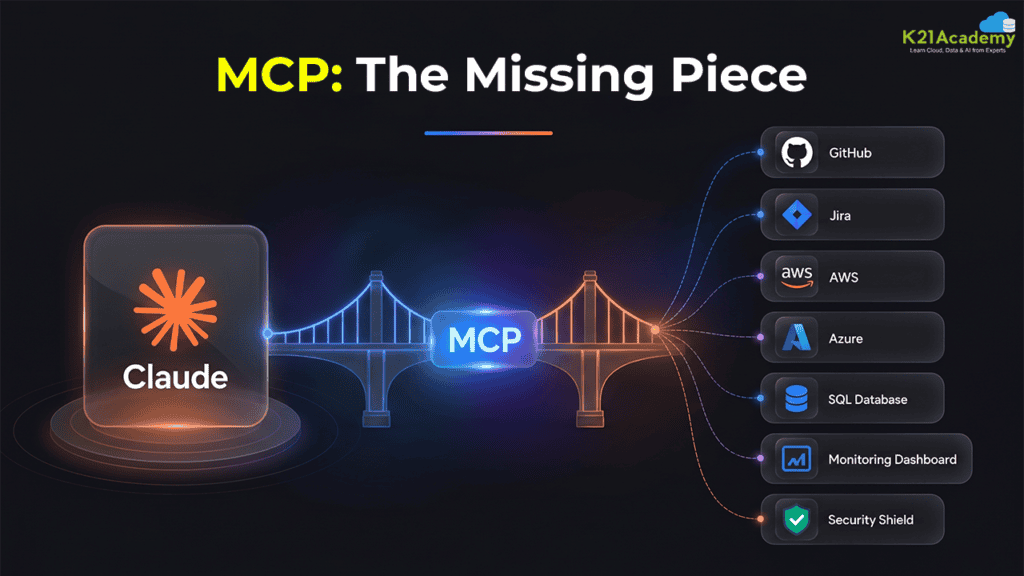
Model Context Protocol (MCP) is rapidly becoming a critical technology for AI-powered engineering systems.
Without MCP:
Claude can only generate responses.
With MCP:
Claude can interact with:
This allows AI agents to access real operational context and take meaningful actions.

Recommended Architecture
A modern Agentic CI/CD platform typically includes:
Intelligence Layer
- Claude AI
- Claude Code
Agent Layer
- LangGraph
- OpenAI Agents SDK
- CrewAI
Retrieval Layer
- RAG
- Vector Databases
- Internal Documentation
Observability Layer
- LangSmith
- Langfuse
- OpenTelemetry
Cloud Layer
AWS:
- Amazon Bedrock
- Lambda
- ECS
- EKS
Azure:
- Azure AI Foundry
- AKS
- Azure Functions
Skills DevOps Engineers Need
As AI becomes embedded into software delivery pipelines, engineers need new skills.
Core Skills
- Python
- GitHub Actions
- Jenkins
- GitLab CI
AI Skills
- Prompt Engineering
- Claude AI
- Claude Code
- LLM Fundamentals
Agentic AI Skills
- LangGraph
- CrewAI
- MCP
- Multi-Agent Systems
Production Skills
- LLMOps
- Observability
- AI Evaluation
- Guardrails
Career Impact
Engineers who understand AI-powered CI/CD are increasingly moving into roles such as:
- AI Engineer
- AI Platform Engineer
- Agentic AI Engineer
- DevOps Engineer
- Platform Engineer
- Site Reliability Engineer (SRE)
- AI Solutions Architect
These roles often command significantly higher compensation than traditional automation-focused positions.
Salary Structure for AI-Powered DevOps & CI/CD Engineers (India, USA, UK & Global)
As organizations adopt AI-powered CI/CD pipelines, Agentic DevOps, and intelligent software delivery workflows, demand is growing for professionals who can combine DevOps expertise with AI technologies such as Claude AI, Claude Code, Model Context Protocol (MCP), LangGraph, and LLMOps.
Whether you’re a DevOps Engineer, Platform Engineer, Site Reliability Engineer (SRE), or AI Platform Engineer, developing AI-assisted automation skills can significantly improve your career prospects and earning potential.
Average Salary by Region
| Region | Entry Level (0–2 Years) | Mid-Level (3–6 Years) | Senior (7+ Years) |
|---|---|---|---|
| India | ₹8–15 LPA | ₹18–35 LPA | ₹40–80+ LPA |
| United States (USA) | $110,000–150,000 | $150,000–220,000 | $220,000–350,000+ |
| United Kingdom (UK) | £50,000–70,000 | £70,000–100,000 | £100,000–160,000+ |
| Europe | €60,000–85,000 | €85,000–130,000 | €130,000–190,000+ |
| Australia | AUD 95,000–130,000 | AUD 130,000–180,000 | AUD 180,000–260,000+ |
| Canada | CAD 90,000–120,000 | CAD 120,000–170,000 | CAD 170,000–240,000+ |
| Middle East (UAE, Saudi Arabia) | AED 200,000–300,000 | AED 300,000–500,000 | AED 500,000–750,000+ |
Note: Salary ranges are approximate and depend on experience, cloud platform expertise, AI implementation skills, company size, and total compensation (bonuses, equity, and benefits).
Common Mistakes
Giving AI Too Much Control Too Early
Start with Pattern 1 before moving to autonomous workflows.
Ignoring Observability
Always monitor AI decisions using tools such as LangSmith and Langfuse.
Skipping Guardrails
AI-generated actions should pass through validation and approval workflows.
Treating AI as a Replacement
The strongest teams use AI to augment engineers, not replace them.
Related Readings:- Is Claude Code Worth Learning for Cloud Engineers? Salary Impact, Time-to-ROI, and Best Resources
Which Pattern Should You Choose?
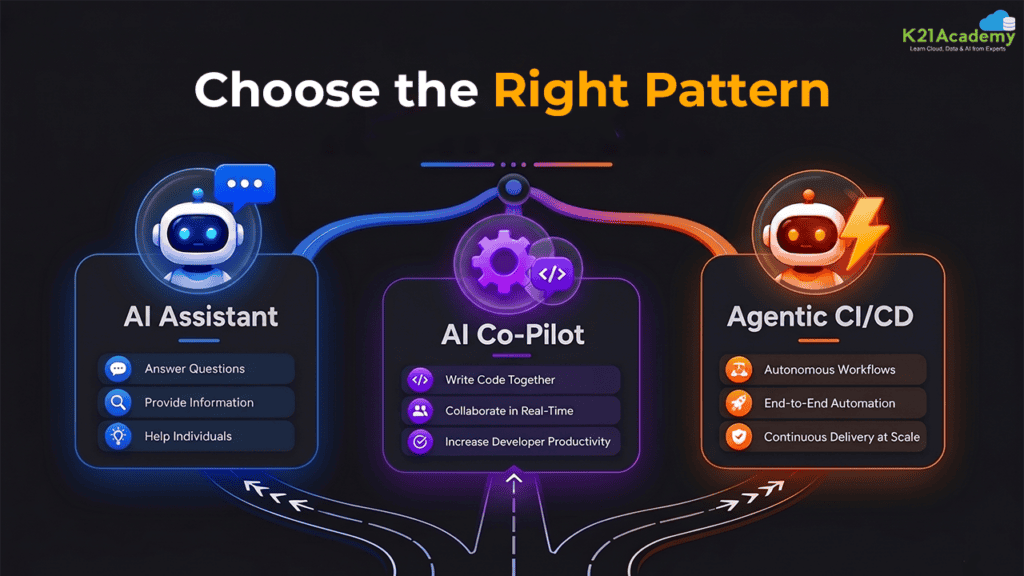
Pattern 1: AI Assistant
Best for:
- Small teams
- Beginners
- Low-risk adoption
Pattern 2: AI Co-Pilot
Best for:
- Growing engineering organizations
- Platform teams
- Cloud engineering groups
Pattern 3: Agentic CI/CD
Best for:
- Enterprise organizations
- High-scale environments
- AI-native engineering teams
Related Readings:- Claude Code Career Roadmap: Skills Developers and AI Engineers Need in 2026
Final Thoughts
The future of CI/CD is not just automation.
It is intelligent automation.
Claude AI and Claude Code are enabling a new generation of software delivery systems that can reason, analyze, recommend, and increasingly take action.
The progression is clear:
Automation → AI Assistance → AI Co-Pilot → Agentic DevOps
Organizations that embrace this evolution will deploy faster, resolve incidents more efficiently, improve software quality, and reduce operational overhead.
For engineers, learning Claude AI, Claude Code, MCP, Creating an AI Agents, RAG, LangGraph, LLMOps, AWS, and Azure is quickly becoming one of the most valuable investments they can make.
The next generation of DevOps professionals won’t just automate pipelines.
They’ll build pipelines that think.