





Artificial Intelligence (AI) is changing the way businesses get in touch with their customers, automate day-to-day activities, and take data-oriented decisions. Large Language Models (LLMs), which are basically highly evolved AI systems, are at the core of this change. These models are able to not only understand but also to mimic human language such that they can be of help to enterprises when it comes to their day-to-day tasks, customer support, and staff productivity.
ChatGPT is, at the moment, the LLM-powered AI companion that has the highest level of user base. Still, ChatGPT isn’t the perfect fit for every business. Different companies have different preferences and expectations. For example, some seek a code writing buddy, whereas others are more concerned with high-level security or alternatively, sector-wise knowledge, multilingual dialogue, or a seamless transition between their current business apps.
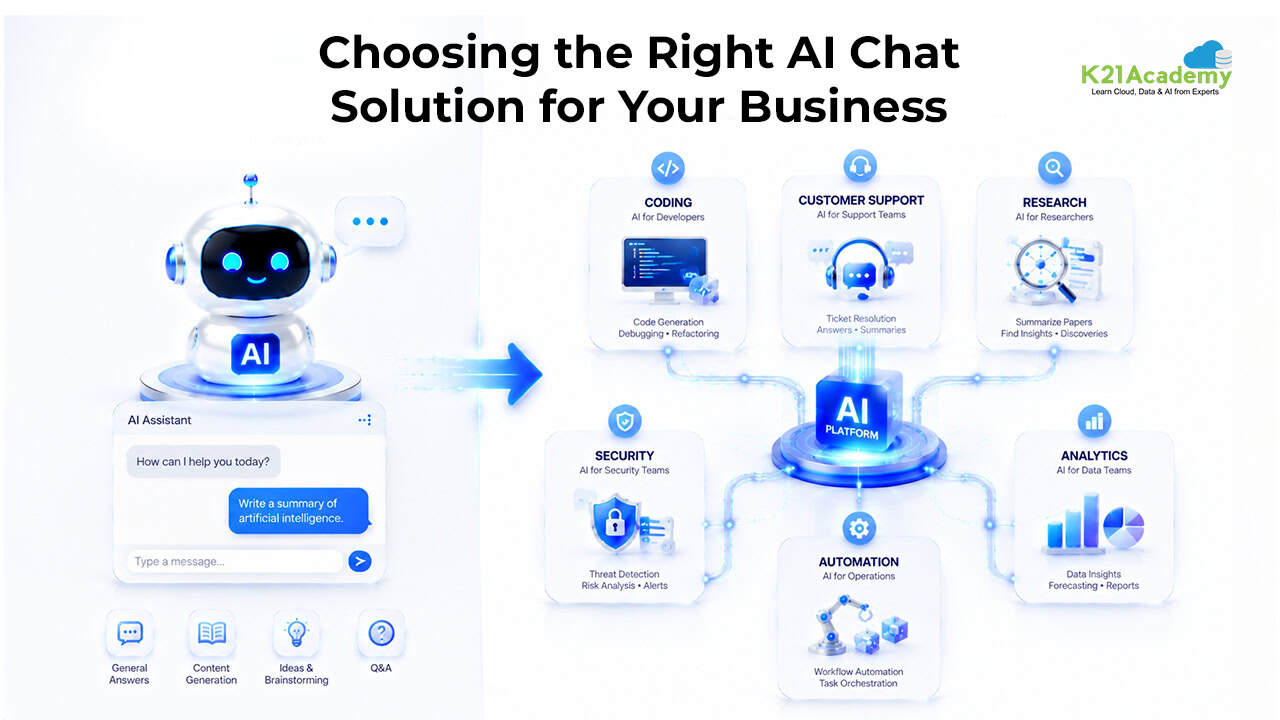
As the market of LLM continues to grow, businesses are now finding a wide gamut of AI chat solutions specially prepared for certain business needs. Customer service automation, for example, or software development, as well as research, text review, and knowledge base work at the business level, these are cases a suitable AI assistant will speed things up, cut costs, and result in the best possible service to the customer.
We shall discuss in this article the reasons for going beyond ChatGPT when choosing an AI chat solution for your business, a side-by-side evaluation of the most popular LLM-powered platforms, a rundown of their features and the situations in which they work best and finally, a guide that outlines the key factors helping to you select the AI chatbot solution that suits your business goals best.
Why Businesses Look Beyond ChatGPT
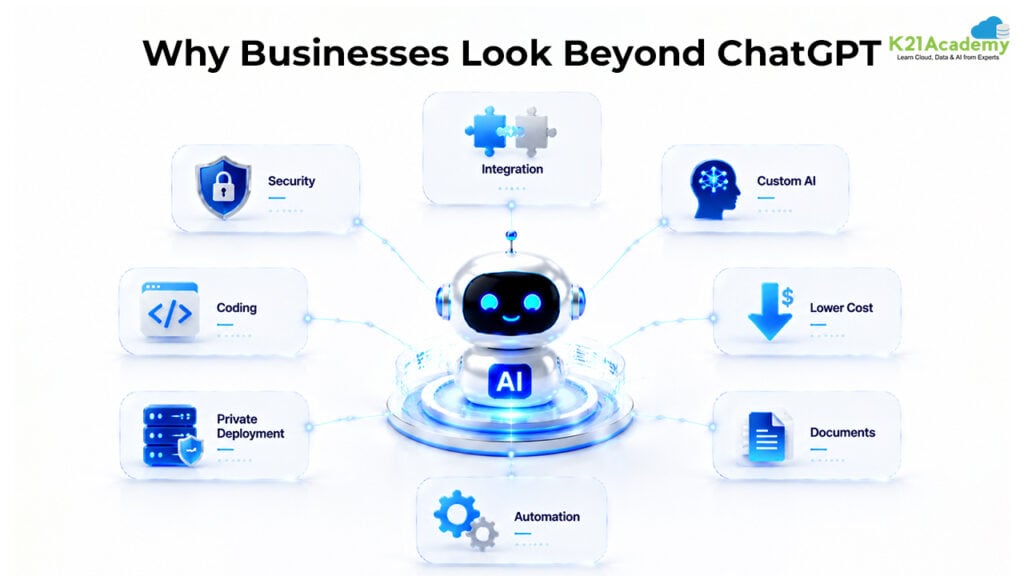
Although ChatGPT is versatile and powerful, businesses often have unique requirements that demand specialized capabilities.
Some common reasons include:
- Enterprise-grade security and compliance requirements
- Better integration with existing business applications
- Industry-specific knowledge and customization
- Lower operational costs
- Improved coding or analytical capabilities
- Private deployment options
- Better document processing and retrieval
- Support for multilingual teams
- Advanced workflow automation
Instead of searching for the “best AI,” organizations should focus on finding the AI that best aligns with their business objectives.
Related Readings:- How to Build Your Own AI Bot in 2026: A Complete Guide
Key Factors to Consider Before Choosing an AI Chat Solution
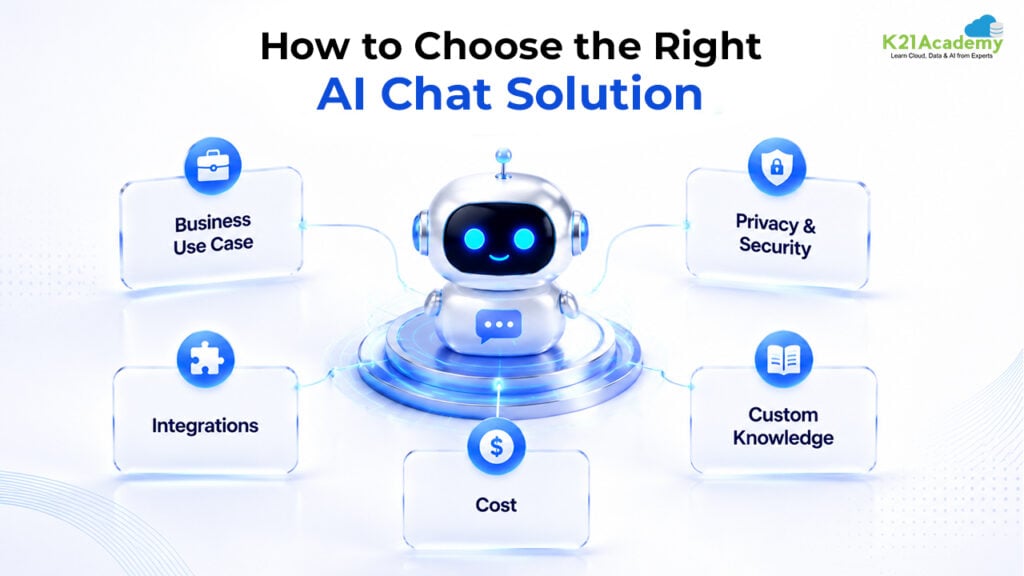
1. Business Use Case
Start by identifying the primary purpose of the AI assistant.
Examples include:
- Customer support
- Sales assistance
- Software development
- Internal knowledge management
- Marketing content creation
- Data analysis
- HR automation
- Legal document review
- Financial reporting
Different AI models excel in different domains.
2. Data Privacy and Security
Businesses handling sensitive information must prioritize security.
Look for features such as:
- Data encryption
- Private cloud deployment
- SOC 2 compliance
- GDPR compliance
- HIPAA compliance (for healthcare)
- Role-based access control
- Audit logs
- Data retention controls
Enterprise security should never be an afterthought.
Related Readings:- The Best Chatbot Development Tools for 2026: A Complete Overview
3. Integration Capabilities
Your AI assistant should work with the tools your team already uses.
Popular integrations include:
- Microsoft 365
- Google Workspace
- Slack
- Teams
- Salesforce
- HubSpot
- Jira
- Confluence
- Notion
- GitHub
- CRM platforms
- ERP systems
The fewer manual steps employees perform, the higher the productivity gains.
4. Custom Knowledge
General-purpose AI only knows publicly available information.
Businesses often need AI that understands:
- Company policies
- Product documentation
- Internal SOPs
- Knowledge bases
- Technical manuals
- Training materials
Solutions with Retrieval-Augmented Generation (RAG) provide significantly better business-specific answers.
5. Cost
Pricing models vary considerably.
Consider:
- Monthly subscriptions
- API pricing
- Usage-based billing
- Enterprise licensing
- Token consumption
- Infrastructure costs
The cheapest option isn’t always the most economical when productivity is considered.
Related Readings:- What Is a Conversational Bot and How It’s Used in 2026?
Best AI Chat Alternatives for Different Business Needs
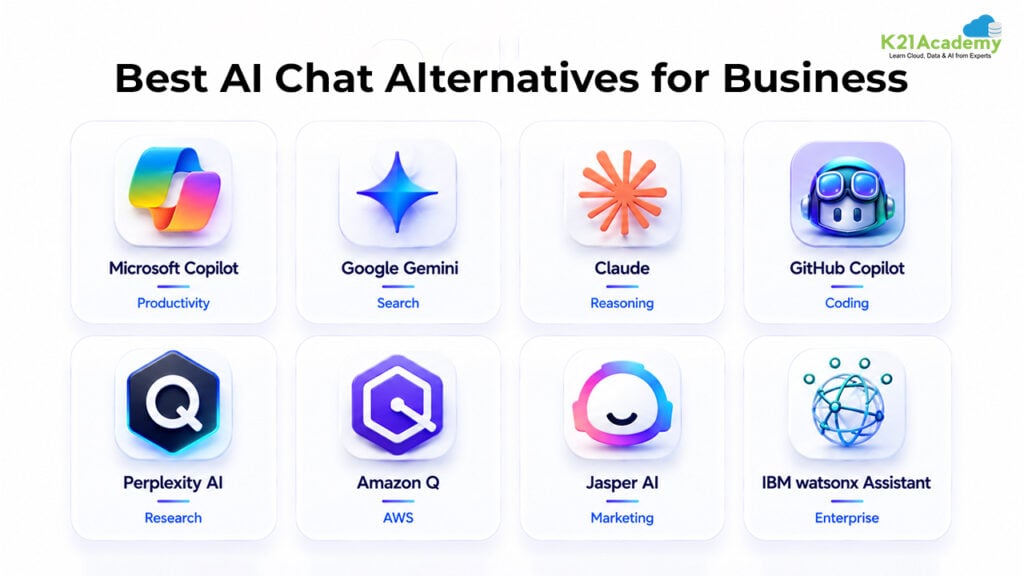
1. Microsoft Copilot
Best For: Microsoft-centric organizations
Ideal for companies already using:
- Microsoft 365
- Outlook
- Excel
- Word
- PowerPoint
- Teams
Strengths
- Native Office integration
- Enterprise security
- Document summarization
- Meeting insights
- Email drafting
- Data analysis in Excel
Ideal Users
- Enterprises
- Corporate teams
- Business analysts
- Finance departments
Related Readings:- Comparing Copilot (Azure) Vs Amazon Q Vs Gemini
2. Google Gemini
Best For: Google Workspace users
Gemini integrates well with:
- Gmail
- Docs
- Sheets
- Meet
- Drive
Strengths
- Strong multimodal capabilities
- Google Search integration
- Workspace productivity
- Large context window
Ideal Users
- Startups
- Marketing agencies
- Educational institutions
3. Claude
Best For: Long-form writing and document analysis
Claude excels at understanding lengthy documents and producing thoughtful responses.
Strengths
- Excellent writing quality
- Large context window
- Strong reasoning
- Safe conversational behavior
Ideal Users
- Legal firms
- Researchers
- HR teams
- Consultants
- Content creators
Related Readings:- Claude Code Explained
4. GitHub Copilot
Best For: Software development teams
Designed specifically for developers.
Strengths
- Code completion
- Bug detection
- Unit test generation
- Documentation
- IDE integration
Ideal Users
- Developers
- Engineering teams
- Software companies
5. Perplexity AI
Best For: Research-heavy organizations
Unlike traditional chatbots, Perplexity provides cited answers from web sources.
Strengths
- Real-time information
- Source citations
- Research assistance
- Market analysis
Ideal Users
- Analysts
- Journalists
- Researchers
- Consultants
6. Amazon Q
Best For: Amazon-Q is good for AWS-based enterprises
Optimized for cloud operations.
Strengths
- AWS integration
- Cloud troubleshooting
- Security insights
- Infrastructure management
Ideal Users
- DevOps teams
- Cloud engineers
- Enterprise IT
7. Jasper AI
Best For: Marketing and content teams
Specialized for content generation.
Strengths
- Social media posts
- Product descriptions
- Marketing campaigns
- Brand voice consistency
Ideal Users
- Digital marketers
- Agencies
- E-commerce businesses
Related Readings: Claude Code vs GitHub Copilot vs Cursor: Which AI Coding Assistant Should You Learn?
8. IBM watsonx Assistant
Best For: Enterprise customer support
Built specifically for conversational AI deployment.
Strengths
- AI chatbots
- Customer service automation
- Workflow automation
- Enterprise deployment
Ideal Users
- Banks
- Insurance companies
- Telecom
- Healthcare
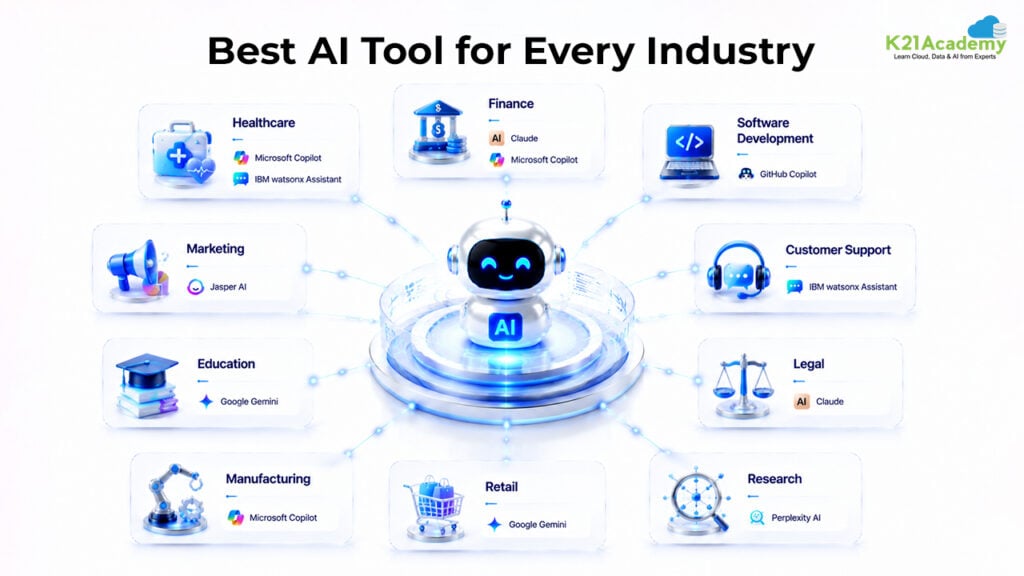
Industry-Specific Recommendations
Questions to Ask Before Making a Decision
Before selecting an AI platform, ask:
- What business problem are we solving?
- Who will use the AI?
- Does it integrate with our existing software?
- How secure is our data?
- Can it understand our internal documents?
- Is it scalable?
- What is the total cost of ownership?
- Does it provide enterprise support?
- Can it be customized?
- Will it improve employee productivity?
These questions help avoid investing in tools that don’t align with your long-term goals.
Related Readings: Top 10 Claude Code Use Cases Every Developer Should Know
Common Mistakes Businesses Make
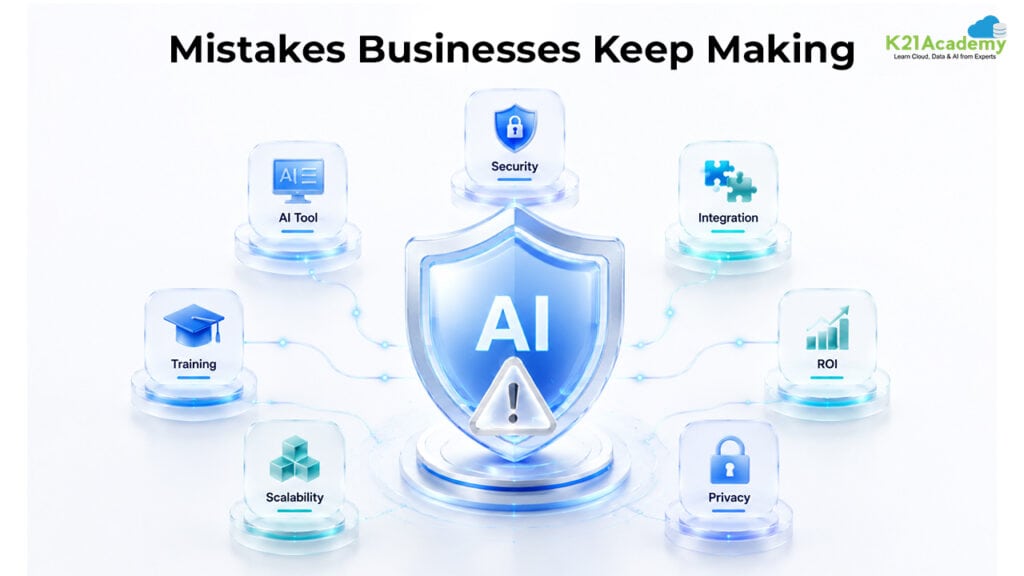
Many organizations rush into AI adoption without a clear strategy.
Avoid these common pitfalls:
- Choosing the most popular tool instead of the most suitable one
- Ignoring security and compliance
- Underestimating integration requirements
- Failing to train employees
- Not measuring ROI
- Overlooking scalability
- Depending entirely on public AI models for sensitive information
A thoughtful implementation plan is just as important as the technology itself.
Related Readings:- Claude Code for AI/ML Engineers: Should You Invest the Time? Honest 2026 Worth-It Breakdown
The Future of Business AI
The next evolution in AI assistants will be to provide not just answers but act as intelligent business agents that can plan, reason and act in running complex workflows. The age of agentic AI, multimodal ai agents, domain specific models and RAG are already transforming enterprise.
Instead of being based on one AI platform, many companies will have a hybrid ecosystem and use one platform for coding, another for customer support, and another for research, marketing, and internal knowledge management. This allows companies to take advantage of each platform’s strengths and keep their operations flexible and scalable.
Final Thoughts
No single AI chat platform is “best” for every business. Which one is “best” for yours depends on the goals of your business sector security considerations, current tech environment, and available budget. Copilot seems the obvious choice for companies already invested in Microsoft tools. Development teams will find GitHub Copilot invaluable, and for research-centric companies Perplexity AI makes sense.
Marketing teams would see a great saving in Jasper AI, and Claude might be the best option for large documentation-heavy businesses. As AI further matures, it won’t be about choosing the most popular chatbot but for the solution that fits your workflows, enables your teams, and delivers business value no matter how well it compares to similar products.
Consider your requirements, experiment with the available options, and go for the one that enables your organization to perform better in the end.