





Healthcare professionals enter their field to help patients, not to spend hours typing notes into electronic health records. Yet documentation demands have grown into one of the most time-consuming aspects of clinical practice today.
For every hour spent with a patient, clinicians often spend nearly two hours on administrative tasks, including charting, coding, and updating records. This imbalance contributes to clinician burnout, reduced face time with patients, and costly documentation errors that affect care quality.

This article explores how generative AI clinical documentation tools are changing this dynamic. We will cover why documentation remains a bottleneck, how AI automates key workflows, the benefits organisations can expect, and what challenges to address before adoption.
Why Clinical Documentation Remains a Bottleneck
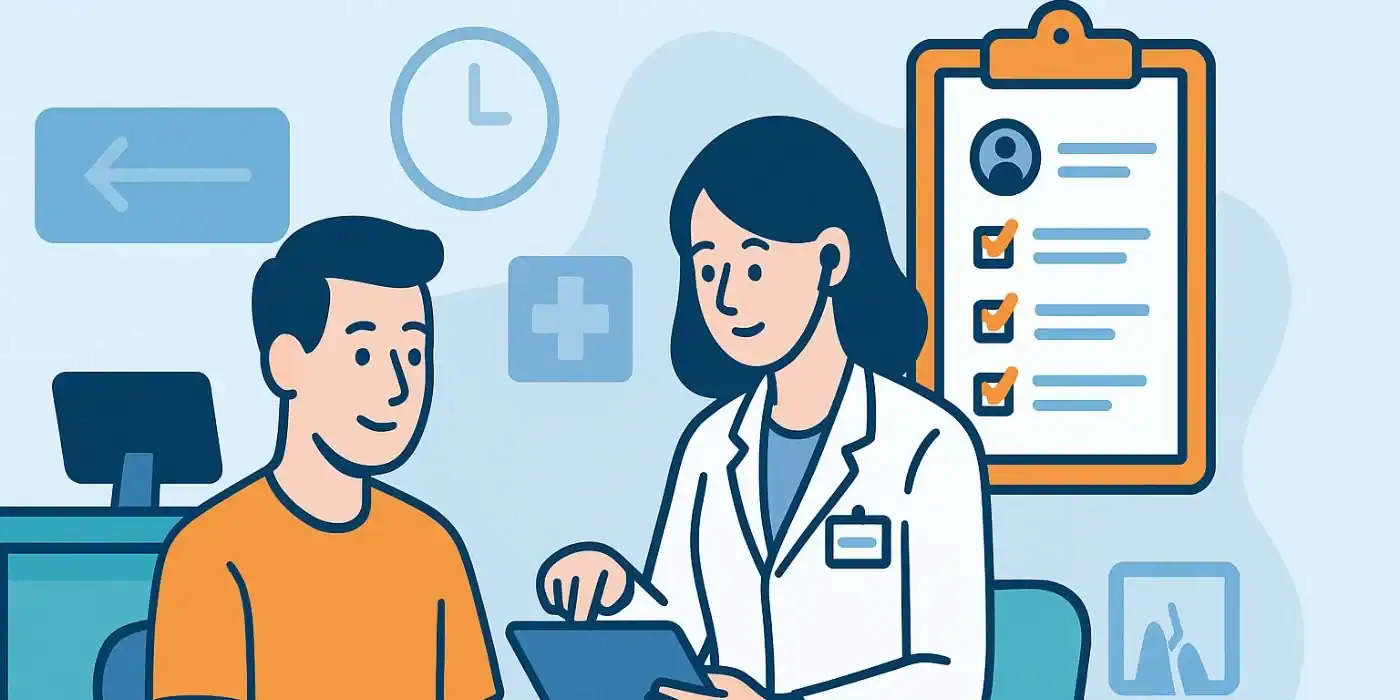
Despite decades of investment in electronic health record (EHR) systems, clinical documentation continues to consume a disproportionate share of clinician time. Understanding the root causes helps explain why AI offers a compelling solution.
The Administrative burden on clinicians: Modern healthcare generates enormous volumes of documentation. Every patient encounter requires structured notes, diagnostic codes, treatment plans, and compliance records. Clinicians often complete this work after hours, a practice so common it has earned the name “pyjama time” in the medical community.
This burden falls heaviest on primary care physicians and mental health professionals who manage high patient volumes. Therapists, for example, must document session observations, therapeutic interventions, and treatment progress for every client. Multiply that across 20 to 30 sessions per week, and documentation becomes a second full-time job.
Documentation Quality vs. Speed: Clinicians face a constant trade-off between thorough documentation and efficient patient care. Rushing through notes leads to incomplete records, vague language, and missing clinical details. Taking extra time produces better notes but means fewer patients seen or longer after-hours work.
This tension creates a lose-lose situation. Incomplete documentation increases compliance risks and can affect reimbursement. Thorough documentation, done manually, pushes clinicians toward exhaustion. Neither outcome serves patients or organisations well.
The ripple effect on patient care: Documentation overload does not just affect clinicians. It impacts the entire care delivery chain. When providers spend more time on screens than on patients, the therapeutic relationship suffers. Patients notice when their clinician focuses on a keyboard rather than on their concerns.
Errors in documentation also cascade downstream. Inaccurate notes can lead to incorrect diagnoses, inappropriate treatment plans, and billing disputes. In mental health settings, poor documentation may fail to capture critical risk indicators, creating safety concerns that extend well beyond the individual session.
Related Readings:- Generative AI vs Machine Learning vs Deep Learning: Key Differences Explained (2026)
How Generative AI transforms the Documentation Process
Generative AI applies large language models to understand, summarize, and structure clinical conversations into professional documentation. This technology goes beyond simple transcription by interpreting clinical context and producing notes that follow established medical formats. Some key processes for generative AI clinical documentation include:
Ambient listening & real-time transcription: One of the most impactful applications is ambient AI listening during clinical encounters. The technology captures the natural conversation between clinician and patient, then converts it into structured documentation automatically.
Unlike traditional dictation, ambient AI understands clinical terminology, identifies relevant medical concepts, and filters out non-clinical conversation. The clinician focuses entirely on the patient while the AI handles documentation in the background. This preserves the human connection that is central to effective care.
Structured Note Generation: Generative AI does not just produce raw transcripts. It organizes clinical information into standard formats such as SOAP notes (Subjective, Objective, Assessment, Plan), DAP notes, intake assessments, and treatment plans.
Platforms offering AI-powered clinical documentation can identify therapeutic techniques used during a session, capture relevant clinical observations, and produce notes that match the clinician’s preferred writing style. This means the output reads as if the clinician wrote it personally, saving hours of manual work each week.
Coding & Compliance Automation: Beyond note generation, generative AI assists with clinical coding for billing and compliance purposes. The technology can suggest appropriate diagnostic codes based on the documented encounter, flag potential compliance gaps, and ensure notes meet payer requirements.
This reduces the back-and-forth between clinicians and billing departments. It also minimizes coding errors that lead to claim denials or audit risks, directly improving an organization’s revenue cycle performance.
Related Readings:- Generative AI Explained: Real-World Use Cases You NEED to Know (2026)
Key Benefits of Healthcare Organizations
The advantages of generative AI clinical documentation extend beyond individual clinician productivity. Organizations adopting these tools report measurable improvements across several operational areas.
1) Reduced Administrative Costs: Documentation consumes a significant portion of healthcare operational budgets. When clinicians spend less time on notes, organizations can reallocate those hours toward direct patient care. This effectively increases patient capacity without adding staff.
According to Grand View Research, the global AI in healthcare market is projected to grow at a compound annual rate exceeding 35% through 2030, with clinical documentation automation ranking among the top adoption drivers. Organizations that invest in these tools now position themselves for long-term operational advantage.
2) Improved Accuracy & Consistency: Manual documentation introduces variability. Two clinicians documenting the same encounter may produce significantly different notes. Generative AI standardizes this process by applying consistent formatting, terminology, and clinical detail across all documentation.
The result is a more reliable medical record. Consistent documentation supports better care coordination between providers, smoother handoffs during shift changes, and more defensible records during audits or legal reviews.
3) Better Clinician Well-being: Burnout remains a crisis across healthcare. Documentation burden is consistently cited as a primary contributor, particularly among mental health professionals and primary care physicians. Reducing time spent on notes directly addresses one of the root causes.
Clinicians who reclaim two to three hours per day from documentation report higher job satisfaction, improved work-life balance, and renewed focus on patient relationships. For organizations, this translates to better retention rates and lower recruitment costs in an already tight labour market.
Challenges to Consider before Adopting Generative AI Clinical Documentation
While generative AI offers significant promise, healthcare organizations must approach adoption thoughtfully. Several challenges require careful planning and mitigation before adopting generative ai clinical documentation.
1) Data Privacy & Regulatory Compliance: Clinical documentation contains some of the most sensitive personal information in any industry. Any AI tool processing this data must comply with regulations such as HIPAA in the United States, GDPR in Europe, and regional privacy laws like PIPEDA in Canada.
Organizations should verify that AI vendors encrypt data in transit and at rest, delete audio recordings after processing, and remove personally identifiable information automatically. A thorough vendor security assessment is non-negotiable before deployment.
2) Clinical Validation & Accuracy: Generative AI models can produce fluent, professional-sounding text that contains factual errors. In clinical settings, even small inaccuracies carry serious consequences. A misattributed symptom or an incorrectly documented medication could affect patient safety.
Clinicians must review and approve all AI-generated notes before they become part of the official medical record. The AI serves as a powerful drafting tool, not a replacement for clinical judgement. Organisations should establish clear review protocols and track accuracy metrics over time.
3) Change Management & Clinican buy-in: Technology adoption in healthcare faces unique resistance. Clinicians are understandably cautious about tools that interact with patient data and clinical workflows. Past experiences with poorly implemented EHR systems have created lasting scepticism toward new technology.
Successful adoption requires involving clinicians early in the evaluation process. Start with a pilot group of willing participants, demonstrate measurable time savings, and gather feedback before scaling. Peer champions who share positive experiences carry more influence than top-down mandates.
Related Readings:- Claude Code Career Roadmap: Skills Developers and AI Engineers Need in 2026
Implementing Generative AI Clinical Documentation
Organizations ready to explore these tools can follow a structured approach to minimise risk and maximise impact.
- Assess Your Current Documentation Workflow: Begin by measuring how much time clinicians currently spend on documentation. Survey your team about pain points, bottlenecks, and workarounds they rely on today. This baseline data helps you quantify the impact of any new tool and build a clear business case for leadership.
- Choose the Right Integration Approach: Evaluate AI documentation tools based on how they integrate with your existing systems. The best solutions work alongside your current EHR rather than replacing it. Look for platforms that support your specific documentation formats and clinical specialties.
- Measure Outcomes and Iterate: Track key metrics from the start: time saved per clinician, note completion rates, documentation accuracy, and clinician satisfaction scores. Compare these against your baseline to demonstrate ROI and justify broader rollout. Use feedback loops to refine the implementation continuously. Clinicians will identify edge cases, preferences, and workflow adjustments that make the tool more effective over time. Treat the rollout as an iterative process rather than a one-time deployment.
Related Readings:- Generative AI vs Agentic AI: Complete Career Guide for IT Professionals in 2026
Conclusion
Generative AI clinical documentation addresses one of healthcare’s most persistent operational challenges. By automating note creation, standardizing clinical records, and reducing administrative burden, these tools free clinicians to focus on what matters most: patient care.
The technology is not a silver bullet. Successful implementation requires careful vendor evaluation, robust privacy safeguards, and genuine clinician engagement throughout the process. Organizations that approach adoption thoughtfully will see measurable gains in efficiency, accuracy, and staff satisfaction.
The path forward starts with understanding your current documentation challenges and taking incremental steps toward automation. The clinicians who benefit from reduced paperwork, and the patients who receive more attentive care, will make the investment worthwhile.
Related Readings:- Claude Code for AI/ML Engineers: Should You Invest the Time? Honest 2026 Worth-It Breakdown
Next Task: Enhance Your AI/ML Skills
K21 Academy provides expert training, hands-on labs, and practical insights to help your team master AI and machine learning cloud platforms, turning your AI ambitions into reality. Explore the power of generative AI applications and advanced analytics today!
Ready to master AI, machine learning, generative AI & Agentic AI? Join K21 Academy’s AIML FREE class and take the first step toward a $250K+ career in AI, ML, Data Science, GenAI & Agentic AI—even without coding experience! Secure your spot now!