


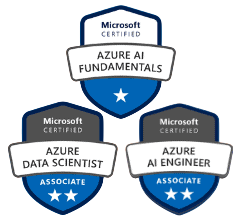

The demand for azure ai certification professionals is growing rapidly as organizations worldwide accelerate AI adoption and cloud transformation initiatives. From intelligent chatbots to advanced machine learning solutions, Microsoft Azure has become one of the leading platforms for building and deploying AI-powered applications. Certifications like AI-901, AI-103, and AI-300, are now considered valuable milestones in the azure ai certification path, helping professionals validate their skills in AI concepts, Azure AI services, and machine learning operations.
Understanding Azure AI/ML ^
Understanding Azure AI/ML is essential for professionals looking to build, deploy, and manage AI solutions at scale. Microsoft Azure offers a comprehensive ecosystem of AI and machine learning services that support everything from data preparation and model training to deployment, monitoring, and automation. As organizations continue investing in AI-driven transformation, Azure AI/ML has become one of the most widely adopted cloud AI platforms for enterprises and developers alike.
Azure AI/ML combines powerful machine learning capabilities with prebuilt AI services, helping teams accelerate development while reducing operational complexity.
Core Components of Azure AI/ML
| Service | Purpose | Common Use Cases |
|---|---|---|
| Azure Machine Learning | End-to-end ML lifecycle management | Model training, MLOps, deployment |
| Azure Cognitive Services, | Prebuilt AI APIs | Vision, speech, NLP, translation |
| Azure OpenAI Service | Generative AI capabilities | Chatbots, copilots, content generation |
| Azure AI Search | Intelligent search solutions | Enterprise search and knowledge mining |
| Azure AI Foundry | Unified platform for building and deploying AI apps and agents | GenAI development, agentic AI, model management |

Key Benefits of Azure AI/ML
- Supports low-code and code-first AI development
- Integrates seamlessly with the broader Azure ecosystem
- Enables scalable cloud-based model deployment
- Simplifies MLOps, governance, and monitoring
- Helps organizations accelerate AI adoption securely
Whether you are preparing for AI-901, AI-103, or AI-300 certifications, understanding Azure AI/ML provides the foundation needed to work with modern AI applications, machine learning workflows, and Generative AI solutions on Microsoft Azure.
To learn more about the workflow, check out our blog on Azure Machine Learning Service Workflow
Overview of Generative AI ^
What is Generative AI & How It Works?
Generative AI, is a type of artificial intelligence that creates new content, like text, images, and music, by learning from existing data. Unlike traditional AI, which focuses on analyzing and predicting, Generative AI can produce original and creative outputs
 This technology is useful in many fields, such as creating personalized marketing content and generating synthetic medical data for research. Using Generative AI on Azure lets you harness powerful tools to build innovative AI solutions.
Azure AI Certification Path Overview
The azure ai certification path is a structured learning roadmap designed by Microsoft to help professionals build expertise in Artificial Intelligence, Machine Learning, Azure AI services, and cloud-based data science solutions. This microsoft ai certification path guides learners from foundational AI concepts to advanced implementation and operational AI skills on Microsoft Azure.
As AI adoption continues to grow across industries, organizations are actively seeking professionals with validated Azure AI expertise. Following a clear azure certification roadmap helps learners choose the right certifications based on their career goals, whether they are beginners entering AI or experienced professionals advancing toward AI engineering and data science roles.
Key Highlights of the Azure AI Certification Path
- Covers foundational, associate-level, and role-based AI certifications
- Includes certifications such as AI-901, AI-103, and AI-300
- Focuses on practical Azure AI, machine learning, and Generative AI skills
- Supports career paths for AI engineers, developers, and data scientists
- Aligns with real-world cloud AI and enterprise AI implementation needs
Azure AI Certification Path vs Traditional AI Learning
Unlike generic AI learning programs that focus mainly on theory, the Microsoft ai certification path emphasizes hands-on implementation using Azure AI services, MLOps workflows, cloud deployment, and enterprise-scale AI solutions. This makes the azure ai certification path especially valuable for professionals working with production-ready AI systems in modern cloud environments.
Azure AI Certification Path Overview
The azure ai certification path is a structured learning roadmap designed by Microsoft to help professionals build expertise in Artificial Intelligence, Machine Learning, Azure AI services, and cloud-based data science solutions. This microsoft ai certification path guides learners from foundational AI concepts to advanced implementation and operational AI skills on Microsoft Azure.
As AI adoption continues to grow across industries, organizations are actively seeking professionals with validated Azure AI expertise. Following a clear azure certification roadmap helps learners choose the right certifications based on their career goals, whether they are beginners entering AI or experienced professionals advancing toward AI engineering and data science roles.
Key Highlights of the Azure AI Certification Path
-
Covers foundational, associate-level, and role-based AI certifications
-
Includes certifications such as AI-901, AI-103, and AI-300
-
Focuses on practical Azure AI, machine learning, and Generative AI skills
-
Supports career paths for AI engineers, developers, and data scientists
-
Aligns with real-world cloud AI and enterprise AI implementation needs
Azure AI Certification Path vs Traditional AI Learning
Unlike generic AI learning programs that focus mainly on theory, the microsoft ai certification path emphasizes hands-on implementation using Azure AI services, MLOps workflows, cloud deployment, and enterprise-scale AI solutions. This makes the azure ai certification path especially valuable for professionals working with production-ready AI systems in modern cloud environments.
Recommended Azure AI Certification Roadmap
| Certification | Level | Focus Area | Ideal For |
|---|---|---|---|
| AI-901 | Beginner | AI Fundamentals & Azure AI Services | Beginners and non-technical professionals |
| AI-103 | Associate | Azure AI App and Agent Development | AI Engineers, Developers, Gen AI professionals |
| AI-300 | Associate | ML Ops & Generative AI Operations | MLOps Engineers, ML Engineers, DevOps professionals |
This certification roadmap provides a progressive pathway for building practical AI expertise while preparing for high-demand cloud AI roles.
AI-901: Azure AI Fundamentals ^
The AI-901 certification, also known as Azure AI Fundamentals, is Microsoft’s entry-level AI certification designed for beginners, students, business professionals, and career changers looking to start their journey in Artificial Intelligence and cloud AI technologies. It places emphasis on foundational technical skills for working with AI solutions in Azure — including hands-on experience with Microsoft Foundry.
The ai-901 exam introduces core AI concepts, machine learning fundamentals, Generative AI, and Azure AI services without requiring prior deep technical or coding experience.
As AI adoption continues to expand across industries, the ai-901 certification has become the essential starting point for professionals who want to understand how AI solutions are built and used in real-world business environments. It also serves as the foundation for advanced certifications such as AI-103 and AI-300.

What Does the AI-901 Certification Cover?
The azure ai fundamentals certification focuses on understanding core AI concepts and capabilities, and practical implementation of AI solutions using Microsoft Foundry and Azure AI services.
| AI-901 Exam Domains | Weightage |
|---|---|
| AI Concepts and Capabilities | 40–45% |
| Implement AI Solutions Using Microsoft Foundry | 55–60% |
Why Choose AI-901?
-
Beginner-friendly certification with no mandatory prerequisites
-
Builds foundational knowledge of AI and Azure services
-
Covers modern AI topics including Generative AI and Microsoft Foundry
-
Ideal for non-technical professionals exploring AI careers
-
Acts as a stepping stone toward advanced Azure AI certifications
AI-901 Exam Details
| Exam Detail | Information |
|---|---|
| Certification Name | Microsoft Azure AI Fundamentals |
| Exam Code | AI-901 |
| Skill Level | Beginner |
| Prerequisites | None |
| Exam Duration | 45 Minutes |
| Registration Fee | USD 99 (varies by region) |
| Exam Format | Multiple-choice and scenario-based questions |
| Languages Available | English, Japanese, Korean, Chinese, German, French, Spanish, Portuguese, Arabic, Italian, and more |
For professionals entering the AI domain, the ai-901 exam provides a strong understanding of Azure AI services and practical AI concepts that are increasingly valuable in today’s cloud-driven technology landscape.
For more details about this certification: Microsoft Azure AI Fundamentals – AI-901 Exam Detailed Overview
 Benefits:
- Establishes a strong foundational knowledge of AI and Azure
- Suitable for individuals new to AI or cloud computing
- Acts as a stepping stone to more advanced certifications

AI-103: Azure AI Apps and Agents Developer Associate ^
The AI-103 certification, officially known as Azure AI Apps and Agents Developer Associate, is one of Microsoft’s most in-demand AI certifications for professionals building and deploying AI-powered applications and intelligent agents on Azure. It reflects how Microsoft expects AI developers to work today, with Generative AI, agentic AI systems, and Microsoft Foundry at the center of modern AI development.
The ai-103 exam focuses on practical implementation skills including Generative AI application development, RAG (Retrieval-Augmented Generation) systems, AI agent design, function calling, Azure OpenAI integration, and responsible AI deployment. It is an application and agent developer certification with a strong hands-on coding and integration focus.
As organizations increasingly adopt AI-driven automation and agentic AI applications, the demand for certified Azure AI Apps and Agents Developer professionals continues to grow across industries.

What Does the AI-103 Certification Cover?
The ai-103 exam evaluates a candidate’s ability to design, build, and deploy AI applications and agents using Azure AI Foundry, Azure OpenAI, Azure AI Search, and other Azure AI services.
| AI-103 Exam Domains | Weightage |
|---|---|
| Plan and Manage an Azure AI Solution | 25–30% |
| Implement Generative AI and Agentic Solutions | 30–35% |
| Implement Computer Vision Solutions | 10–15% |
| Implement Text Analysis Solutions | 10–15% |
| Implement Information Extraction Solutions | 10–15% |
Key Skills Validated in AI-103
- Building AI applications and agents using Azure AI Foundry
- Implementing Generative AI and RAG solutions with Azure OpenAI
- Developing multi-step AI agent workflows and orchestration
- Working with computer vision, NLP, and document intelligence
- Managing AI solution deployment, monitoring, and responsible AI practices
Why Choose the AI-103 Certification?
- One of Microsoft’s most recognized AI developer certifications in 2026
- Strong focus on real-world Generative AI and agentic AI implementation
- Ideal for AI engineers, developers, and cloud solution architects
- Covers modern AI technologies including AI agents, RAG, and Azure OpenAI
- Helps validate practical AI application development skills for enterprise projects
AI-103 Exam Details
| Exam Detail | Information |
|---|---|
| Certification Name | Azure AI Apps and Agents Developer Associate |
| Exam Code | AI-103 |
| Skill Level | Associate |
| Recommended Experience | Familiarity with AI and machine learning concepts |
| Exam Duration | 100 Minutes |
| Registration Fee | USD 165 (varies by region) |
| Exam Format | Multiple-choice, case study, and scenario-based questions |
| Languages Available | English, Japanese, Korean, Chinese, German, French, Spanish, Portuguese, and more |
For professionals aiming to become an azure ai engineer or Generative AI developer, the ai-103 certification provides practical, job-ready skills that align closely with modern enterprise AI application development and agent-based AI deployment.
AI-103 is designed for professionals who want to build and deploy AI solutions and intelligent agents using Azure services. It focuses on practical skills and the implementation of production-ready AI projects.

For more details about this certification: AI-103 Develop AI Apps & Agents on Azure: Exam Preparation Guide

AI-300: Machine Learning Operations (MLOps) Engineer Associate ^
The AI-300 certification, officially known as Machine Learning Operations (MLOps) Engineer Associate, is a role-based Microsoft certification designed for machine learning engineers, DevOps professionals, and data scientists who want to operationalize machine learning and generative AI solutions on Azure. It covers both traditional MLOps and GenAIOps — the operational practices for running generative AI applications and agents reliably in production.
Microsoft groups both disciplines together as AI Operations (AIOps). The AI-300 exam focuses on designing MLOps infrastructure, managing the ML model lifecycle, deploying and managing generative AI systems using Microsoft Foundry, implementing quality assurance and observability, and optimizing generative AI performance at production scale.
As organizations continue investing in AI-driven analytics and production-ready AI systems, certified MLOps Engineer Associate professionals are increasingly in demand across industries such as finance, healthcare, retail, and manufacturing.

What Does the AI-300 Certification Cover?
The ai-300 exam evaluates a candidate’s ability to design and implement end-to-end MLOps and GenAIOps solutions using Azure Machine Learning, Microsoft Foundry, and related Azure AI services.
| AI-300 Exam Domains | Weightage |
|---|---|
| Design and Implement an MLOps Infrastructure | 15–20% |
| Implement Machine Learning Model Lifecycle and Operations | 25–30% |
| Design and Implement a GenAIOps Infrastructure | 20–25% |
| Implement Generative AI Quality Assurance and Observability | 10–15% |
| Optimize Generative AI Systems and Model Performance | 10–15% |
Key Skills Validated in AI-300
-
Designing and implementing MLOps infrastructure on Azure
-
Managing machine learning model lifecycle, deployment, and versioning
-
Building GenAIOps infrastructure using Microsoft Foundry
-
Implementing observability and evaluation for generative AI systemsOptimizing RAG performance and model efficiency at production scale
Why Choose the AI-300 Certification?
- Strong focus on practical MLOps and GenAIOps engineering skills
- Ideal for machine learning engineers, DevOps professionals, and data scientists moving into operations
- Covers end-to-end ML and generative AI lifecycle management
- Aligns with modern cloud AI operations, CI/CD, and observability practices
- Valuable for professionals managing AI systems at enterprise scale
AI-300 Exam Details
| Exam Detail | Information |
|---|---|
| Certification Name | Machine Learning Operations (MLOps) Engineer Associate |
| Exam Code | AI-300 |
| Skill Level | Associate |
| Recommended Experience | Familiarity with machine learning, Python, Azure Machine Learning, and CI/CD workflows |
| Exam Duration | 120 Minutes |
| Registration Fee | USD 165 (varies by region) |
| Exam Format | Scenario-based, case studies, and technical Implementation questions |
| Languages Available | English, Japanese, Korean, Chinese, German, French, Spanish, Portuguese, and more |

Benefits:
- Equips you with comprehensive skills to handle data science projects on Azure
- Emphasizes practical application and real-world scenarios
- Valuable for data scientists looking to leverage Azure for their projects]
For learners pursuing advanced machine learning operations expertise, the ai-300 certification provides hands-on exposure to Azure Machine Learning, Microsoft Foundry, GenAIOps workflows, and enterprise-grade AI production pipelines. It is especially valuable for professionals planning to build a long-term career as an MLOps engineer or AI operations specialist.
For more details about this certification: AI-300 Exam | Microsoft Certified Operationalizing Machine Learning and Generative AI Solutions Overview

Hands-On Labs for Certification Preparation ^
Hands-on labs are essential for gaining practical experience and reinforcing theoretical knowledge. Engaging in these labs allows you to apply what you’ve learned in real-world scenarios, making the concepts more tangible. Here are some recommended labs to help you prepare for Azure AI certifications:
1. Introduction to Azure Machine Learning Studio: Learn the basics of Azure Machine Learning, including data preparation, model training, and deployment.

2. Building a Simple AI Model Using Azure Cognitive Services: Create a basic AI model using pre-built APIs for vision, speech, and language.

3. Implementing a Data Science Solution with Azure Machine Learning: Develop and deploy a complete data science solution, from data ingestion to model deployment.
These labs provide a hands-on approach to learning, helping you build confidence and proficiency in using Azure AI/ML services. They are designed to complement your study materials and prepare you effectively for certification exams.
Azure AI Certification Comparison Table
Choosing the right Azure AI certification can be challenging, especially for professionals comparing foundational AI learning with advanced implementation or data science-focused roles. This azure ai certifications comparison helps you understand the differences between AI-901, AI-103, and AI-300 based on skill level, career path, technical depth, and practical use cases.
Whether you are deciding which Azure AI cert is best for your career goals or planning a complete Azure certification roadmap, the comparison below provides a clear side-by-side overview.
Azure AI Certifications Comparison
| Feature | AI-901: Azure AI Fundamentals | AI-103: Azure AI Apps and Agents Developer Associate | AI-300: MLOps Engineer Associate |
|---|---|---|---|
| Certification Level | Beginner | Associate | Associate |
| Primary Focus | AI fundamentals and Azure AI concepts | Building and deploying AI apps and agents | MLOps and GenAIOps operations |
| Ideal For | Beginners, students, career changers | AI engineers, developers, GenAI professionals | MLOps engineers, ML engineers, DevOps professionals |
| Technical Difficulty | Low | Medium to High | High |
| Coding Requirement | Minimal | Moderate | Strong Python and ML knowledge recommended |
| Core Technologies | Azure AI Services, Microsoft Foundry basics, AI concepts | Azure AI Foundry, Azure OpenAI, RAG, AI agents, Azure AI Search | Azure Machine Learning, Microsoft Foundry, MLOps pipelines, GenAIOps |
| Practical Focus | Conceptual understanding with hands-on Foundry labs | Real-world AI application and agent development | End-to-end ML and generative AI lifecycle operations |
| Career Roles | AI Analyst, AI Consultant, Cloud Beginner | Azure AI Engineer, GenAI Developer, Agentic AI Engineer | MLOps Engineer, AI Operations Engineer, ML Engineer |
| Recommended Experience | None | Familiarity with AI, Generative AI concepts, and Python basics | Experience with ML, Azure Machine Learning, and DevOps workflows |
| Exam Duration | 45 Minutes | 100 Minutes | 120 Minutes |
Understanding the Differences
The biggest difference in this azure cert comparison is the depth of technical implementation and the target career role.
- AI-901 focuses on foundational AI knowledge and hands-on experience with Microsoft Foundry at a beginner level. It is ideal for understanding Azure AI services without requiring deep coding or machine learning expertise.
- AI-103 is implementation-focused and designed for professionals building AI-powered applications and agents using Azure AI Foundry, Azure OpenAI, and RAG systems. It includes practical topics such as Generative AI, agentic AI, computer vision, NLP, and information extraction.
- AI-300 is centered around machine learning and generative AI operations. It requires strong knowledge of model lifecycle management, MLOps pipelines, GenAIOps infrastructure, Microsoft Foundry deployment, and production-grade AI observability and optimization.
This distinction matters because each certification aligns with a very different career direction and technical skill set.
When to Choose Which Azure AI Certification
Choose AI-901 if:
-
You are completely new to AI or cloud technologies
-
You want a beginner-friendly introduction to Azure AI
-
You are a business professional, student, or career switcher
-
You want to build foundational knowledge before advanced certifications
Example Scenario:
A project manager or business analyst wants to understand how AI solutions work in Azure before moving into AI-driven projects.
Choose AI-103 if:
-
You want to become an Azure AI Engineer or Generative AI Developer
-
You are interested in building AI applications, agents, and copilots
-
You work with Azure AI Foundry, Azure OpenAI, or RAG-based solutions
-
You want practical implementation-focused AI development skills
Example Scenario:
A software developer wants to build enterprise AI applications using Azure OpenAI, NLP, and computer vision services.
Choose AI-300 if:
-
You want to work in MLOps or AI operations roles
-
You are interested in model lifecycle management, CI/CD for AI, and GenAIOps
-
You already have experience with Python, Azure Machine Learning, or DevOps workflows
-
You want deeper expertise in operationalizing ML and generative AI at production scale
Example Scenario:
A data scientist or DevOps engineer wants to build and manage scalable machine learning pipelines, deploy GenAI systems using Microsoft Foundry, and maintain production AI workflows reliably.
Which Azure AI Certification Should You Start With?
For most beginners, AI-901 is the best starting point because it builds foundational AI and Azure knowledge. From there:
- Move to AI-103 if your focus is AI application development, agentic AI, and Generative AI engineering.
- Move to AI-300 if your goal is machine learning operations, GenAIOps, or production-grade AI lifecycle management.
This structured learning path makes the azure ai certifications comparison more practical by helping professionals choose certifications based on real career outcomes rather than exam difficulty alone.
How to Prepare for Azure AI Certifications
Successful azure ai certification preparation requires more than just reading documentation. Whether you are preparing for AI-901, AI-103, or AI-300, the best approach combines structured learning, hands-on Azure practice, and exam-focused study resources. This study guide outlines a step-by-step process to help you understand how to prepare effectively for Microsoft Azure AI certifications.
Prerequisites Before You Start
Before beginning your Azure AI certification journey, make sure you have the following:
Basic Requirements
- A Microsoft Azure account (Free Tier or Pay-As-You-Go)
- Stable internet connection and modern browser
- Basic understanding of cloud computing concepts
- Familiarity with AI and machine learning fundamentals (recommended for AI-103 and AI-300)
Recommended Tools
| Tool | Purpose |
|---|---|
| Microsoft Azure Portal | Access Azure AI services |
| Azure Machine Learning | ML experimentation and deployment |
| Azure AI Foundry | Build, deploy, and manage AI apps and agents |
| Visual Studio Code | Coding and development |
| Python | Required for AI-103 and AI-300 workflows |
| GitHub | Managing code repositories and CI/CD pipelines |
Step-by-Step Azure AI Certification Preparation Guide
Step 1: Choose the Right Azure AI Certification Path
Start by selecting the certification aligned with your current skill level and career goals.
| Certification | Best For |
|---|---|
| AI-901 | Beginners and non-technical professionals |
| AI-103 | AI engineers, developers, and GenAI professionals |
| AI-300 | MLOps engineers, ML engineers, and DevOps professionals |
Choosing the correct certification path helps you focus on relevant skills and avoid unnecessary topics during preparation.
Step 2: Set Up Your Azure AI Learning Environment
Create a Microsoft Azure account and explore Azure AI services through the Azure Portal.
Example Azure CLI Setup
az login
az account show
Create a Resource Group
az group create --name AzureAI-Lab --location eastus
This setup allows you to practice with Azure AI services, Azure Machine Learning, Azure AI Foundry, and Azure OpenAI resources.
Step 3: Follow an Exam-Focused Study Plan
A structured study guide is essential for efficient learning.
Recommended Preparation Strategy
-
Review official exam objectives
-
Study one domain at a time
-
Take notes on Azure AI services and concepts
-
Practice with hands-on labs and sandbox environments
-
Attempt mock tests regularly
Suggested Weekly Plan
| Week | Focus Area |
|---|---|
| Week 1 | AI concepts and Azure fundamentals |
| Week 2 | Azure AI services and implementation |
| Week 3 | Hands-on labs and practice projects |
| Week 4 | Mock exams and revision |
Step 4: Practice with Real Azure AI Services
Hands-on experience is critical for AI-103 and AI-300 preparation.
Key Services to Practice
- Azure Machine Learning
- Azure AI Services
- Azure OpenAI Service
- Azure AI Foundry
- Azure AI Search
- Document Intelligence
- NLP and Computer Vision APIs
Example Python SDK Snippet
from azure.ai.textanalytics import TextAnalyticsClient
from azure.core.credentials import AzureKeyCredential
Practical exposure helps reinforce theoretical concepts and improves confidence for scenario-based exam questions.
Step 5: Use Practice Tests and Real-World Scenarios
Most Azure AI exams include scenario-based questions that test practical understanding.
Focus Areas During Revision
-
AI solution architecture
-
NLP and Generative AI use cases
-
Model deployment and monitoring
-
MLOps and ML lifecycle management
-
Responsible AI and governance concepts
Timed mock exams help improve speed, accuracy, and exam readiness.
Step 6: Join Structured Azure AI Training Programs
Instructor-led learning can significantly improve certification success rates, especially for advanced certifications like AI-102 and DP-100.
-
AI-901 Training for Azure AI Fundamentals
-
AI-103 Azure AI Apps and Agents Developer Training
-
AI-300 Azure MLOps Engineer Training
Step 7: Verify Your Preparation Before Scheduling the Exam
Before booking the certification exam, validate your readiness.
Final Readiness Checklist
-
Can you explain key Azure AI services confidently?
-
Have you completed hands-on Azure labs?
-
Are you consistently scoring well in practice tests?
-
Can you solve scenario-based questions without guessing?
If the answer is “yes” to most of these, you are likely ready for the certification exam.
Common Issues During Azure AI Certification Preparation
Common Problem 1: Limited Hands-On Experience
Many learners focus only on theory. Azure AI certifications, especially AI-102 and DP-100, require practical understanding of Azure services and workflows.
Common Problem 2: Confusion Between AI-102 and DP-100
AI-102 focuses on implementing AI applications using Azure AI services, while DP-100 is centered around machine learning engineering and data science workflows.
Common Problem 3: Difficulty Understanding Azure Services
Azure includes multiple AI and ML tools that can feel overwhelming initially. Using guided labs and structured K21 training can simplify the learning process significantly.
Success Stories & Case Studies ^
One of the biggest azure ai certification benefits is gaining practical AI and cloud skills that organizations actively use in real-world projects. From retail and media to education and analytics, companies are using Azure AI services to improve automation, personalization, and customer engagement.
These success stories show how Azure AI technologies and certifications can create strong career benefits for professionals and measurable business impact for organizations.
Real-World Azure AI Success Stories
| Organization | Azure AI Use Case | Business Impact |
|---|---|---|
| Project Gutenberg | AI-generated audiobook narration using Azure AI Speech Services | Improved accessibility and scalable content delivery |
| Marks & Spencer | Personalized customer recommendations with Azure Machine Learning | Increased customer engagement and loyalty |
| LALIGA | AI-driven fan analytics and personalized content | Enhanced fan experience and revenue opportunities |
These examples highlight how Azure AI solutions are being applied across industries to solve business challenges using machine learning, NLP, analytics, and Generative AI technologies.
Azure AI Certification Benefits
-
Validates practical AI and Azure cloud skills
-
Improves career opportunities in AI and cloud computing
-
Helps professionals work on enterprise AI projects
-
Builds expertise in machine learning and Generative AI
-
Strengthens credibility for Azure AI Engineer and Data Scientist roles
Career Paths After Azure AI Certifications
| Certification | Common Career Roles |
|---|---|
| AI-901 | AI Analyst, Cloud Associate |
| AI-103 | Azure AI Engineer, AI Developer |
| AI-300 | Azure Data Scientist, ML Engineer |
For learners preparing for Azure AI certifications, structured programs like K21 Academy training can help with hands-on labs, real-world projects, and exam-focused preparation for AI-901, AI-103, and AI-300.

Conclusion ^
Mastering Azure AI/ML and obtaining certifications like AI-901, AI-103, and AI-300 can significantly advance your career and enhance your AI skills. Engaging in hands-on labs and exploring Generative AI on Azure allows you to apply theoretical knowledge in practical scenarios.
Azure provides a robust platform with powerful tools to innovate and solve real-world problems effectively. Start your journey today by diving into Azure AI services and unlocking new opportunities in the world of AI.
Frequently Asked Questions
Ans: Azure AI certification is a Microsoft credential that validates skills in Artificial Intelligence, machine learning, and Azure AI services. Certifications such as AI-901, AI-103, and AI-300 help professionals demonstrate expertise in cloud AI concepts, AI application development, and machine learning operations using Microsoft Azure.
Ans: Azure AI certification is important because it helps professionals validate in-demand AI and cloud computing skills. As organizations increasingly adopt AI technologies, certifications like AI-901, AI-103, and AI-300 improve career opportunities, strengthen technical credibility, and help candidates stand out for AI engineer, GenAI developer, and MLOps engineer roles.
Ans: The Azure AI certification path includes different certifications based on skill level and career goals. Beginners typically start with AI-901, while professionals move to AI-103 for AI application and agent development expertise, or AI-300 for advanced machine learning operations and GenAIOps skills. Candidates prepare using training, labs, and practice exams before taking the official Microsoft certification exam.
Ans: The main benefits of Azure AI certification include improved career opportunities, stronger AI and cloud expertise, hands-on Azure AI skills, and industry-recognized credentials. These certifications also help professionals work with real-world AI technologies such as machine learning, NLP, Generative AI, agentic AI, and Azure OpenAI services.
Ans: Azure AI certifications are suitable for beginners, developers, AI engineers, cloud professionals, MLOps engineers, and career changers interested in Artificial Intelligence. AI-901 is ideal for foundational learning, AI-103 is designed for professionals building AI applications and intelligent agents, and AI-300 is for those working with machine learning operations and generative AI systems at production scale.
Ans: The prerequisites depend on the certification level. AI-901 has no mandatory prerequisites and is beginner-friendly, though basic familiarity with Azure and Python basics is helpful. AI-103 recommends familiarity with AI, Generative AI concepts, Python, and cloud platforms. AI-300 is better suited for professionals with knowledge of Python, Azure Machine Learning, machine learning workflows, and CI/CD practices.
Ans: To get started with Azure AI certification, begin by choosing the right certification path based on your goals and experience level. Create an Azure account, study the official exam objectives, practice with Azure AI services and Microsoft Foundry, and use structured training programs, hands-on labs, and mock exams to prepare effectively.
Ans: The future of Azure AI certification looks strong as demand for AI, cloud computing, Generative AI, and agentic AI skills continues to grow globally. Certifications like AI-901, AI-103, and AI-300 are positioned to remain highly valuable for professionals working in AI engineering, machine learning operations, automation, and enterprise AI transformation projects. Q1) What is Azure AI certification?
Q2) Why is Azure AI certification important?
Q3) How does Azure AI certification work?
Q4) What are the benefits of Azure AI certification?
Q5) Who should learn about Azure AI certification?
Q6) What are the prerequisites for Azure AI certification?
Q7) How to get started with Azure AI certification?
Q8) What is the future of Azure AI certification?
Next Task: Enhance Your Azure AI/ML Skills