

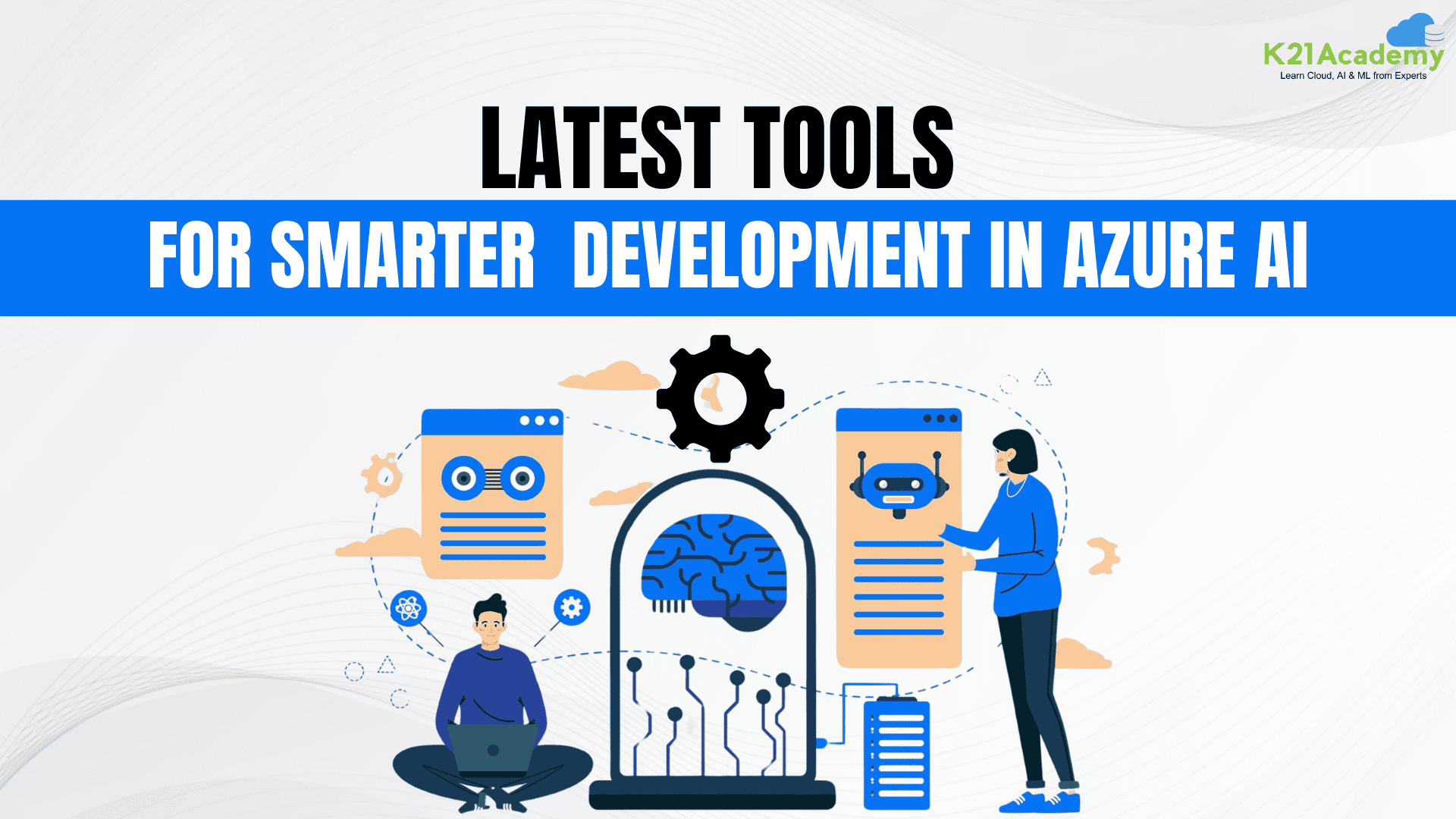



Enterprise AI adoption is accelerating faster than ever, with businesses increasingly investing in real-time AI applications, multimodal systems, and cost-optimized Large Language Model workflows. In 2026, technologies such as the azure ai realtime api, prompt caching, model distillation, and vision fine-tuning are becoming some of the most important innovations shaping modern AI development on Microsoft Azure.
These advanced Azure AI capabilities help organizations build faster conversational systems, reduce AI inference costs, optimize model performance, and create highly customized AI applications for image analysis, automation, and enterprise copilots. From real-time voice assistants and low-latency AI agents to specialized computer vision models trained on custom datasets, Azure’s latest AI ecosystem is enabling businesses to deploy smarter and more scalable AI solutions.
In this article, you will explore how Azure AI Realtime APIs work, the role of prompt caching in improving efficiency, how model distillation reduces infrastructure costs, and why vision fine-tuning is becoming essential for industry-specific AI applications. We’ll also cover practical use cases, implementation benefits, and the future impact of these emerging Azure AI technologies in 2026.

Realtime API
Enhancing Low-Latency Multimodal Conversations with Azure AI
The azure realtime api is one of the most advanced additions to the modern Azure AI ecosystem, designed to enable ultra-fast, human-like AI interactions across text, audio, and multimodal communication channels. Unlike traditional AI systems that process speech and text sequentially, the openai realtime api supports real-time streaming conversations with significantly lower latency, making AI assistants feel more natural and responsive.
As businesses increasingly adopt AI-powered copilots, voice assistants, and conversational agents, demand for low latency ai systems has grown rapidly. Modern users expect instant responses, natural speech flow, and seamless context switching between voice, text, and actions. The Azure Realtime API addresses these challenges by enabling developers to build highly interactive AI experiences optimized for speed, scalability, and multimodal communication.
What is the Azure Realtime API?
The azure realtime api is a real-time conversational AI interface that supports streaming audio, text, and function calling capabilities within a single interaction pipeline. It is designed for applications requiring instant AI responses, continuous conversations, and dynamic user engagement.
This API enables:
- Real-time voice conversations
- Streaming AI responses
- Simultaneous text and audio output
- Function calling during live interactions
- Context-aware multimodal conversations
Unlike conventional chatbot architectures that rely heavily on separate speech-to-text and text-to-speech stages, the openai realtime api reduces processing delays by handling interactions more natively and efficiently.
Key Features of the Azure Realtime API
| Feature | Description | Real-World Benefit |
|---|---|---|
| Real-Time Audio Streaming | Enables live conversational AI responses | Faster and smoother voice interactions |
| Multimodal Support | Handles text, speech, and function calls together | More natural user experiences |
| Low Latency Processing | Reduces conversational delays significantly | Improves responsiveness for AI assistants |
| Function Calling | Allows AI to trigger workflows and actions | Supports automation and task execution |
| Context Retention | Maintains conversational flow across interactions | Better long-form conversations |
Why Low-Latency AI Matters
In conversational AI systems, even small delays can negatively affect user experience. Research and industry observations show that users are far more engaged when AI systems respond almost instantly during voice interactions.
Low latency ai systems are especially important for:
- AI customer support assistants
- Real-time translation systems
- Voice-enabled copilots
- AI tutoring applications
- Healthcare virtual assistants
- Gaming and immersive AI environments
For example, an AI-powered support assistant handling live customer conversations can dramatically improve customer satisfaction when response times are reduced from several seconds to near real-time interactions.
How the OpenAI Realtime API Improves Multimodal Conversations
Traditional conversational AI systems often process:
- Speech-to-text conversion
- Text understanding
- AI response generation
- Text-to-speech synthesis
This multi-stage workflow introduces delays and reduces conversational fluidity.
The openai realtime api streamlines this process by enabling:
- Faster streaming responses
- Real-time speech interaction
- Simultaneous audio and text outputs
- Natural conversational turn-taking
- More expressive AI-generated speech
This creates highly immersive multimodal conversations where users can interact with AI more naturally through voice, text, and contextual actions.
Practical Use Cases of Azure Realtime API
AI Voice Assistants
Organizations can build AI assistants capable of real-time voice communication for customer support, scheduling, or workplace productivity.
AI Language Learning Platforms
Realtime AI conversations help learners practice pronunciation, fluency, and conversational skills with instant feedback.
Enterprise AI Copilots
Businesses can integrate voice-enabled copilots into internal systems for reporting, workflow automation, and intelligent search.
Healthcare & Telemedicine
Doctors and healthcare platforms can use realtime AI assistants for patient interaction, transcription, and medical workflow support.
Gaming & Interactive Experiences
Gaming companies can create intelligent NPCs and AI-driven interactive storytelling experiences using live conversational AI.
Example: AI-Powered Language Practice Applications
Azure AI has demonstrated the potential of realtime conversational systems through immersive language-learning experiences that combine:
- Live AI conversations
- Speech interaction
- Real-time feedback
- Adaptive AI tutoring
These systems simulate realistic conversations while maintaining low response latency, helping users practice speaking skills in more natural learning environments.
Benefits for Developers
Developers using the azure realtime api can build scalable AI systems with:
- Faster response times
- Improved conversational realism
- Simplified multimodal AI workflows
- Reduced infrastructure complexity
- Better user engagement metrics
For modern AI engineering teams, realtime conversational capabilities are becoming a major competitive advantage, especially in applications involving AI agents, customer interaction, and voice-enabled automation systems.
Future of Realtime AI on Azure
As Generative AI and AI copilots continue evolving in 2026, realtime AI infrastructure is expected to become a core component of enterprise AI systems. Future advancements will likely include:
- More emotionally expressive AI voices
- Advanced multimodal reasoning
- Real-time AI video interactions
- Autonomous AI agents with voice capabilities
- Personalized AI assistants with persistent memory
The growing adoption of low latency ai systems indicates that realtime conversational AI will play a central role in the next generation of enterprise applications and intelligent user experiences.


Vision Fine-Tuning
Training Multimodal AI Models with Text and Image Data
As AI systems evolve beyond text-only interactions, organizations are increasingly investing in multimodal AI models capable of understanding both visual and textual information simultaneously. Vision fine-tuning azure is one of the most important emerging capabilities in this space, allowing developers to customize AI models using combined image and text datasets for highly specialized real-world applications.
Unlike traditional computer vision systems that rely only on image recognition, multimodal fine-tuning enables AI models to understand visual context alongside descriptive text, instructions, metadata, and semantic relationships. This creates more intelligent AI systems capable of handling complex tasks such as product recognition, autonomous navigation, inventory management, medical imaging analysis, and visual search applications.
What is Vision Fine-Tuning?
Vision fine-tuning azure is a process where AI models are further trained using both images and accompanying text data to improve performance on domain-specific tasks.
Developers can provide:
- Images
- Captions
- Labels
- Descriptions
- Structured metadata
using formats such as JSONL datasets for custom model training.
This form of image text training helps AI systems learn:
- Visual patterns
- Object relationships
- Contextual understanding
- Semantic interpretation between images and text
As a result, models become significantly more accurate for specialized business use cases compared to generic pretrained vision models.
Why Multimodal Fine-Tuning Matters
Modern enterprise AI applications increasingly require systems that can:
- Understand visual content
- Interpret textual instructions
- Connect images with semantic meaning
- Process multimodal inputs simultaneously
For example:
- Retail AI systems analyze product images and descriptions together
- Healthcare AI models combine scans with medical notes
- Autonomous systems interpret traffic signs alongside contextual instructions
- Inventory systems match product images with catalog metadata
This is why multimodal fine-tuning is rapidly becoming a major area of AI innovation in 2026.
Key Features of Vision Fine-Tuning Azure
| Feature | Description | Business Benefit |
|---|---|---|
| Image & Text Training | Uses visual and textual data together | Better contextual understanding |
| JSONL Dataset Support | Structured training format for multimodal data | Simplified dataset preparation |
| Domain Customization | Fine-tunes models for specific industries | Higher task accuracy |
| Improved Visual Recognition | Learns specialized visual patterns | Better enterprise AI performance |
| Scalable Cloud Training | Uses Azure AI infrastructure | Faster deployment and scaling |
How Vision Fine-Tuning Works
The vision fine-tuning azure workflow generally includes:
- Collecting image and text datasets
- Structuring data into JSONL format
- Uploading training datasets into Azure AI services
- Running multimodal fine-tuning jobs
- Evaluating model performance improvements
- Deploying optimized models into production
During image text training, the AI model learns relationships between:
- Visual objects
- Captions and descriptions
- Labels and classifications
- Contextual text instructions
This improves the model’s ability to interpret complex real-world visual scenarios.
Real-World Example: GrabMaps Platform
A strong example of multimodal fine-tuning comes from Grab, a large Southeast Asian technology and food delivery company. The organization used Vision Fine-Tuning capabilities to improve its GrabMaps platform for navigation and mapping optimization.
By fine-tuning AI models with approximately 100 targeted examples, the company achieved:
- 20% improvement in lane count accuracy
- 13% improvement in speed limit sign localization
This demonstrates how even relatively small, high-quality multimodal datasets can significantly improve AI model performance for specialized enterprise tasks.
Practical Applications of Image Text Training
Retail & E-Commerce
AI systems can identify products using images while understanding descriptions, pricing data, and inventory metadata.
Autonomous Vehicles & Smart Navigation
Models can interpret traffic signs, lane markings, and environmental context together for safer navigation.
Healthcare & Medical Imaging
Medical AI systems can analyze scans alongside patient notes and diagnostic descriptions for improved decision support.
Manufacturing & Quality Inspection
Factories can use multimodal AI to detect product defects while comparing inspection results against production specifications.
Intelligent Document Processing
AI systems can process forms, invoices, and scanned documents containing both images and text information.
Benefits for Developers & AI Teams
Using vision fine-tuning azure, development teams can:
- Build highly specialized AI models
- Improve model accuracy for niche tasks
- Reduce dependency on generic vision systems
- Create scalable multimodal AI workflows
- Accelerate enterprise AI deployment
This capability is particularly valuable for organizations requiring custom AI solutions tailored to industry-specific datasets and workflows.
Challenges & Considerations
Although multimodal fine-tuning offers major advantages, developers should also consider:
- High-quality dataset preparation requirements
- Data labeling complexity
- Responsible AI and bias considerations
- Increased compute requirements for training
- Model evaluation and validation processes
Well-structured datasets remain one of the most important factors influencing multimodal model performance.
Future of Vision Fine-Tuning in 2026
The demand for multimodal AI systems is expected to grow rapidly as businesses move toward more intelligent and context-aware applications. Future advancements in vision fine-tuning azure may include:
- Real-time multimodal reasoning
- Video and image sequence training
- AI agents capable of visual understanding
- Advanced robotics and automation systems
- Personalized visual AI assistants
As AI continues evolving beyond text-only interactions, image text training and multimodal AI development are likely to become foundational components of next-generation enterprise AI systems.

Model Distillation
Building Faster and Smaller AI Models with Azure AI
As Large Language Models and multimodal AI systems continue growing in size and complexity, organizations are increasingly facing challenges related to infrastructure cost, latency, scalability, and deployment efficiency. This is where model distillation azure becomes highly valuable. By transferring knowledge from large, resource-intensive models into optimized smaller ai models, developers can maintain strong performance while significantly reducing compute requirements.
Knowledge distillation is rapidly becoming one of the most important optimization techniques for machine learning engineers building scalable enterprise AI systems in 2026. It enables organizations to deploy efficient AI models on cloud environments, edge devices, mobile applications, and realtime AI systems without relying entirely on massive foundation models.
What is Model Distillation?
Model distillation azure is a machine learning optimization technique where a smaller “student” model learns from a larger, more advanced “teacher” model.
Instead of training the smaller model only on raw datasets, the student model learns:
- Predictions from the teacher model
- Probability distributions
- Hidden patterns and relationships
- Contextual reasoning behavior
This process allows smaller ai models to achieve performance levels closer to large models while requiring significantly fewer computational resources.
Why Knowledge Distillation Matters
Modern AI models often contain billions of parameters, making them:
- Expensive to run
- Slower during inference
- Difficult to deploy at scale
- Resource-intensive for edge devices
Through knowledge distillation, organizations can:
- Reduce inference costs
- Improve deployment speed
- Lower memory requirements
- Enable low-latency AI systems
- Improve scalability for production environments
Industry implementations have shown that distilled models can often reduce model size dramatically while retaining a large percentage of original performance accuracy depending on the task and training quality.
Key Concepts in Model Distillation Azure
| Concept | Description | Benefit |
|---|---|---|
| Teacher Model | Large pretrained model with high accuracy | Provides learning guidance |
| Student Model | Smaller optimized model | Faster and cheaper deployment |
| Soft Labels | Teacher-generated probability outputs | Better knowledge transfer |
| Distillation Loss | Training objective comparing outputs | Improves student model learning |
| Model Compression | Reducing model complexity | Lower infrastructure costs |
How Knowledge Distillation Works
The model distillation azure workflow typically follows these steps:
- Train or select a large teacher model
- Generate predictions and probability outputs
- Create a smaller student architecture
- Train the student model using teacher outputs
- Optimize performance and latency
- Deploy the distilled model into production
During knowledge distillation, the student model learns not only the final answers but also the reasoning patterns and probability relationships generated by the larger model.
This creates compact AI systems that remain highly capable while being far more efficient.
Benefits of Smaller AI Models
Faster Inference Speed
Distilled models process requests more quickly, making them ideal for realtime AI applications and low-latency environments.
Reduced Infrastructure Costs
Using smaller ai models lowers GPU and cloud compute requirements, helping organizations optimize operational expenses.
Better Scalability
Compact models can handle larger numbers of simultaneous requests with lower resource consumption.
Edge & Mobile Deployment
Distilled AI models are easier to deploy on:
- Mobile devices
- IoT systems
- Edge AI hardware
- Embedded enterprise systems
Improved Energy Efficiency
Smaller models consume less power, which is increasingly important for sustainable AI infrastructure.
Real-World Applications of Model Distillation
AI Assistants & Chatbots
Organizations can deploy lightweight conversational AI systems with faster response times and lower cloud costs.
Edge AI Systems
Manufacturing and IoT platforms can run distilled AI models directly on edge devices without relying heavily on centralized cloud infrastructure.
Mobile AI Applications
Developers can integrate efficient AI capabilities into smartphones and portable devices with reduced latency.
Autonomous Systems
Distilled models help autonomous systems make faster decisions in realtime environments such as robotics and smart vehicles.
Enterprise AI Deployment
Large enterprises using AI copilots and automation tools can optimize scalability by deploying distilled models for repetitive workflows.
Example: Large Enterprise AI Optimization
Consider a company deploying an enterprise AI assistant to thousands of employees daily. Running a large foundation model for every request may create:
- High inference costs
- Increased latency
- GPU bottlenecks during peak usage
Using model distillation azure, the organization can create a smaller optimized model tailored specifically for internal workflows. This reduces infrastructure requirements while maintaining acceptable response quality for common enterprise tasks.
Challenges & Considerations
Although knowledge distillation provides major optimization benefits, developers should consider:
- Potential accuracy trade-offs
- Dataset quality requirements
- Teacher model selection complexity
- Task-specific optimization needs
- Evaluation and benchmarking processes
Distilled models may not always fully replicate the reasoning capabilities of extremely large foundation models, especially for highly complex tasks.
Model Distillation vs Traditional Model Compression
| Technique | Primary Goal | Common Use Case |
|---|---|---|
| Knowledge Distillation | Transfer knowledge into smaller models | AI deployment optimization |
| Quantization | Reduce numerical precision | Faster inference |
| Pruning | Remove unnecessary parameters | Model size reduction |
| Compression | Reduce storage requirements | Efficient deployment |
Among these techniques, knowledge distillation is especially valuable because it attempts to preserve model intelligence while improving efficiency.

Implementation Guide: How to Implement Azure AI Features in 2026
This practical azure ai development guide walks through the essential steps required to implement advanced Azure AI capabilities such as Realtime APIs, Prompt Caching, Vision Fine-Tuning, and Model Distillation. Whether you are building enterprise AI assistants, multimodal applications, or scalable AI services, these steps will help you successfully implement azure ai features in real-world environments.
Prerequisites Before You Begin
Before starting implementation, ensure you have:
- An active Microsoft Azure account
- Access to Azure AI Studio or Azure OpenAI Service
- Basic Python knowledge
- Familiarity with REST APIs and JSON
- Visual Studio Code or another code editor
- Python 3.9+ installed
- Azure SDK and OpenAI libraries configured
Required Azure Services
| Service | Purpose |
|---|---|
| Azure OpenAI | Generative AI and LLM access |
| Azure AI Studio | AI model management |
| Azure Machine Learning | Model training and deployment |
| Azure AI Vision | Vision Fine-Tuning workflows |
| Azure Monitor | Monitoring and logging |
Step 1: Create Azure AI Resources
Start by creating the required Azure AI services in the Azure Portal.
Actions
- Sign in to Azure Portal
- Create an Azure OpenAI resource
- Create Azure AI Studio workspace
- Configure resource group and region
- Generate API keys and endpoints
Expected Result
You should now have:
- API endpoint URL
- Deployment name
- Authentication keys
- Access to Azure AI Studio playground
Example Configuration
AZURE_OPENAI_ENDPOINT="https://your-resource.openai.azure.com/"
AZURE_OPENAI_API_KEY="your-api-key"
DEPLOYMENT_NAME="gpt-4o"
Step 2: Install Required SDKs & Libraries
Install the required Python packages for Azure AI development.
Installation Commands
pip install openai
pip install azure-ai-ml
pip install azure-identity
pip install requests
Why This Step Matters
These libraries help developers:
- Connect to Azure AI APIs
- Deploy machine learning models
- Manage authentication securely
- Build scalable AI workflows
Step 3: Connect to Azure OpenAI API
Now configure your application to interact with Azure AI models.
Python Example
from openai import AzureOpenAI

client = AzureOpenAI(
    api_key="your-api-key",
    api_version="2024-02-15-preview",
    azure_endpoint="https://your-resource.openai.azure.com/"
)

response = client.chat.completions.create(
    model="gpt-4o",
    messages=[
        {"role": "user", "content": "Explain Azure AI Realtime API"}
    ]
)

print(response.choices[0].message.content)
Expected Output
The model should generate a detailed AI response explaining the requested topic.
Screenshot Suggestions
- Azure AI Studio deployment page
- Successful API response output
- Resource configuration screen
Step 4: Implement Azure Realtime API
To build low latency ai applications and realtime conversational systems, configure streaming responses using Azure Realtime APIs.
Key Features Enabled
- Realtime voice interaction
- Streaming AI responses
- Multimodal conversations
- Function calling support
Example Realtime Workflow
response = client.chat.completions.create(
    model="gpt-4o-realtime-preview",
    messages=[
        {"role": "user", "content": "Start realtime conversation"}
    ],
    stream=True
)

for chunk in response:
    print(chunk)
Practical Use Cases
- AI voice assistants
- Realtime customer support
- AI copilots
- Interactive tutoring systems
Step 5: Configure Prompt Caching
To improve efficiency and reduce ai costs, enable reusable prompt workflows.
Recommended Cached Prompt Strategy
system_prompt = """
You are an enterprise AI assistant trained on company policies.
Always respond professionally.
"""
Instead of repeatedly sending the same system instructions, reusable prompt structures can be cached and optimized across sessions.
Benefits
- Faster response generation
- Lower token usage
- Reduced infrastructure cost
- Improved scalability
Step 6: Prepare Data for Vision Fine-Tuning
For vision fine-tuning azure, prepare image and text datasets using JSONL format.
Example JSONL Structure
{
  "image_url": "product-image-01.jpg",
  "text": "Red running shoes with white sole"
}
Dataset Preparation Tips
- Use high-quality labeled images
- Maintain consistent formatting
- Include descriptive text captions
- Validate image-text alignment
Typical Use Cases
- Product recognition
- Inventory management
- Medical imaging
- Visual search systems
Step 7: Deploy Smaller AI Models Using Distillation
To optimize performance and scalability, developers can create smaller ai models using model distillation workflows.
Distillation Workflow
- Select teacher model
- Generate training outputs
- Train student model
- Evaluate inference performance
- Deploy optimized model
Why This Matters
Knowledge distillation helps:
- Reduce GPU usage
- Improve inference speed
- Lower cloud costs
- Enable edge AI deployment
Step 8: Test & Verify Your Azure AI Setup
After implementation, verify that all AI services work correctly.
Verification Checklist
- API requests return successful responses
- Streaming responses function correctly
- Vision models process images accurately
- Prompt caching improves response speed
- Distilled models deploy successfully
Sample Test Prompt
"Summarize the uploaded product image and generate recommendations."
Expected Result
The AI system should:
- Analyze image content
- Generate contextual text responses
- Respond quickly without API failures
Common Issues & Troubleshooting Tips
Issue 1: Authentication Errors
Problem: Invalid API key or endpoint configuration.
Solution:
Double-check:
- API keys
- Deployment names
- Endpoint URLs
- Azure region settings
Issue 2: Slow Response Times
Problem: High latency during AI inference.
Solution:
- Enable prompt optimization
- Use cached prompts
- Reduce token length
- Optimize realtime configurations
Issue 3: Vision Fine-Tuning Dataset Errors
Problem: Training jobs fail due to invalid dataset formatting.
Solution:
- Validate JSONL structure
- Ensure image paths are accessible
- Remove corrupted images
- Verify caption formatting consistency
Pricing Impact
As organizations scale Generative AI and multimodal applications in 2026, understanding azure ai pricing has become critical for developers, startups, and enterprise AI teams. Features such as realtime AI APIs, multimodal processing, and large language model inference can significantly affect operational costs depending on usage volume, token consumption, latency requirements, and deployment architecture.
Capabilities like prompt caching savings and optimized realtime api cost management are increasingly important because enterprise AI systems often process millions of requests every month. Without proper optimization, AI infrastructure expenses can grow rapidly.
Azure AI Pricing Factors
Several factors directly influence Azure AI operational costs:
- Model size and complexity
- Number of API requests
- Input and output token usage
- Realtime streaming requirements
- Fine-tuning and training workloads
- GPU compute requirements
- Region and deployment type
- Concurrent user traffic
Enterprise AI applications with high-frequency interactions usually experience the highest infrastructure costs, especially when using advanced multimodal or realtime AI systems.
Realtime API Cost Considerations
The realtime api cost for enterprise AI applications can increase quickly because realtime systems require:
- Continuous streaming responses
- Low-latency infrastructure
- Higher GPU utilization
- Persistent conversational context
For example:
- AI voice assistants serving thousands of users daily may generate significantly higher compute costs compared to standard text-based chatbots.
- Multimodal realtime AI systems processing voice and text simultaneously typically consume more resources due to continuous inference requirements.
However, realtime AI systems often provide stronger user engagement and improved customer experience, which can justify higher infrastructure investment for enterprise use cases.
Prompt Caching Savings & Cost Optimization
One of the most effective optimization strategies is implementing prompt caching savings techniques.
Organizations using repeated system prompts, workflows, or AI assistant templates can dramatically reduce:
- Token processing overhead
- Response latency
- API compute costs
Industry implementations suggest that efficient prompt caching strategies may:
- Reduce latency by up to 80%
- Lower inference costs by nearly 50% for repetitive workflows
This becomes especially valuable for:
- AI copilots
- Enterprise assistants
- Customer support systems
- Internal productivity bots
Pricing Impact of Model Distillation
Using smaller ai models through model distillation can significantly reduce long-term AI infrastructure costs.
Benefits of Distilled Models
- Lower GPU consumption
- Reduced memory usage
- Faster inference speed
- Lower realtime processing costs
- Better scalability for enterprise applications
For organizations deploying AI systems at scale, even small inference optimizations can create substantial annual cost savings.
Azure AI Certification & Career Salary Impact
Professionals with Azure AI expertise and certifications often see strong salary growth due to increasing enterprise AI demand.
| Certification | Typical Job Roles | Estimated Salary Impact |
|---|---|---|
| AI-900 | AI Support, Junior AI Roles | Entry-level cloud AI opportunities |
| AI-102 | Azure AI Engineer, AI Developer | Higher enterprise AI demand |
| DP-100 | ML Engineer, Data Scientist | Advanced AI engineering roles |
| Azure MLOps Skills | AI Platform Engineer | Premium enterprise salaries |
Factors affecting salary growth include:
- Practical AI project experience
- Generative AI expertise
- Cloud deployment skills
- Realtime AI implementation knowledge
- Geographic location and company scale
Professionals combining Azure AI certifications with hands-on portfolio projects are increasingly competitive in AI hiring markets in 2026.
Practical Tips to Optimize Azure AI Costs
Use Prompt Caching Strategically
Implement reusable prompt structures to maximize prompt caching savings and minimize repeated token processing.
Deploy Distilled Models for Repetitive Workloads
Use optimized smaller ai models for common enterprise workflows instead of running large foundation models continuously.
Optimize Token Usage
Reduce unnecessary prompt length and context retention to lower API consumption.
Use Realtime APIs Selectively
Deploy realtime conversational infrastructure only where low latency creates meaningful business value.
Monitor AI Usage Continuously
Track token consumption, latency, and model usage patterns using Azure Monitor and analytics dashboards.
Final Thoughts on Azure AI Pricing in 2026
As enterprise AI adoption accelerates, understanding azure ai pricing is becoming just as important as building AI functionality itself. Organizations that optimize inference workflows, implement prompt caching, and deploy efficient AI architectures can dramatically improve scalability while controlling operational expenses.
For developers and businesses, balancing performance, latency, and infrastructure efficiency will remain one of the most important challenges in large-scale AI deployment over the next few years.
When to Use Which Feature
Choosing the right Azure AI capability is important for balancing performance, cost, scalability, and user experience. A smart azure ai feature selection strategy helps developers avoid unnecessary infrastructure costs while improving application efficiency.
Different Azure AI features are designed for different use cases. For example, realtime APIs are best for live conversational systems, while prompt caching is more suitable for repetitive AI workflows that require cost optimization.
| Feature | Best Used For | Key Benefit |
|---|---|---|
| Realtime API | Voice assistants, live AI chat | Low latency responses |
| Prompt Caching | Repeated prompts & workflows | Reduced AI costs |
| Vision Fine-Tuning | Custom image understanding | Improved multimodal accuracy |
| Model Distillation | Lightweight AI deployment | Faster smaller models |
When to Use Prompt Caching
Developers should use prompt caching when:
- System prompts are reused frequently
- AI assistants handle repetitive workflows
- Token costs become too high
- Faster response times are required
Industry implementations show that prompt caching can reduce latency by up to 80% and lower inference costs significantly for repetitive enterprise workloads.
Practical Decision Framework
- Choose Realtime API for interactive user experiences.
- Choose Prompt Caching for cost optimization.
- Choose Vision Fine-Tuning for industry-specific image AI tasks.
- Choose Model Distillation for scalable and lightweight AI deployment.
A proper azure ai feature selection approach ensures better performance, improved scalability, and more efficient AI infrastructure management in 2026.
Safety Considerations
As advanced AI capabilities become more powerful, ai safety azure and responsible ai practices are becoming critical for enterprise adoption. Features like realtime voice interaction, multimodal AI, and voice generation offer major business benefits, but they also introduce risks related to misinformation, impersonation, privacy, and misuse.
One major concern is voice synthesis safety, especially in realtime AI systems capable of generating highly realistic speech. AI-generated voice misuse has already raised concerns globally in areas such as robocalls, impersonation scams, and misleading synthetic media.
| Safety Area | Risk | Recommended Protection |
|---|---|---|
| Voice Synthesis | AI voice impersonation | Voice usage restrictions |
| Realtime AI | Harmful live interactions | Content moderation |
| Multimodal AI | Misleading generated media | Human review workflows |
| Enterprise AI | Sensitive data exposure | Access controls & monitoring |
Key Responsible AI Measures
- Restrict API misuse through authentication and access controls
- Clearly disclose when users are interacting with AI systems
- Use moderation and content filtering systems
- Monitor realtime AI outputs continuously
- Apply human review for sensitive enterprise workflows
Why Responsible AI Matters
Strong responsible ai practices help organizations:
- Build user trust
- Reduce legal and compliance risks
- Prevent harmful AI misuse
- Improve enterprise AI governance
- Support safer large-scale AI adoption
As Azure AI capabilities continue evolving in 2026, balancing innovation with strong ai safety azure practices will remain essential for developers, enterprises, and AI platform providers.

Conclusion
The latest innovations from Azure AI—Realtime API, Prompt Caching, Vision Fine-Tuning, and Model Distillation—offer developers powerful tools to enhance the performance and scalability of AI applications. These features help developers create more immersive, efficient, and cost-effective solutions while maintaining the flexibility to fine-tune and optimize models for specific use cases. Whether you are working on multimodal conversations, reducing costs with prompt caching, or enhancing your models’ performance, these tools will provide you with the resources to elevate your AI projects within Azure.
Frequently Asked Questions
What is azure ai realtime api?
The azure ai realtime api is a low-latency AI interface that enables real-time text and voice interactions using Azure AI models. It supports streaming responses, multimodal conversations, and function calling, making it useful for AI assistants, voice bots, customer support systems, and realtime enterprise AI applications.
Why is azure ai realtime api important?
The azure ai realtime api is important because modern AI applications require fast, human-like interactions with minimal delay. It helps developers build responsive AI systems for voice assistants, copilots, and live conversational experiences while improving user engagement and supporting advanced multimodal communication workflows.
How does azure ai realtime api work?
The azure ai realtime api works by processing streaming audio and text inputs in real time using Azure AI infrastructure. Unlike traditional AI systems that rely on separate speech processing stages, it enables faster conversational flow, simultaneous multimodal outputs, and low latency response generation for interactive AI applications.
What are the benefits of azure ai realtime api?
The main benefits of the azure ai realtime api include lower response latency, improved conversational realism, support for multimodal conversations, and better user experience in AI-powered applications. It also helps developers build scalable realtime systems for customer support, AI tutoring, enterprise copilots, and voice-enabled automation.
Who should learn about azure ai realtime api?
Developers, AI engineers, cloud professionals, and enterprise solution architects should learn about the azure ai realtime api. It is especially valuable for professionals building conversational AI systems, voice assistants, realtime customer support platforms, or multimodal AI applications using Azure AI and OpenAI technologies.
What are the prerequisites for azure ai realtime api?
To work with the azure ai realtime api, learners should have basic knowledge of Python, APIs, cloud computing, and Azure services. Familiarity with Azure OpenAI, JSON, authentication workflows, and AI application development can also help when building realtime conversational or multimodal AI systems.
How to get started with azure ai realtime api?
To get started with the azure ai realtime api, developers should create an Azure OpenAI resource, configure API access, and test streaming responses using Azure AI Studio or SDKs. Building small realtime chatbot or voice assistant projects is one of the best ways to gain practical implementation experience.
What is the future of azure ai realtime api?
The future of the azure ai realtime api is closely tied to the growth of AI copilots, voice AI, and multimodal systems. As enterprise AI adoption expands in 2026, realtime AI technologies are expected to power more advanced digital assistants, AI agents, interactive learning systems, and low-latency enterprise automation platforms.
Related References
- The Role of AI and ML in Cloud Computing
- GPT 4 vs GPT 3: Differences You Must Know in 2024
- What is Prompt Engineering?
- What Is NLP (Natural Language Processing)?
- Deploying Foundation Models in Azure OpenAI Studio
- Create Azure OpenAI Service Resources using Console & CLI : Step-by-step Activity Guide
- Azure AI/ML Certifications: Everything You Need to Know
Next Task: Enhance Your Azure AI/ML Skills