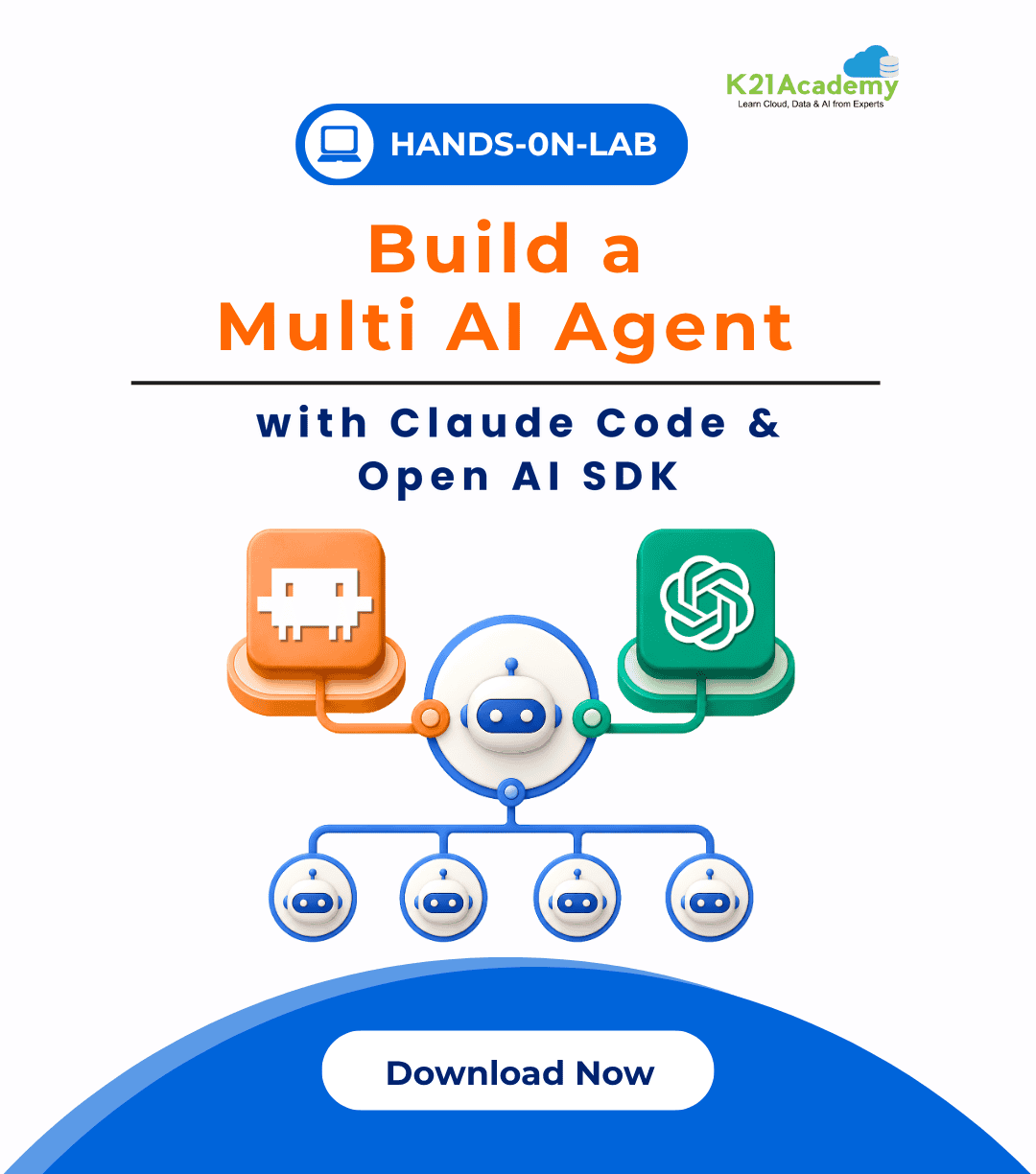
Build a Multi-Agent AI System with Claude Code & OpenAI SDK: Learn How to Make AI Agents Research, Analyze, and Write Together
This practical, step-by-step Hands-On Lab Guide helps you build a complete Multi-Agent AI system using Claude Code and the OpenAI Agents SDK, where specialized Researcher, Analyst, and Writer agents collaborate to turn a user query into a professional research report.
Build a Multi
AI Agent System That Works Together
Real-world AI applications often require more than one agent. Instead of asking a single general-purpose agent to handle research, analysis, and writing, multi-agent systems divide the work between specialized agents and allow them to collaborate through a workflow.
In this lab, you will create a Researcher Agent that gathers real-time information, an Analyst Agent that extracts trends and insights, and a Writer Agent that turns the findings into a polished executive report. A manager function orchestrates the complete workflow.
Give your Researcher agent real-time web search capabilities using Tavily, so it can gather live information from the web instead of relying only on what the model already knows.
Build an Analyst Agent that extracts trends, risks, and key insights from the research findings, then passes structured outputs forward using Pydantic models.
Create a Writer Agent that turns the analysis into a professional executive report containing a short summary, a detailed analysis, and follow-up questions.
Orchestrate the full Researcher, Analyst, and Writer pipeline with a manager function, and use a shared SQLiteSession so the agents collaborate across the entire workflow.
What You'll
Learn
Learn how to build a multi-agent AI system where specialized agents work together instead of relying on one general-purpose agent, and why that approach is often more effective.
The lab introduces function tools and Pydantic specifically to solve two important multi-agent problems: giving agents access to external capabilities, and making sure outputs passed between agents have a reliable structure.
Everything is demonstrated with real-world research queries, including a Tesla Cybertruck sentiment research example, plus troubleshooting guidance and optional enhancements.
What You
Need
This guide is beginner-friendly, but it builds on the previous single-agent environment and assumes you have completed the required setup.
The major advantage is that you reuse the existing project environment, virtual environment, OpenAI Agents SDK skill, and Jupyter kernel rather than starting everything from scratch.
Download Your Free Multi-Agent AI Lab Today
Go beyond building a single AI agent. Get the free hands-on lab guide and follow the complete end-to-end video tutorial to build a multi-agent system where specialized AI agents research, analyze, and write together. Includes multi-agent architecture concepts, Claude Code prompts, Tavily web search integration, Pydantic structured data models, Researcher, Analyst and Writer agents, manager orchestration, SQLiteSession memory, troubleshooting guidance, and real-world project practices.
Get Instant Free AccessWhether you’re just starting out or feeling stuck midway, our guided, hands-on programs in the most in-demand technologies AI/ML on AWS/Azure/Google/Oracle, Agentic AI, AI for Business Leaders, Program Managers, and Project Managers – will take you from ‘confused’ to ‘in-demand
What Our Trainees Say
Trusted by thousands of satisfied trainees across multiple platforms